Get Full Government Meeting Transcripts, Videos, & Alerts Forever!
Get email alerts on the Restraints And Reporting topic
No spam. Unsubscribe anytime.
MDH and ombudsman urge restraint rules for assisted‑living; committee fails to adopt senate language
Summary
Conference conferees considered adding statutory restraints reporting and use limits for assisted living. The Minnesota Department of Health and the long‑term‑care ombudsman described gaps and examples; a motion to adopt the senate restraint language was put to a roll call and was not adopted.
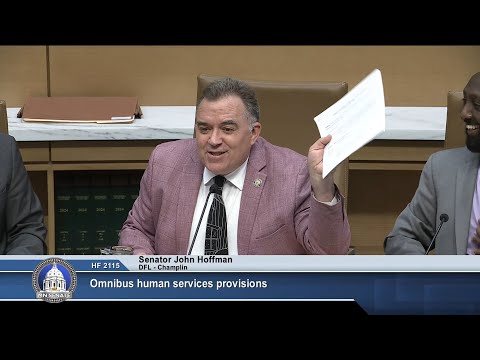
The conference committee on House File 2115 discussed proposed statutory language that would clarify and restrict the use of chemical and physical restraints in assisted‑living settings and require reporting of restraint use to the Minnesota Department of Health.
Lisa Timmian, director of government relations at the Minnesota Department of Health, told conferees that the current statute is silent on restraints in assisted living and that the proposed language would align assisted‑living rules with existing statutory language for other care settings. “The current statute is silent on the use of restraints in assisted living settings,” Timmian said. “This leads to confusion about the appropriate use of restraints.” She said stakeholder work dating to 2019 shaped the draft language and that the department does not anticipate high use of restraints but wants clarity and reporting to track usage and reasons.
Pericher Rudina of the Office of Ombudsman for Long Term Care gave a detailed example of misuse: in one memory‑care unit, staff “would go around and offer hand massages to residents, without informing them that in the cream were sedatives, and then at 06:00 every evening, all the residents in that memory care unit would be fast asleep.” Rudina characterized that pattern as a chemical restraint used for staff convenience and urged clearer statutory limits.
Providers and some conferees asked how the language would treat resident‑directed assistive devices and whether facilities that do not use restraints would be affected. MDH and ombudsman staff said the language anticipates therapeutic uses with medical orders and emphasizes person‑centered planning and positive behavioral supports as preferred alternatives.
A roll call motion was made to adopt the senate language in article 2 (sections cited in committee). The transcript shows a roll call was taken; several members voted aye and others no. The committee chair announced the motion was not adopted following the roll call. The transcript does not record a final amended text being adopted during this sitting.
Advocates framed the proposal as closing a statutory gap and improving oversight; some legislators said they favored additional clarification before adoption so resident rights and legitimate therapeutic uses are preserved.