Get Full Government Meeting Transcripts, Videos, & Alerts Forever!
Get email alerts on the Assisted Living Payment Transition topic
No spam. Unsubscribe anytime.
Conference committee debates protections for assisted‑living residents switching from private to public pay
Summary
Minnesota conference committee members debated competing house and senate language that would bar assisted‑living providers from terminating contracts when a resident switches from private pay to public (elderly waiver) funding and would require notification and assistance. No final action was taken; conferees agreed to continue work.
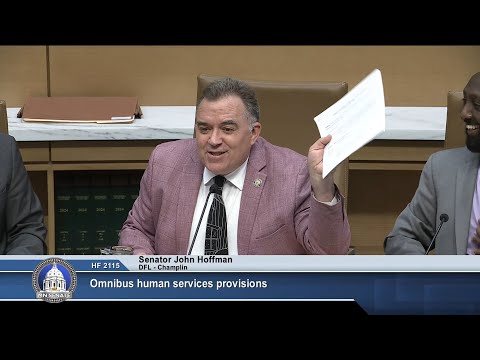
Members of the conference committee on House File 2115 spent an extended portion of their meeting discussing language that would bar assisted‑living facilities from terminating a contract when a resident transitions from private pay to public funds and whether the law should require residents or providers to notify facilities or help complete public‑pay applications.
The discussion centered on two competing approaches. The senate language would simply make it impermissible to terminate an assisted‑living contract because a resident shifts from private to public payment. The house language included additional requirements for notifying the facility and for the facility to help residents complete applications for elderly‑waiver benefits.
Committee members said the choice matters to both residents and providers. Representative Schumacher said a requirement that a resident simply give notice without further participation could create a system that residents might “game” to hold spots, and that assisted‑living operators need adequate lead time to budget for private‑pay vs. waiver beds. Other members recounted testimony that counties and applicants often take weeks or months to process elderly‑waiver applications, creating timing gaps that complicate placements.
Pericher Rudina, of the Office of Ombudsman for Long Term Care speaking on behalf of the Consumer Advocates Coalition, argued for provider responsibility to help with the application process. “VULNERABLE ADULTS SHOULD NOT BE RESPONSIBLE FOR FIGURING OUT HOW TO GET ON ELDERLY WAIVER,” Rudina said, adding that providers benefit financially when residents successfully transition and therefore should assist.
Some conferees expressed concern that requiring residents to declare only an “intent” to apply creates legal vagueness. Senator Maquaid and others said the word “intent” as drafted is too ambiguous and suggested a clearer trigger such as a submitted application or a specific, short timeline for notice. Several members asked for language that protects residents from retaliatory discharge while also assuring providers that they will receive reasonable notice.
The committee did not record a final vote on a conference‑committee compromise at this meeting. Members discussed adopting house language with some deletions and noted they would continue stakeholder work; one conferee asked staff to revisit the earlier A19 amendment language as a possible alternative. Chair remarks indicated conferees intend to return to the topic and produce a clearer, agreed text before finalizing the article.
Community members and providers are expected to remain engaged as the conferees refine the definition of permissible notice, the mechanics of application assistance, and protections against discharge while an application is pending.