Get Full Government Meeting Transcripts, Videos, & Alerts Forever!
Get email alerts on the Public Safety Drones topic
No spam. Unsubscribe anytime.
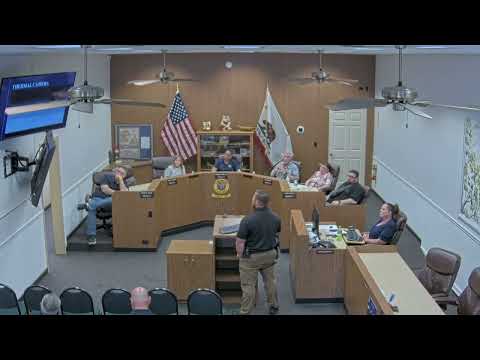
Kingsburg Public Safety Committee approves approximately $5,000 for police drone project
Summary
The Kingsburg Public Safety Committee voted to allocate about $5,000 in remaining fiscal-year funds to the Kingsburg Police Department’s proposed unmanned aerial systems (drone) program after a presentation on equipment, training, and privacy safeguards.
The Kingsburg Public Safety Committee voted on May 13 to designate approximately $5,000 in remaining fiscal‑year 2024–25 funds to the Kingsburg Police Department (KPD) to support a proposed unmanned aerial systems program.
Member Schilling introduced the agenda item and invited Officer Brent Kroger of the KPD to describe the department’s planned drone unit, its intended uses, training requirements and equipment costs. Kroger said the unit would operate under the patrol division chain of command and that licensed operators must pass the FAA Part 107 exam to conduct commercial or law‑enforcement flights.
Kroger described two classes of aircraft the department is considering: a larger outdoor unit (identified in the presentation as a DJI Matrice‑style thermal drone) and a compact indoor model (described as an Avada‑style unit). He said the larger thermal drone had been quoted at about $8,500, the indoor unit at about $2,000, and that a vendor livestream subscription was estimated around $500 per year. Kroger also summarized operational capabilities and limits: the larger unit’s demo specs cited about a 45‑minute flight time, top speed near 46 mph and zoom/thermal imaging that he said can aid overwatch, searches and evidence collection in low light.
Addressing community concerns, Kroger said the department would not use drones for “random surveillance” or to target people based on protected traits, and he described intent to build policy and standard operating procedures consistent with federal and state law. “It’s not gonna be used for random surveillance, proactive enforcement, and targeting people based on race, gender, religion,” Kroger said. He also noted state law limits on capturing images of private individuals and described a separate statute that provides immunity to first responders who damage unmanned aircraft that interfere with emergency response (as summarized in the presentation).
Committee members asked about logistics, certification and maintenance. Kroger said the Part 107 exam is a single FAA test (fee under $200, according to his presentation) and that the department planned recurring training with the county sheriff’s unit. He described operational practices such as keeping a drone at the station in an armored case, hot‑swapping batteries to extend operational time, and coordinating with allied agencies when multiple aircraft are needed on a call.
After questions, a committee member moved to designate the committee’s remaining fiscal‑year 2024–25 funds to the KPD drone project in the amount of approximately $5,000 and revisit funding in fiscal year 2025–26. The committee chair called for opposition; none was recorded and the motion passed. The transcript does not record a roll‑call vote or individual vote tallies.
The committee did not adopt final procurement or policy documents at the meeting; Kroger said additional steps remain, including obtaining firm vendor quotes, finalizing storage and cloud‑storage arrangements for footage, developing SOPs and completing Part 107 certifications for operators. He also offered to schedule public demonstrations and hands‑on sessions to address community questions and build familiarity with the technology.
Context: Kroger referenced examples from nearby agencies (Clovis Police Department and Fresno County agencies) and described past local demonstrations and case uses — for example, thermal overwatch that aided an arrest and indoor reconnaissance used to clear a residence prior to entry. The committee’s allocation funds initial equipment/training needs but is not a full procurement appropriation; the department indicated further procurement steps and subscription costs remain to be finalized.