Get Full Government Meeting Transcripts, Videos, & Alerts Forever!
Get email alerts on the Federal Funding Risk topic
No spam. Unsubscribe anytime.
Council hears potential federal funding risks that could affect Fones Road, EMS reimbursements and CDBG allocations
Summary
City staff warned council members that federal actions could threaten specific revenue streams — including Medicaid/GEMT reimbursements and CDBG funding — with potential multi‑million dollar impacts on transportation projects and emergency medical transport revenues.
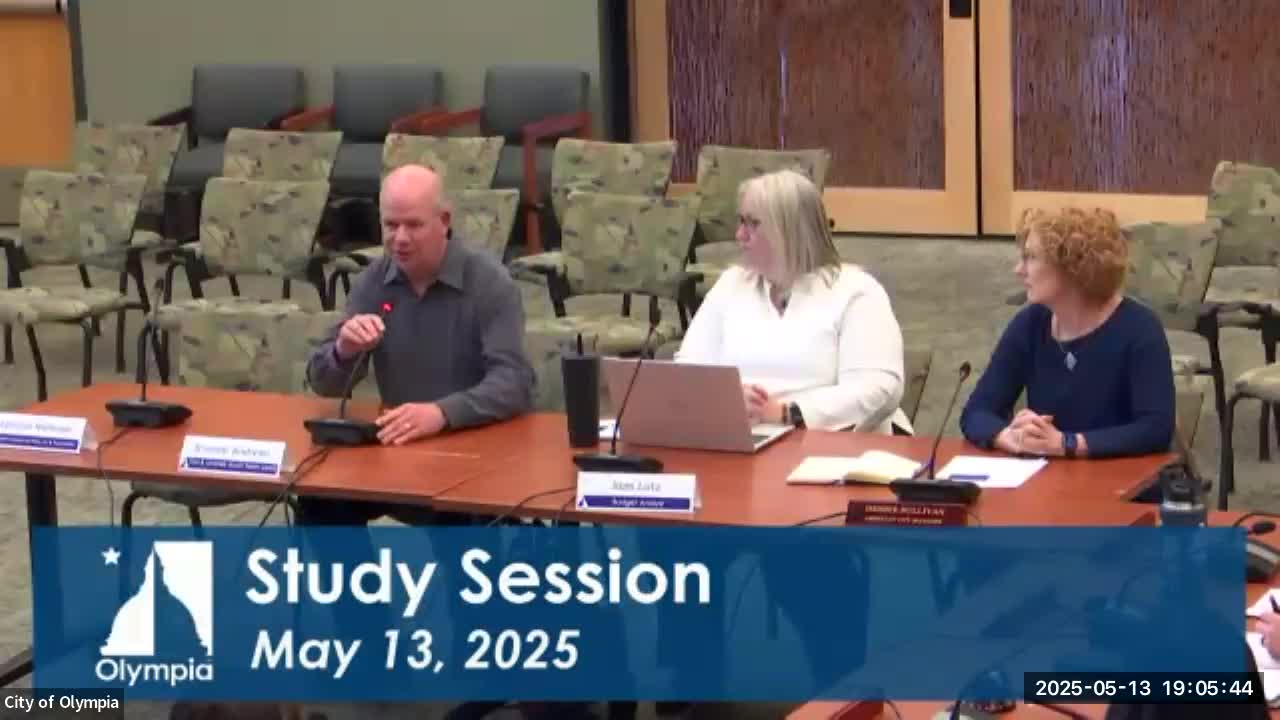
City Manager Jay Bernie and department directors briefed the council May 13 on a range of external risks to Olympia’s 2025–26 revenues, naming federal actions that could reduce funding and showing how the city would respond if those streams were reduced or lost.
Bernie and department heads framed at least three potential federal risks: (1) an executive action discussed by the federal administration that could condition or withhold funds from jurisdictions described as “sanctuary” cities; (2) possible federal reductions to Medicaid that would reduce reimbursements tied to the Ground Emergency Medical Transport (GEMT) program for local ambulance services; and (3) potential impacts to Community Development Block Grant (CDBG) funding. Bernie said the state of Washington had joined other states in a legal challenge to the executive order, an outcome he welcomed.
On GEMT and EMS: Fire Chief Matt Morris told the council GEMT — ground emergency medical transport — is a federal reimbursement program that allows public entities to recover the difference between Medicaid/Medicare payments and the actual cost of transporting eligible patients. Morris said Olympia’s payer mix for transports is “in excess of 60% Medicaid/Medicare,” a share notably higher than many jurisdictions, and that loss of supplemental GEMT reimbursements could materially affect the department. Bernie and Chief Morris estimated potential revenue impacts in the range of $2 million to $4 million depending on program eligibility and timing of reimbursements.
On transportation projects: Public Works Director Mark Russell warned that Fones Road is a large, multiyear construction project heavily funded with federal dollars — he cited roughly $9.5 million of federal funding associated with the project. Russell said the city could complete Fones Road using local funds if federal dollars were withdrawn, but doing so would exhaust reserves and force delays or cancellations of other transportation projects for one to two years while the city reprioritized funding.
On CDBG: Bernie said Olympia’s annual CDBG allocation is about $347,000 and noted there is roughly $160,000 in CDBG funds currently unspent; a clawback or reduction would affect nonprofit partners and projects that rely on that money.
Council questions and planning: Council members asked about contingency planning. Russell said the city could use local funds to finish Fones Road but would then delay other projects and would not be able to stop a project mid‑construction due to contractual obligations. Bernie said staff are inventorying projects, identifying contingency plans and will bring more detailed options to the June midyear retreat.
Ending: Staff characterized the risk as real but uncertain and committed to monitoring developments, noting no written notices of withheld funding had been received at the time of the study session.