Get Full Government Meeting Transcripts, Videos, & Alerts Forever!
Get email alerts on the Legislation Policing topic
No spam. Unsubscribe anytime.
Policy analyst flags state bills and White House order that could reshape policing oversight in Dallas
Summary
OCPO policy staff briefed the board on several state bills — including House Bill 3640/HJR162 and Senate Bill 1637 — and on a recent presidential executive order expanding federal support for law enforcement, noting potential implications for local oversight and community trust.
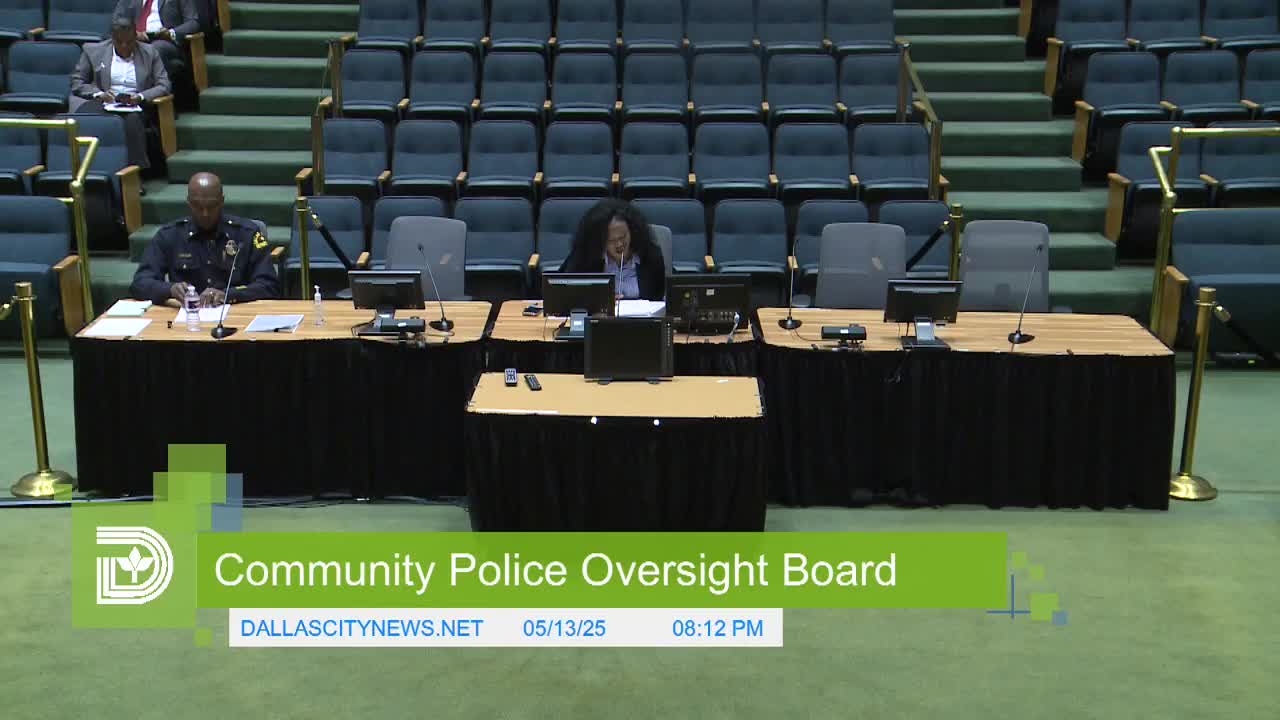
Sierra Obasuji, policy analyst for the Office of Community Police Oversight, briefed the board on May 13 about several state legislative proposals and a federal executive order that could affect policing and civilian oversight in Dallas.
Obasuji described House Bill 3640 and its companion House Joint Resolution 162, which would amend the Texas Constitution to give the attorney general shared authority to prosecute alleged criminal offenses by peace officers acting in the course of duty. If the joint resolution passes and is approved by voters, the attorney general could prosecute or appoint external prosecutors for on‑duty officer offenses. Obasuji said this could reduce local prosecutorial control and urged the board to monitor implications for local accountability.
She also summarized Senate Bill 1637, which would amend the Texas Penal Code’s deadly‑conduct sections to create statutory exemptions for peace officers acting lawfully in the discharge of official duties. Obasuji noted that if enacted, DPD might need to modify use‑of‑force and related general orders to reconcile statutory exemptions with department disciplinary rules.
Finally Obasuji outlined a White House executive order issued April 28 directing federal agencies to expand support for state and local law enforcement, increase availability of excess federal equipment, and review federal consent decrees; she said the order could strain the authority of local oversight mechanisms if federal policy leads to rescission or modification of consent decrees and could prompt escalations in enforcement that affect overpoliced neighborhoods.
Board members asked whether OCPO would take positions on the bills and how the office would coordinate with the city; Obasuji said staff are tracking the measures and that the policy subcommittee could evaluate potential formal positions if the board chooses.
Obasuji said she would circulate rapid updates during the legislative session and that several bills of interest were pending with deadlines approaching.