Get Full Government Meeting Transcripts, Videos, & Alerts Forever!
Get email alerts on the Elections topic
No spam. Unsubscribe anytime.
Lake County registrar asks supervisors to approve staffing, scanners and signature-verification funds to speed ballot processing
Summary
Registrar Maria Valadez sought board support to add technicians, reclassify a specialist, expand extra-help hours, replace an aging ballot scanner and buy a signature-verification system to reduce post‑election processing time and meet certification deadlines.
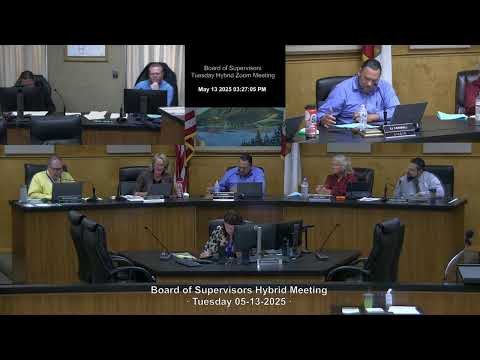
Maria Valadez, Lake County registrar of voters, asked the Board of Supervisors on Tuesday to approve a phased plan of staffing, facility and technology investments aimed at speeding post‑election canvass and compliance work.
Valadez told the board that the office must meet state and federal certification timelines — 28 days for presidential contests and 30 days for other elections — while complying with cybersecurity, Americans with Disabilities Act and language‑accessibility rules. “This isn’t about inefficiency, it’s about capacity,” she said, describing steady growth in workloads since 2020.
The proposal lists four priorities: staffing, infrastructure, technology and ongoing support. Valadez requested reclassifying one specialist to an analyst, adding an elections technician and an elections manager at a later phase, hiring a part‑time specialist that would work full time during election cycles, and adding six additional extra‑help workers to run staggered canvas shifts to allow continuous processing.
Valadez cited data from the last election: mail ballots made up 56 percent of returned ballots (13,331 ballots), about 3,500 returns came from six county drop boxes, and roughly 3,000 ballots were returned through polls and the office in the mail‑distribution window. She said the office processed 681 ballots the week after the election and that election day phone volume exceeded 4,700 calls. The office moved from about 900 usable square feet to roughly 2,000 but has outgrown that space, she said.
On technology, Valadez proposed buying a new ballot scanner to replace an aging unit and acquiring an automated signature‑verification system her office estimates at roughly $240,000–$280,000 for equipment (she noted annual software and maintenance costs would be additional). She said the county still holds about $130,000 in voting‑system funds that could be used toward a signature‑verification purchase if spent before June 2026. She also described a need to replace about 30 of 40 ballot printers in the near term at an estimated total cost of about $24,000.
Supervisors pressed for details and phasing. “So are you asking for two new permanent full‑time positions?” Supervisor Piaiszka asked. Valadez clarified the immediate ask was a reclassification, a technician, and six temporary extra‑help workers; a manager and other hires could be phased in later. Several supervisors recommended staff coordinate with the county budget office, the technology committee and the space committee before returning with costed options; one suggested short‑term rentals or pooled vehicle arrangements instead of buying a van for drop‑box collection.
Board members generally expressed support for exploring technology and extra‑help funding while asking for clearer cost models. Vice Chair Solotti suggested IT help could be shared across departments and recommended the registrar present vendor demonstrations to the county’s technology review group. Valadez said one vendor is willing to demo the signature‑verification system.
The board did not take a formal vote on the request. Supervisors gave direction to staff: prepare costed options and vendor information, consult with IT and the budget office, and discuss facility needs with the space committee. Valadez said she would return with detailed costs and plans if the board gave a “green light” to proceed with further analysis.
Valadez closed by thanking staff and poll workers. “This would be a sustainable path forward,” she said, “and it would equip us to protect and strengthen public trust.”
What’s next: county staff will coordinate follow‑up meetings with IT, the budget office and space committee; the registrar will arrange vendor demonstrations and return with detailed cost and phasing information for board consideration.