Lifetime Citizen Portal Access — AI Briefings, Alerts & Unlimited Follows
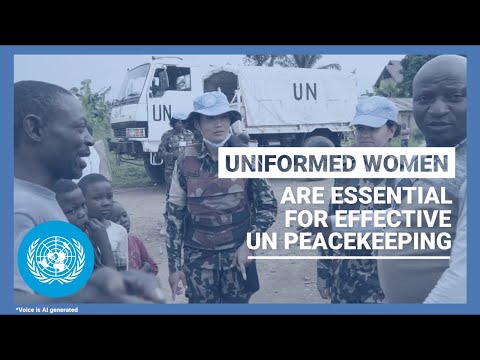
Uniformed women in UN peacekeeping call for more leaders, better accommodations to create 'enabling environments'
Loading...
Summary
Uniformed women serving in United Nations peacekeeping said in recorded remarks that expanding mid- and senior-level leadership roles for women, strengthening mentoring and peer networks, and improving accommodations and equipment suited to women would help create an "enabling environment" and enable equal opportunities to serve.
Uniformed women serving in United Nations peacekeeping said in recorded remarks that expanding mid- and senior-level leadership roles for women, strengthening mentoring and peer networks, and improving accommodations and equipment suited to women would help create an "enabling environment" and enable equal opportunities to serve.
The speakers — identified in the session as uniformed women representing peacekeeping missions and related networks — said leadership that is "gender responsive" and mentors who support women are central to retention and effectiveness. "The first measure that will best support uniformed women's participation is to have more uniformed women in mid level and senior leadership roles," one uniformed peacekeeper said. "Because the moment you have women in a position of decision makers, policies and decisions change for women and for the betterment of everyone."
Speakers described an enabling environment as "a work culture where everyone is respected, where we are provided equal opportunities," and said that leaders must deliberately create conditions in which women can "operate or work in their full potentials." Several speakers urged cultivation of networks for uniformed women across missions so members can "share their ideas, learning from each other's experiences and challenges." One participant said leaders and mentors must "promote and support women peacekeepers."
Participants also pointed to practical steps: when male and female peacekeepers are assigned long-distance patrols or deployed to temporary operating bases, planners should ensure "accommodations or at least equipment which is suitable for women in peacekeeping." Another speaker framed gender-responsive leadership as essential to command effectiveness, saying, "There is no leadership in the world that can be effective without being gender responsive... If you are not responsive to the needs, the challenges, the views, the concerns of women under you, then obviously, you have left half your command... not really in synergy with you."
The remarks focused on discussion and recommendations; the session did not record any formal motions, votes, or decisions. No specific timelines, budgets, or implementing authorities were cited in the recorded excerpts.