Get Full Government Meeting Transcripts, Videos, & Alerts Forever!
Get email alerts on the Un Reform Unat topic
No spam. Unsubscribe anytime.
Secretary-General outlines UNAT initiative to streamline United Nations operations, says reforms alone won’t solve liquidity crisis
Summary
Secretary-General António Guterres briefed an informal U.N. plenary on the UNAT (UN 80) initiative to identify efficiencies, review mandate implementation and consider structural changes; member states broadly supported reform but pressed for safeguards on mandates, regional presence and oversight of budgetary measures.
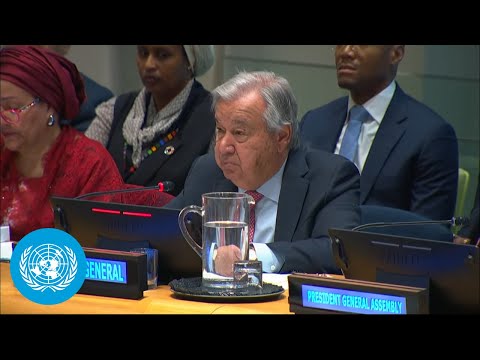
Secretary-General António Guterres on Thursday outlined a three-part reform plan called the UNAT initiative (also referred to as UN 80) to identify efficiencies, review how member-state mandates are implemented and consider structural changes across the United Nations system, and he said the organization’s liquidity crisis cannot be solved by internal reform alone.
Guterres told the informal plenary that the initiative is “an opportunity to undertake strategic reforms and improvements in line with the United Nations Charter and the pact for the future,” and that proposals affecting the regular budget for 2026 will be included in revised estimates to be presented in September.
The initiative, Guterres said, is structured around three work streams: (1) rapidly identifying efficiencies and management improvements; (2) reviewing implementation of mandates entrusted by member states (not the mandates themselves); and (3) considering structural changes and program realignment across the U.N. system. He said a secretariat working group led by Catherine Pollard is developing a management strategy and that a UNAT task force and seven thematic clusters — including peace and security, development, humanitarian, human rights, training and research, and specialized agencies — have been established to produce concrete proposals.
Why it matters: Delegations said the reforms could affect budget priorities, staff, and where U.N. work is based. Many member states welcomed efforts to reduce duplication and improve delivery, but speakers representing developing countries, small island states and regional blocs urged that efficiency measures not come at the expense of mandates, regional presence or support for vulnerable members.
Key details and proposals
- Guterres said the secretariat has already identified more than 3,600 unique mandates for the secretariat alone and is clustering those mandates for analysis. He said the review will examine implementation and identify duplications and opportunities for consolidation.
- Examples cited by Guterres of possible efficiency steps in the peace and security area included “resetting” DPPA (Department of Political and Peacebuilding Affairs) and DPO (Department of Peace Operations), merging units, eliminating duplications and “we believe we’ll be able to eliminate 20% of the posts of the 2 departments” as a reference point for the wider exercise, subject to the specificities of each area.
- The secretary-general said the secretariat is reviewing relocating services from high-cost duty stations and centralizing IT and support services, and he cited ongoing office moves in New York and examples of greater activity in Nairobi (UNICEF, ITC, UNHCR) as instances of delocalization already under way.
- Guterres said some proposals affecting the regular budget will be included in revised 2026 estimates to be submitted in September; additional proposals requiring longer analysis would appear in the 2027 draft program budget.
Member-state reactions
- The representative of Iraq, speaking for the Group of 77 and China, welcomed efficiency efforts but stressed that the immediate remedy for the liquidity crisis is member states paying assessed contributions "in full on time and without conditions." He and several other delegations warned against austerity-driven cuts that could weaken delivery.
- The European Union representative urged evidence-based decisions and asked when the secretariat could provide a systemwide overview of overlaps, duplications, revenues and staffing.
- Small states, the Alliance of Small Island States (AOSIS), the least developed countries and the landlocked developing countries urged that reforms preserve geographic balance, in-country and regional presence, and protections for development and SIDS-focused programming.
- Several delegations (including the United States, Australia and Norway) pressed for concrete proposals to eliminate duplication and produce measurable efficiencies; the U.S. statement emphasized staff costs as the largest discretionary area and suggested reviewing compensation and benefits and examining mergers or consolidations of offices and agencies.
- Russia, China and other delegations called for transparency, member-state oversight and protection of the U.N.’s role and mandate; multiple speakers insisted that budgetary changes be subject to review by ACABQ (the Advisory Committee on Administrative and Budgetary Questions) and the Fifth Committee of the General Assembly.
Secretary-General’s clarifications
Guterres repeatedly said what the process is not: it will not weaken the U.N.’s commitment to the Charter or replace Agenda 2030 or the pact for the future, and it is not a move to focus only on peace and security while sidelining development or human rights. He said the secretariat will present proposals through the existing budgetary process so they receive ACABQ and Fifth Committee scrutiny, and he urged member states to examine mandates themselves in intergovernmental processes to reduce duplication.
Guterres also said the liquidity crisis is primarily caused by arrears in member-state assessed contributions and that reforms alone will not solve the short-term cash problem: "We won't solve the liquidity crisis by reforming the organization. We solve the liquidity crisis by countries paying full and, on time, their contributions." He added that efficiencies can reduce the impact of arrears and potentially help the organization’s financial stability.
Discussion vs. decision
- Discussion: The meeting recorded broad support for examining efficiencies and mandate implementation but widespread concern that cost-cutting must not erode mandates, regional offices, or the support delivered to vulnerable member states.
- Direction: The secretary-general announced internal steps — a secretariat working group, a UNAT task force, the seven clusters and a request for entities to identify lower-cost options — and set a timetable for revised budget estimates for 2026.
- Decision: There were no formal votes at this informal briefing; member-state oversight bodies (ACABQ and the Fifth Committee) were identified as the routes for any budgetary decisions.
What remained unresolved
Delegations asked for more detail on membership of the secretariat working groups, time frames, the cost-benefit analysis of relocation versus total costs, protections for staff, and guarantees that regional commissions and country-level presence will be preserved where needed. Many called for inclusive, transparent consultations and for member states to replenish assessed contributions.
What’s next
Guterres said revised estimates for the 2026 regular budget will be presented in September and that additional proposals will be prepared for the 2027 program budget. He said consultations with member states and with U.N. staff will continue and stressed that most decisions will be taken through member-state governing bodies.
Ending
The informal plenary concluded with a commitment by delegations to continue engagement; the secretary-general reiterated that the initiative aims to increase the U.N.’s capacity to implement the Charter and deliver results for member states rather than to diminish the organization.