Get Full Government Meeting Transcripts, Videos, & Alerts Forever!
San Mateo planning commission backs zoning changes to implement housing element, expands below‑market‑rate compliance options
Summary
The planning commission voted unanimously to recommend that City Council adopt zoning code amendments to streamline development review, set minimum densities for mixed‑use residential projects and allow new alternatives to on‑site below‑market‑rate (BMR) requirements, including off‑site construction and developer‑proposed alternatives.
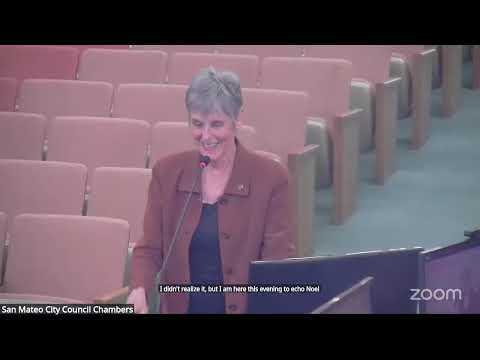
The San Mateo Planning Commission on May 13 recommended that the City Council adopt a package of zoning code amendments and an updated Below Market Rate (BMR) program resolution to implement the city's 2024 housing element.
The proposal, presented by Principal Planner Steve Golden and Rachel Horst, housing and neighborhood services manager, would (1) streamline development review and add an appeal path for incomplete applications, (2) change rules on planning approval expirations, (3) adjust when projects must be reviewed by City Council based on height relative to the General Plan, (4) establish minimum densities for mixed‑use residential projects (with higher minima near Caltrain), and (5) add two compliance alternatives to the city's BMR rules: an off‑site construction option and a developer‑proposed alternative that requires City Council approval.
The changes aim to implement multiple housing element policies adopted by the council, including H1.3 (BMR program), H1.6 (streamlining review), and H1.9 (minimum densities). "After a multiyear process, the City of San Mateo adopted our housing element. City council adopted on 05/20/2024, and it was certified by the California Housing and Community Development Department on July 23, 2024," Principal Planner Steve Golden said during the staff presentation.
Why it matters: The package is intended to help the city meet state housing obligations, increase affordable housing production, and align zoning rules with the General Plan and recent state guidance. Staff said the measures are designed both to accelerate predictable approvals and to offer alternatives for meeting inclusionary requirements when on‑site construction is not feasible or not the best fit.
Key provisions and discussion
Streamlining and appeals: Staff proposed an appeals process for cases in which planning staff have determined an application is incomplete. "State law under the permanent streamlining act says that we have to give that applicant an appeals process," Golden said.…
Already have an account? Log in
Subscribe to keep reading
Unlock the rest of this article — and every article on Citizen Portal.
- Unlimited articles
- AI-powered breakdowns of topics, speakers, decisions, and budgets
- Instant alerts when your location has a new meeting
- Follow topics and more locations
- 1,000 AI Insights / month, plus AI Chat