Get Full Government Meeting Transcripts, Videos, & Alerts Forever!
Get email alerts on the City Budget topic
No spam. Unsubscribe anytime.
Santa Clara unveils proposed FY2025–27 budget, restores 25% reserve and adds firefighter, police and bond-implementation staff
Summary
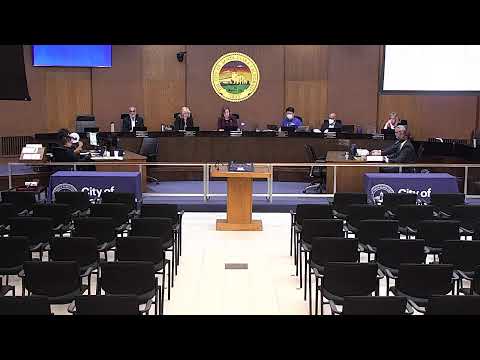
Santa Clara City Manager Jevon Grogan presented the first of three study sessions on the proposed fiscal year 2025–27 biennial operating budget and fiscal year 2025–26 capital improvements, saying, “As you know, this is the first of 3 meetings on the proposed budget. The second study session will occur on May 27, with a planned final adoption on June 10.”
Santa Clara City Manager Jevon Grogan presented the first of three study sessions on the proposed fiscal year 2025–27 biennial operating budget and fiscal year 2025–26 capital improvements, saying, “As you know, this is the first of 3 meetings on the proposed budget. The second study session will occur on May 27, with a planned final adoption on June 10.”
The proposed plan would continue core city operations without personnel or service reductions while restoring key reserves and funding several targeted staffing and implementation needs. The finance director told the council the budget “also adopts a prudent fiscal approach” and emphasized restoring the city’s budget stabilization reserve to its policy level, which staff set at 25% of operating expenditures.
Why it matters: The draft seeks to balance one-time receipts and ongoing needs amid a projected structural gap in later years. City staff say the first-year operating budget uses one-time resources and carryover revenue to meet short-term priorities — including firefighter restorations, partial unfreezing of police positions and seed funding for administration of a $400 million voter-approved Measure I (GO bond) — while the 10-year forecast shows expenditures again outpacing revenues in several years.
Most important details
- Scale: The combined first-year budget document covers roughly $333 million of operating activity and $568 million of capital funds in the first year; staff said all-funds activity across utilities and capital-related lines totals in the billions over the biennium and multi-year horizon.
- Reserves: The proposal restores the budget stabilization reserve to 25% (staff called this “an important number to reach”), representing roughly three months of operating costs and a recovery from pandemic-era drawdowns.
- Positions and staffing: The FY2025–26 budget adds 21 new or restored positions (10.35 in the general fund) in year one and anticipates net growth over the two-year period of 39.25 positions. Notable items: funding to convert 12 grant-funded firefighter slots (SAFER grant positions) to ongoing positions, partial restoration in year two of three sworn police posts (one sergeant and two officers) and several bond-implementation and capital accounting positions to administer Measure I projects.
- Major events and reimbursements: Budgeted staff and planning funds for major events (Super Bowl, FIFA World Cup) are included with the expectation that event partners or the stadium authority will reimburse city costs. Staff emphasized agreements and reimbursements remain under negotiation.
- Capital and bond administration: The budget provides limited one-time general fund support for bond program staffing (about $1 million in year one, $2 million in year two) to fund project managers and engineers while restricting bond-funded overhead to the bond resolution’s 5% staffing allowance.
Council questions and concerns
Council members pressed staff on several items during the public Q&A. Council Member Jane asked about the city’s role in broadband equity and whether city-owned fiber would be used to deliver household internet: “Santa Clara should be 1 of the richest cities in the Bay Area,” she said as she described the city’s large utility and business-tax base and urged the upcoming fiscal-sustainability study to address long-term structural issues.
Council members also asked for detail on the pace of capital maintenance funding (staff proposed modest recurring transfers that grow over the forecast), the assumptions behind the 10-year actuarial pension outlook and a planned fiscal sustainability consulting RFP aimed at identifying options to close structural shortfalls over the next 12 months.
What staff said about risks and next steps
Finance Director Ken Lee and city management repeatedly warned the council the 10-year forecast assumes a continuing structural imbalance: staff said retirement and labor costs, incomplete restoration of frozen positions and incomplete capital maintenance needs are the principal pressures. Grogan said the city will begin a fiscal sustainability project next fiscal year to produce concrete recommendations for long-term balance.
Staff noted the budget uses a mix of one-time funds and ongoing revenue and emphasized that the proposed allocations reflect council priorities set during April priority-setting. The council will hold a second study session May 27 and is scheduled to adopt the biennial budget on June 10. If the council requests additional detail at the next session, staff said they will provide it before final adoption.
Sources and attribution: Quotes and facts above are taken from the City Manager and Finance Director presentation and the council’s Q&A during the May 13 council/stadium authority concurrent meeting. City Manager Jevon Grogan and Finance Director Ken Lee presented the budget. Council members who asked questions include Council Member Jane, Council Member Chahal, Council Member Park, Council Member Hardy and Vice Mayor Cox.
Ending: The proposal reconstitutes the city’s 25% stabilization reserve and funds selected public-safety and bond-implementation positions, but staff told the council the city must pursue a fiscal-sustainability plan to address structural shortfalls beyond the two-year horizon.