Get Full Government Meeting Transcripts, Videos, & Alerts Forever!
Get email alerts on the Mental Health topic
No spam. Unsubscribe anytime.
Metuchen board hears expanded mental-health initiative, Lifelines training and peer-mentoring growth
Summary
Doctor Herzog gave the Metuchen Board of Education an annual update on the district’s mental-health initiative on May 13, describing 12 core elements funded by a community referendum and new programming including Lifelines suicide-awareness lessons, tiered interventions and student peer-mentoring.
Doctor Herzog told the Metuchen Board of Education on May 13, 2025, that the district’s community-funded mental-health initiative now includes a 12-element framework of tiered interventions, expanded clinician partnerships and a districtwide rollout of Lifelines suicide-awareness programming.
The presentation explained why the initiative matters: suicide is the second-leading cause of death for youth ages 10 to 14, and “20 percent of United States high school students have had serious thoughts of suicide,” Herzog said, citing national statistics included in the presentation. The program’s funding traces to a 2019 local referendum that began at $700,000 and has increased with annual budget growth, Herzog said.
Herzog summarized the program’s 12 core elements as tiered interventions, social-emotional learning embedded in curriculum, explicit instruction and practice opportunities, staff development, high-quality resources, leadership support, family and community engagement, multidisciplinary collaboration, student leadership and peer mentoring, and a comprehensive suicide-awareness plan. He said the district uses the New Jersey tiered system of supports model beyond academics to structure these services.
Among specifics, Herzog said the district hired two school psychologists funded by the referendum so each school has a psychologist five days a week; added board-certified behavior analysts; placed therapeutic clinicians at Campbell and Edgar schools through community partnerships; and funded reading and math intervention positions and summer programs. He described three-tiered service levels: universal (Tier 1) supports for all students, targeted (Tier 2) groups for some students, and individualized (Tier 3) data-driven services for the smallest group.
Herzog described this year’s Lifelines trilogy rollout, which trained a core team in prevention, intervention and postvention. “Our secondary health and physical-education teachers were trained in the curriculum,” Herzog said; Lifelines lessons were implemented for sixth-, ninth- and 11th-grade health classes this spring to teach warning signs, how to identify a trusted adult and how to seek help. The district also launched a trusted-adult campaign and ran parent Lifelines trainings, Herzog said.
The presentation highlighted student leadership programs: Bulldog Buddies pairs younger and older elementary students to practice SEL skills, middle-school mental-health ambassadors receive training to spread awareness and the Wingman program links athletes and advisors to student-led kindness initiatives. Herzog credited partnerships with Rutgers clinicians and the Metuchen Police Department for coordination in cases requiring outside care.
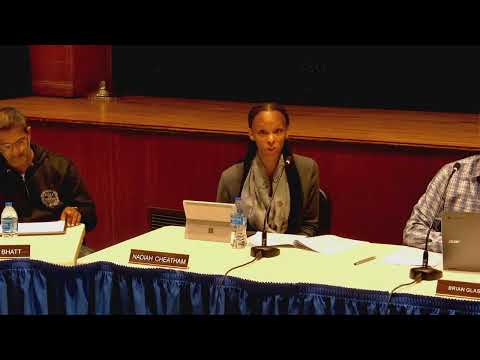
Board members praised the work and asked operational questions. Board member Mister Glassberg said the presentation showed the program was “more than money” and praised the sustained effort. Miss Cheatham asked about provider capacity, saying, “What are you seeing the capacity like with the current school psychologists? Are they fully utilized?” Herzog responded that school psychologists perform direct services, risk assessments, safety plans and consultation, and that a major goal is to build capacity among classroom teachers and paraprofessionals so more staff can support students’ needs.
Herzog said the district will focus next year on continuity and sustainability as schools are reconfigured and on adding supports to help students navigate sensitive topics in class content. He thanked Janine Bonacisa, the district’s director of special services, and Alana Curtain, supervisor of school counseling, and noted Heather Mills is Curtain’s interim replacement.
The board did not take formal action on the presentation; the session was an informational report and discussion.