Get Full Government Meeting Transcripts, Videos, & Alerts Forever!
Get email alerts on the Transportation topic
No spam. Unsubscribe anytime.
Danvers planning board reviews transportation needs assessment; members prioritize pedestrian safety and downtown measures
Summary
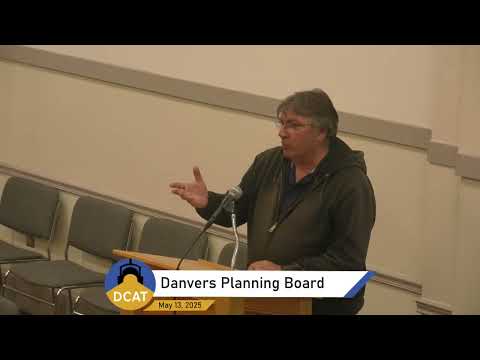
Danvers Planning Board members on Tuesday discussed draft recommendations in a transportation needs assessment prepared with the Metropolitan Area Planning Council that they say should guide short-term steps and longer-term planning.
Danvers Planning Board members on Tuesday discussed draft recommendations in a transportation needs assessment prepared with the Metropolitan Area Planning Council that they say should guide short-term steps and longer-term planning.
The board highlighted pedestrian safety and downtown needs as immediate priorities while asking staff and MAPC for more supporting data and a fuller draft chapter that could feed into a future master plan.
Why it matters: board members said an updated Complete Streets prioritization plan could unlock state construction grants of up to $500,000 for local projects, and residents urged quicker work on sidewalks and crosswalks in high-pedestrian areas.
At the meeting Josh Morris, principal planner for the Town of Danvers, described four headline recommendations from MAPC: (1) update the Complete Streets prioritization plan, (2) promote existing transit services that operate in Danvers, (3) consider zoning changes to reduce minimum off‑street parking for new development, and (4) develop a downtown parking management plan. Morris said the Complete Streets plan is five years old and that MassDOT recommends updating prioritization plans every five years. “Importantly, having an updated prioritization plan will enable the town to unlock up to $500,000 in construction funding to implement one or more projects identified in the plan,” Morris said.
Board members focused discussion on which recommendations are most actionable now. Tim Spiddle, a planning board member, said he wants to see the underlying data used to generate the recommendations before setting a firm hierarchy: “It’s hard for me to prioritize when it’s like, yeah. I can tell you about my experience. Parking downtown’s never been an issue for me, so that’s not really high on my list,” he said, adding he supports measures that are “easily actionable” with the data in hand.
Several members, including Jim Sears and Jean Hartnett, said they would prioritize pedestrian safety and measures that benefit downtown. Sears argued the town should bundle elements of recommendations 1, 2 and 4 to concentrate state funding and local effort downtown as new housing comes online: “If we can get up to a half million dollars to use toward focusing on downtown…we could add parking, put in infrastructure improvements and promote the transit services people don’t know about,” Sears said.
The board and staff discussed what the Complete Streets update would involve: planning and engineering staff would assemble and rank a list of candidate infrastructure projects (sidewalks, crossings, bike lanes, intersection work) that would compete for grant funding. Morris and board members noted the funding is competitive and that awards are discretionary; an application might win some or all of the requested amount.
On transit promotion the draft recommends a town-led outreach campaign to raise awareness of services such as the Salem Skipper, the senior shuttle, MBTA and CATTA buses and the Logan Express, with materials available in English and Spanish, a centralized web page and outreach to employers and community groups. Morris said those steps are relatively low-cost and could be advanced quickly.
On parking and zoning, MAPC’s draft recommends lowering minimum parking requirements for multifamily housing outside the downtown core and re-examining commercial parking tables. Morris and board members said a parking‑use update is justified; the board noted the town’s last downtown parking study dates to 2015 and several members recommended a more recent utilization analysis before making major policy changes.
Public comment: several residents urged expedited work on sidewalks and pedestrian safety. Bill Bradstreet, a town meeting member, asked whether grant funds could be used for education or outreach; Morris said the Complete Streets construction grant supports physical infrastructure and is not intended to fund driver-education programs. Lois McKenzie, a town meeting member, said, “The sidewalks are horrible,” and urged prioritizing sidewalk repair in neighborhoods that residents use daily.
Next steps: board members asked staff to return with the full transportation chapter or a fuller draft that includes the data and appendices used to arrive at the recommendations and to coordinate with MAPC on next steps. Morris said staff would consult with MAPC and return with a follow-up item; board members suggested that easily actionable items (improved information and wayfinding for parking and transit) could be advanced quickly while larger policy changes be studied further.
Board context: the discussion drew multiple board members and public commenters and lasted the majority of the evening’s agenda item. Members asked staff to provide supporting data (existing-conditions analysis, utilization counts, crash/incident data) and to present a next draft that lays out implementation steps and likely timing for grant opportunities.
Ending: The board did not take a vote on any of the recommendations; members asked staff to compile the technical back-up and return with a fuller draft and implementation plan for further discussion.