Get Full Government Meeting Transcripts, Videos, & Alerts Forever!
Get email alerts on the Utilities Operations topic
No spam. Unsubscribe anytime.
Fulshear staff recommend bringing water and wastewater "inside-the-fence" operations in-house to cut costs, improve oversight
Summary
Utilities director Ben Glenn presented a plan May 13 to bring water and wastewater operations that are "inside the fence" at city facilities under city control. He said doing so could improve security and oversight and produce estimated savings after an initial investment.
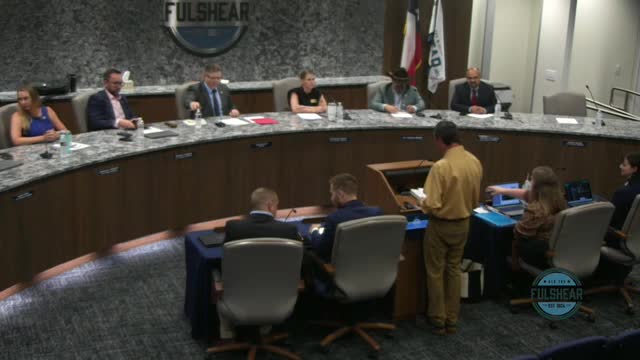
Fulshear utilities director Ben Glenn presented a proposal to the City Council on May 13 to shift in-house the "inside-the-fence" portions of the city's water and wastewater operations: production, lift stations and reclamation facilities.
Glenn told the council that the city currently relies on a private contractor (Inframark) for broad operational control and that the contract structure has made budgeting and oversight difficult. "Infomark is a great company. They operate in multiple states. They run, you know, hundreds of thousands of connections," Glenn said, but added that "they're also a private company. Their job is to make a profit." He described examples of billing descriptions and markups that he said limit transparency, citing a recurring invoice line that billed $190 for a Master Lock replacement and other small-item markups.
Glenn said bringing "inside-the-fence" work in-house would require roughly eight additional full-time operators and initial purchases of trucks and tools, and that there would be an overlap period while city staff trained alongside contractor operators. "We can do it with 8 people, provide them trucks and tools," he said. Glenn estimated the move could save about $250,000 in the first year and up to $500,000 in subsequent years once one-time equipment purchases are complete. He said some contractual work already has been brought in-house (lab services and sludge hauling) and that chemicals could follow.
Councilmembers asked about hiring, certification and retention. Glenn said the city currently has three utility maintenance technicians, a supervisor and a utilities manager, and that existing staff included two licensed operators (water operator A licenses for Glenn and Don) plus technicians pursuing additional certifications. He described training and certification timelines: shadowing existing contractors for three to four months and multi-year licensing paths for higher operator classes. "If you put the money up enough, it'll get there," one councilmember said in response to recruitment concerns.
The presentation flagged other implementation items the council would need to budget for, including SCADA (supervisory control and data acquisition) systems and cyber-security measures tied to automated controls. Glenn said those elements are part of upcoming budget planning: staff will include the positions and program in the draft budget; the draft budget is expected to be presented in July with the new fiscal year and positions effective with the October budget start if approved.
Council members expressed broad support for moving forward. There was no formal vote; Glenn was directed to include the plan and performance indicators in the coming budget documents for council consideration.