Get Full Government Meeting Transcripts, Videos, & Alerts Forever!
Get email alerts on the Public Safety Domestic Violence topic
No spam. Unsubscribe anytime.
Safe Haven Tarrant County briefs Bedford council on domestic-violence services; served 20 Bedford residents in 2024
Summary
Safe Haven of Tarrant County officials told Bedford council members the county provider served 20 Bedford residents in 2024, outlined shelter and high‑risk response services and asked the city to increase local awareness and partnership opportunities.
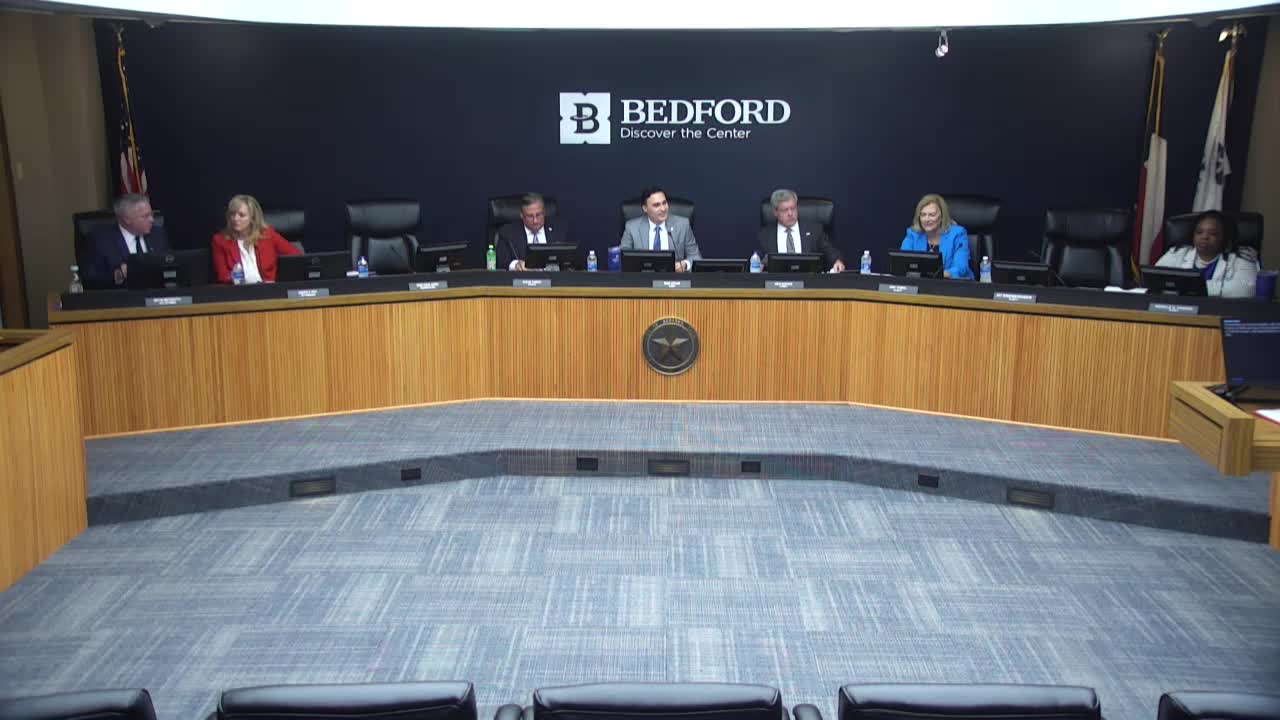
Safe Haven of Tarrant County, the county’s state‑designated domestic-violence provider, briefed the Bedford City Council on May 13 about its services, high‑risk response work and local impact, including help to 20 Bedford residents in 2024.
Rona Huckaby, chief of mission for Safe Haven, told council members the agency operates the county’s two domestic‑violence shelters and the only 24‑hour domestic‑violence hotline in Tarrant County. Safe Haven also runs a high‑risk team and a strangulation response initiative that works with hospital emergency departments. Huckaby said the shelter system and the agency’s offender‑accountability programs are evidence‑based and that the group publishes an annual fatality‑review report.
Huckaby said Safe Haven’s 2024 impact report shows the organization served 15 families from Bedford (20 individuals total), provided emergency shelter to several Bedford families and delivered nonresidential services—case management, counseling, play therapy—to others. She told council members there were no intimate‑partner homicides in Bedford in 2024 but that neighboring jurisdictions had recent homicides, underscoring the regional risk.
“Women who have been strangled in their relationship are 750 times more likely to be murdered in that relationship,” Huckaby said, urging the council to support outreach, hospital partnerships and awareness campaigns. She described Safe Haven’s prevention‑of‑abuse program for offenders (PAIP), including court‑ordered completions, and explained that the agency seeks funding from federal, state and private sources in addition to local donors.
Council members asked about funding and service expansion to local hospitals. Huckaby said most funding is federal and that Safe Haven receives state-designated support for Tarrant County; she said the organization is seeking to expand hospital partnerships in the Mid‑Cities area and invited Bedford to help spread awareness and host outreach presentations.
No council action was taken; Huckaby asked the city to consider outreach opportunities and to refer churches, civic groups and potential donors to Safe Haven’s programs and needs list.