Get Full Government Meeting Transcripts, Videos, & Alerts Forever!
Get email alerts on the Taxes Small Businesses topic
No spam. Unsubscribe anytime.
Small-business owners urge council to preserve $100,000 exemption and scale back proposed tax changes
Summary
Small-business owners and trade groups told Philadelphia City Council during a public hearing that proposed changes to the wage, business income and receipts, and realty transfer taxes would squeeze family-run businesses; speakers urged preserving the $100,000 BERT exemption and seeking more targeted relief.
Small-business owners and trade-group representatives urged Philadelphia City Council on Tuesday to preserve a $100,000 business exemption and to scale back proposed changes to local business and wage taxes that they said would harm family-run firms.
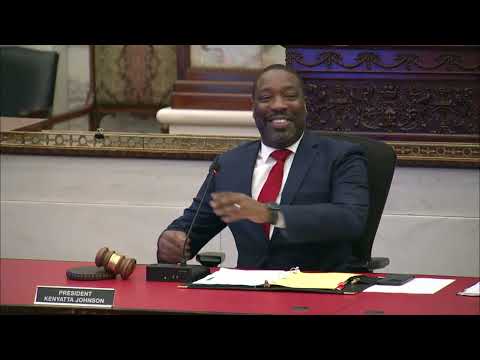
The testimony came during a public hearing convened as the Committee of the Whole considered a slate of ordinances and a five-year financial plan tied to the mayor’s proposed FY 2026 operating and capital budgets.
"These are not large corporations. These are family-run shops, community anchors," Benjamin Wong, president of the Greater Philadelphia chapter of the Asian Real Estate Association of America, said in his two-minute public comment. "We want to stay here. We want to hire, reinvest, and grow. But we need a tax environment that supports that, not one that makes it harder." Wong and other speakers said the proposed removal of the $100,000 BERT (business exemption) would tax small firms before owners paid themselves or staff.
Speakers from the Asian Real Estate Association and the Asian American Chamber of Commerce also raised concerns about ripple effects tied to the administration’s housing plan, including a proposed bond issuance. Minh Nguyen, representing ARIA and the Asian Chamber partnership, said the administration’s housing action plan — described in testimony as a $2 billion initiative to build and preserve units with an $800 million municipal bond component — raised questions about assessment-driven displacement and the financing and repayment assumptions underpinning any transfer-tax increase.
"We have concerns regarding economic and environmental impacts, ... gentrification, displacement due to artificial inflation of the assessment of property taxes, underwriting of the municipal bonds, the repayment schedule," Nguyen said.
Clarifying details offered by witnesses included an example of the current real-estate transfer tax cited by one speaker as 4.2 percent on transactions, and multiple references to the mayoral proposal’s elimination of the $100,000 exemption for business taxes. Speakers asked council to consider targeted reductions in the wage tax and business income-and-receipts tax rather than broad rate changes that they said would reduce investment and hiring.
Council staff opened the hearing by reading dozen-plus labeled ordinances and a resolution on the calendar, including measures described as amendments to wage and net-profits taxes, changes to the business income and receipts tax, and realty-transfer proposals (bills numbered 250195, 250199, 250211 among others).
Speakers said they would submit written testimony and financial analyses to council for further review. No formal council action or vote took place during the public-comment period covered in this hearing; the testimony will be part of the record as council members and staff weigh changes in subsequent committee meetings and markups.
For now, business owners and trade groups asked council to prioritize tax changes that protect very small firms and to provide clearer fiscal modeling before adopting across-the-board reductions or removals of exemptions.