Court approves EMS career-pathway class with schools and mental-health counseling for EMS staff
Loading...
Summary
The fiscal court approved a memorandum of understanding with local schools to deliver an EMS EMT course on the high-school campus beginning 2025–26 and approved a small annual contract for mental-health screenings and counseling support for EMS staff.
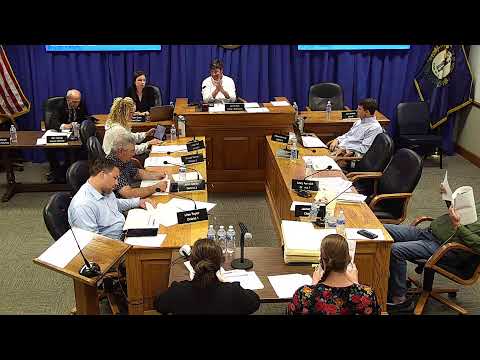
Woodford County Fiscal Court approved two EMS-focused workforce and wellness actions: a school-year EMS career-pathway class to train local students and a mental-health wellness contract to provide one-on-one screening and referral services for EMS staff.
Director Freeman Bailey told the court the county will deliver EMT instruction at the school’s planned vocational technical center starting in the 2025–26 school year under a draft memorandum of understanding. The school will provide classroom space, cover books and testing costs and is expected to support the instructor financially. The pilot class is capped at 10 students; Bailey said nine students had signed up and explained the program aims to reduce travel time students currently spend traveling to off-site EMT instruction and to offer dual-credit college hours. Students completing the program will be able to sit for National Registry testing near the end of the school year.
The court moved, by motion, to approve the draft memorandum of understanding contingent on school-board approval and authorized Judge Kaye and Director Bailey to finish negotiations. The motion passed unanimously.
In a related personnel-wellness decision, the court approved an annual $3,066 proposal from Compass (presented by freelance counselor Blake Jones) to provide mental-health screening, individual sessions and referral assistance for the county’s EMS staff. Director Bailey described the service as a one-on-one, confidential screening designed to identify employees who may need follow-up counseling or referral to longer-term care. The county framed the Compass arrangement as a pilot for EMS first responders with high exposure to traumatic incidents; the motion passed unanimously.
Bailey emphasized workforce needs: roughly 95% of his current EMS staff live outside the county, and several experienced staff are nearing retirement, making a local recruitment pipeline and early training a priority. He also described shifting the workforce so an instructor can be in the classroom full time and a replacement staffer assigned to operational shifts.
Ending The EMS training MOU and the mental-health contract both passed the court, but the career-pathway MOU remains contingent on the school board’s approvals. The court directed staff to continue negotiations and return with finalized agreements or bid results as required.