Get Full Government Meeting Transcripts, Videos, & Alerts Forever!
Get email alerts on the Public Meetings Remote Access topic
No spam. Unsubscribe anytime.
County counsel, IT directors debate remote-attendance language ahead of ordinance second reading
Summary
Josephine County counsel and IT staff discussed whether draft county code should track recent state statute language requiring reasonable opportunity for remote access to business sessions; second reading and final vote were scheduled for the county business session two days later.
Josephine County officials discussed whether the county—ode should duplicate or track new state statutory language requiring that members of the public be provided, "to the extent reasonably practicable," an opportunity to access and attend business sessions by telephone, video or other electronic means.
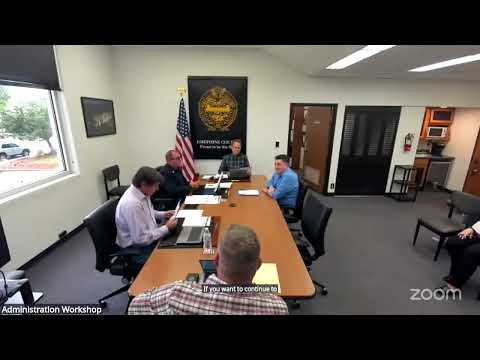
At the county administrative workshop on May 13, County Counsel and IT Director Richard Sellers reviewed a draft amendment slated for second reading and final vote at the business session on Thursday. Counsel said the draft is "slated for second reading and final vote" and that feedback from IT directors had been circulated to the commissioners.
Sellers told the board the statute llows local jurisdictions to opt out if providing remote participation creates an "undue burden," and said the county currently lacks the capacity to let members of the public call in or Zoom into business sessions that include public comment. He noted the county broadcasts meetings live on YouTube and archives recordings for later review.
Commissioners pressed the county's IT director on what technology or expenditures would be required to offer remote attendance. Sellers said adding true remote-attendance capability could require new systems and additional costs and that any new solution would need to be judged "reasonably practicable" by the board. He also said the county faces challenges around link distribution, connectivity, and the lack of a reliable mechanism to mute or block disruptive callers in real time.
County Counsel recommended against duplicating statutory language in the ordinance because "the ORS supersedes our ordinance," and suggested streamlining county code so it does not impose stricter requirements than state law. The draft ordinance, as written in the packet, includes language close to the statute; counsel and staff said that, if the legislature later changes the ORS wording from "access and attend" to "access or attend," duplicative county language could inadvertently become more restrictive.
The board was told the ordinance is on the schedule for a second reading and final vote at the business session two days after the workshop, and that it would take effect 90 days after adoption. Commissioners agreed to consider whether to adjust the draft before that vote and asked staff to be prepared with cost estimates and proposed technical solutions if the board wants to require remote attendance capability.
The discussion made clear the county currently satisfies public-review obligations via streaming and archives but may need to weigh cost and operational trade-offs before committing to full remote-interactive access for business-session public comment.