Get Full Government Meeting Transcripts, Videos, & Alerts Forever!
Get email alerts on the Public Transit topic
No spam. Unsubscribe anytime.
Prince George's County Council hears five-year transit vision plan; briefing becomes informational after quorum lost
Summary
Department of Public Works and Transportation presented CR-57-2025, a proposed five-year transit vision plan that emphasizes bus-stop upgrades, six high-capacity corridors, five microtransit zones and phased implementation; presentation became informational when the meeting lost quorum and no vote was taken.
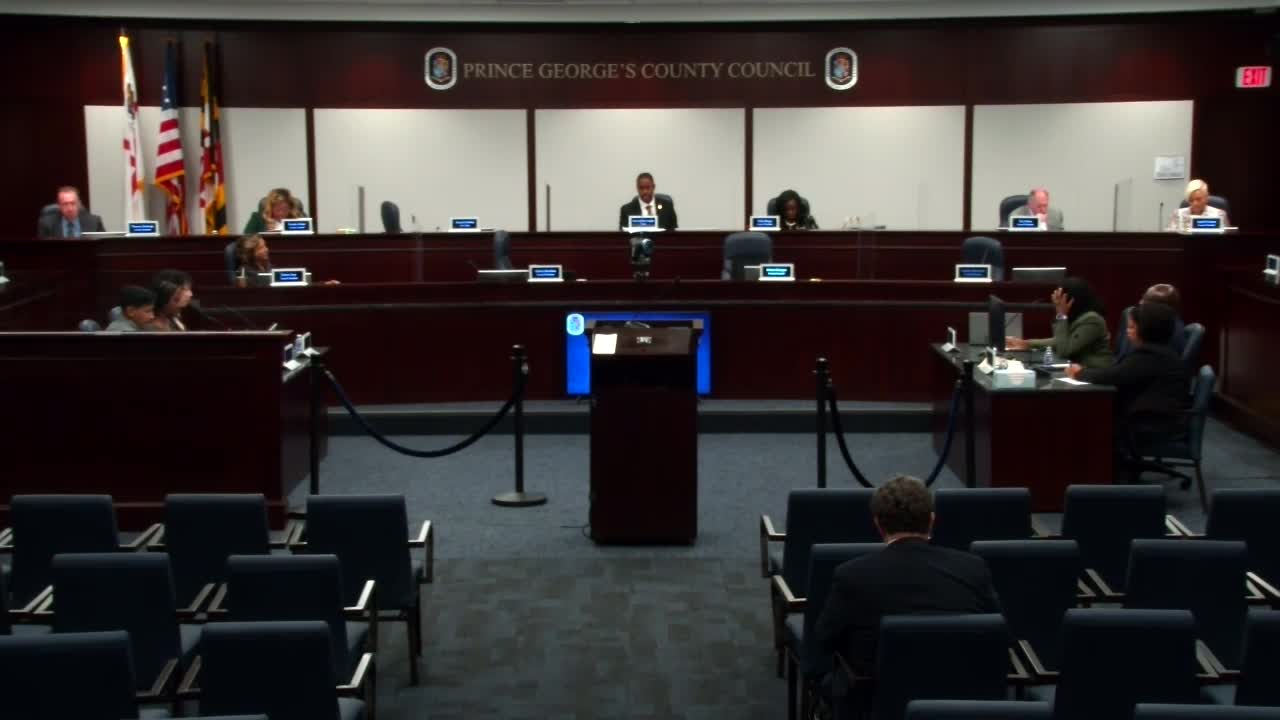
Prince George's County Council members received an informational presentation on CR-57-2025, the county's proposed five-year transit vision plan, during a Committee of the Whole meeting May 13. Staff from the Department of Public Works and Transportation outlined priorities including bus-stop upgrades, six high-capacity transit corridors, five microtransit zones and a phased implementation schedule, but no formal vote occurred after the meeting lost quorum.
The plan, presented by Oluseyi Olubenle, deputy director of the Department of Public Works and Transportation, is intended to be the county's official guiding document for public transit over the next five years. Council members were told the plan packages recommendations, implementation steps and monitoring so the work is actionable rather than merely advisory.
DPW&T staff said the plan couples local service changes with the Washington Metropolitan Area Transit Authority (WMATA) Better Bus Network redesign and emphasizes reliability, frequency, operating hours and accessibility. According to staff, outreach included more than 80 public-engagement events across the county. The presentation identifies needs for upgraded bus stops and shelters, ADA-accessible boarding, improved lighting and sidewalk connectivity, and new mobility hubs tied to transit-oriented development.
“ My name is Oluseyi Olubenle, deputy director of the Department of Public Works and Transportation,” Olubenle told the council when opening the briefing. Yifan Appanti, the department’s chief of transit planning, described the plan’s phased approach and service goals and said staff intend the plan to be implementable within five years.
Staff described three implementation phases: short-term projects expected in one to three years; mid-term projects targeted for three to five years; and longer-term efforts that may extend beyond five years. The plan also identifies six high-capacity corridors for future emphasis (including US 1 and MD 210/Indian Head Highway) and proposes five county microtransit zones to improve short-trip accessibility for older adults and riders with disabilities.
Council members asked questions about timing and specific improvements. Council Member Olson asked whether the county plan would run concurrently with WMATA’s Better Bus Network rollout; staff said WMATA’s public engagement is already underway and indicated WMATA will launch its changes June 29 while the county’s related launch is planned for June 30. "So this is gonna run concurrent with that?" Olson asked during the meeting.
Council Member Watson pressed for detail on geographic coverage and station-level improvements, noting constituent concerns about changes in routes and bus-stop locations in Bowie. Watson also asked about two Capital Bikeshare installations in Greenbelt (near Eleanor Roosevelt High School and Greenbelt Metro) and asked staff for a timeline; staff said the bike-share coordinators were not present but that staff would follow up.
Yifan Appanti said the plan includes an inventory and study of existing stops to address ADA accessibility and shelter placement, and acknowledged that "not all bus stops can have shelters, but we know that, improving the comfortability of our riders is important." Staff explained that requests for bus-stop changes are typically routed through the county’s 311 system, which prompts a field review and safety-based siting decisions.
Because the committee lost quorum during the presentation, Chair Burrows declared the briefing informational and no formal action was taken on CR-57-2025. The meeting concluded after a motion to adjourn moved by Council Member Blaguey and seconded by Council Member Watson; the motion carried and the committee adjourned.
Next steps described by staff included finalizing a draft of the transit vision plan, launching a dedicated website for public comment by mid-June and beginning stakeholder engagement on implementation strategies in the summer.