Get Full Government Meeting Transcripts, Videos, & Alerts Forever!
Get email alerts on the Budget topic
No spam. Unsubscribe anytime.
Woodstock presents $86.2 million proposed fiscal 2026 budget; funds new firefighters, parks bond work and a 4% water rate increase
Summary
City staff presented a balanced $86.2 million proposed fiscal 2026 budget that funds 12 new firefighter positions, advances Little River Park work from the 2024 parks bond and includes a 4% water rate increase; council will consider the first votes at its next meeting.
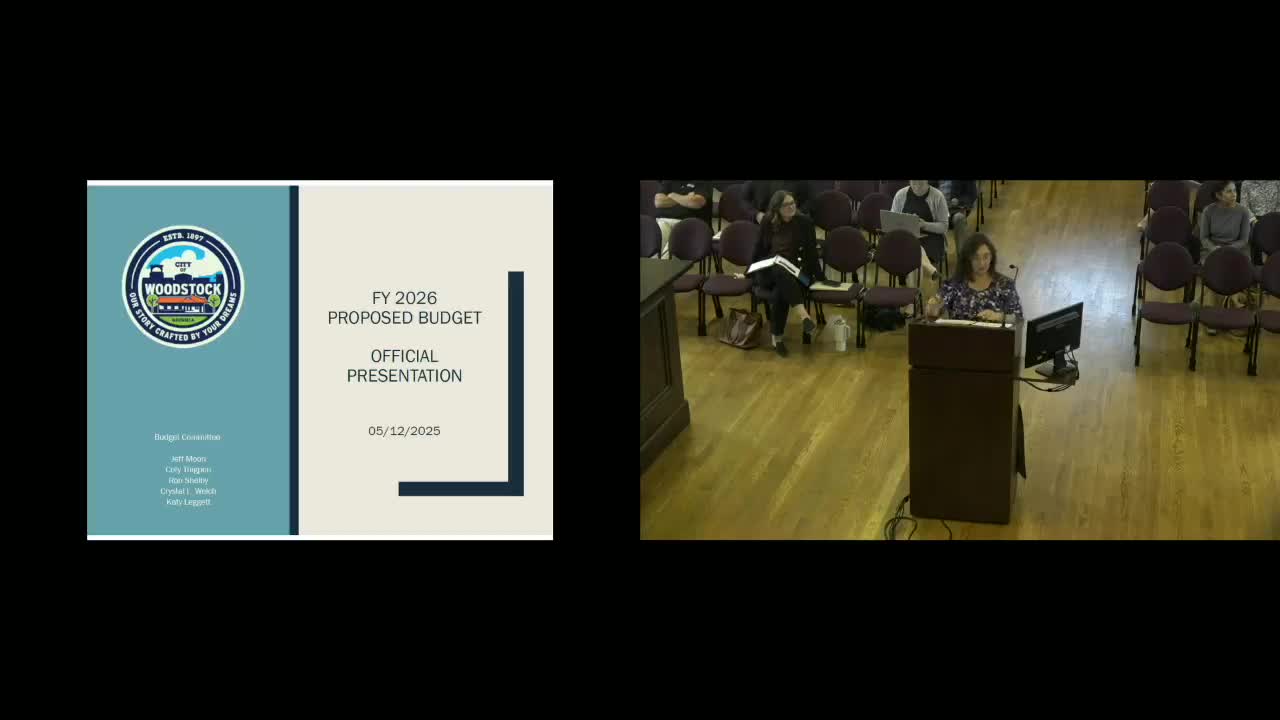
Woodstock Mayor Michael Caldwell and city staff presented the proposed fiscal year 2026 budget during the May 12 regular meeting, describing a citywide spending plan of about $86.2 million and policy changes that would fund new firefighters, capital projects and a modest cost‑of‑living adjustment for employees.
The proposed budget, presented by city staffer Crystal, would increase total citywide spending about 6 percent over fiscal 2025 and keeps the tax rate unchanged at the moment. It includes a $32.3 million general fund; a $14.0 million water and sewer fund with a proposed 4 percent water rate increase effective July 1; and continued spending from the 2024 parks general obligation bond, including about $12.5 million for Little River Park in 2026.
City staff told council that the proposal is balanced across funds and rests on several assumptions: estimated 2 percent new construction growth for property tax projections, a 2 percent cost‑of‑living adjustment (COLA) for most employees capped at $2,000, a merit pool averaging roughly 3 percent citywide (effective in April), and use of $1.5 million from health fund reserves to offset operating budgets. Property and casualty insurance costs were shown rising substantially (staff noted a 41 percent projected increase), and the city plans to pre‑fund deductible exposure in a new internal service fund.
Personnel and public safety were highlights of the plan. The proposal would add 14 full‑time positions (one part‑time municipal court bailiff and 14 full time), including 12 new firefighter positions; nine of the new firefighters would be funded from September through June, three for half a year because of training timing. Police and fire are budgeted at a 96 percent staffing assumption (4 percent vacancy) for FY26. The city would also adopt a 9 percent increase to pension contributions at actuarial recommended levels.
Capital projects called out in the presentation include a new capital project fund for Ridgewock Parkway and the I‑575 diverging diamond interchange (multi‑year; right‑of‑way acquisition funded in FY26), replacement and upgrades at the wastewater treatment plant, sewer main rehabilitation and several road and sidewalk projects funded in part by SPLOST 7 and external grants. Staff also noted a plan to place an order for a new fire engine in advance of a long lead time, with payment due on delivery.
Council members thanked staff for the volume of work put into the proposal and emphasized that the plan prioritizes infrastructure, parks and public safety without proposing a tax increase at this time. City Manager Mr. Moon said formal votes will begin at the next council meeting and that this presentation represents the first of three briefings. Council asked staff to bring back final numbers and amendments as required; staff confirmed the digest and millage adoption timeline remains tied to county certification in the summer.
The council did not vote on the budget on May 12; formal readings and votes are scheduled at upcoming meetings.
Meeting context: staff said digest notices from the county are delayed this year and the certified digest typically arrives in July, with millage adoption in August. Council and staff repeatedly emphasized the presentation was informational and that the first votes will occur at the next meeting.