Get Full Government Meeting Transcripts, Videos, & Alerts Forever!
Get email alerts on the Elections Technology Accessibility topic
No spam. Unsubscribe anytime.
Commissioners approve purchase of poll pads and accessibility tablets for every polling location after public testimony from deaf-rights advocates
Summary
Bexar County approved cooperative purchases to replace aging poll laptops with 750 full-featured electronic poll pads and an additional 350 handheld/curbside units to provide deaf-accessible services (via DeafLink) and improve curbside voting; the decisions followed extensive public comment from deaf community members.
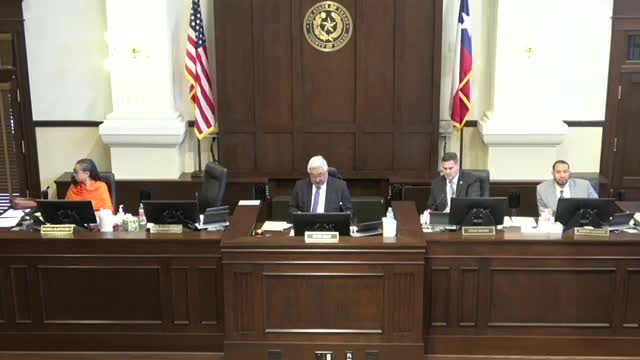
Bexar County Commissioners Court on May 13 approved cooperative purchases to replace legacy poll laptops with modern electronic poll pads at every polling site and to add portable units for curbside and deaf-accessible voting.
The court first approved the purchase, via the Texas BuyBoard cooperative (contract 71023), of 750 poll-pad cellular “express vote” all‑in‑one hardware-and-software units, at a total cost of $998,500. That motion was made by Commissioner Clay Flores and seconded by Commissioner Calvert and passed by voice vote. The court then approved a separate purchase of 350 poll-pad cellular curbside/express all‑in‑one units for $355,500 to support curbside voting and DeafLink interpretation services; the motion was made by Commissioner Rodriguez and seconded by Commissioner Calvert and also carried (one abstention was recorded on the second motion).
Elections Administrator Michelle Stewart (referred to in the meeting as Michelle/Stewart) told the court the new tablets will replace the county’s current laptop-based check-in stations, streamlining set-up for poll workers and providing built-in accessibility features from the devices’ platform. The vendor, No Inc., represented by Steel Shippey, described a deployable “stand” with a patented ID-scan tray, a rotating screen for poll worker / voter view, and a rugged protective case for curbside use.
Stewart said the 750-unit purchase would give each polling location two check-in stations and that the additional 350 units would add extra portability and an option for a third station where needed. Commissioners discussed implementation timing and training; several said the county should avoid rushing the rollout into the imminent June runoff and ensure poll workers receive adequate training. The elections office confirmed laptops will remain available for the June runoff if the county chooses a later full deployment, but staff said they could implement the new systems for the runoff if the court directs them to do so.
Members of the deaf and disability community gave extended testimony in support of the purchase. Speakers—including Kaye Chiodo, Melanie Cawthorn (technical advisory committee for persons with disabilities), Larry Lios, Juan Carcoba, and Cassel Grice—described long-standing barriers to accessible voting and urged immediate approval so American Sign Language interpretation via DeafLink could be available at all polling locations. Advocates said permanent, county‑owned devices would build trust by providing consistent access rather than the “hit-or-miss” availability that had existed previously.
Commissioners and staff also addressed operational questions: the unit scans standard ID barcodes on Texas driver’s licenses to pull voter records, does not store ID images, supports reasonable-impediment workflows, and will use the county’s existing printers for ballot printing at express‑vote stations. Purchasing staff confirmed the recommended procurement path is a cooperative BuyBoard contract (No Inc. through BuyBoard contract #71023).
After debate about rollout timing and device counts, the court approved both purchases. The elections office will proceed to finalize the cooperative purchase, execute any required budgetary transfers, and implement training and logistics for polling sites.