Get Full Government Meeting Transcripts, Videos, & Alerts Forever!
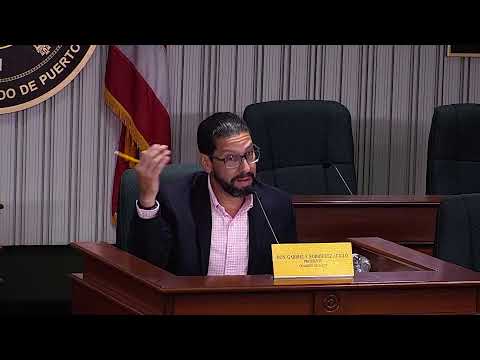
House Health Committee hears conflicting testimony on bill to let providers charge 'commercially reasonable' rates
Summary
San Juan — The House Health Committee held a public hearing May 13, 2025 on Proyecto de la Cámara 132, a bill by Representative Navarro Suárez that would amend Article 48.030 of the Código de Seguros de Salud to allow providers to charge “commercially reasonable” rates to insurers when an individual or family (direct-pay) plan’s contracted payment does not cover the provider’s total cost.
San Juan — The House Health Committee held a public hearing May 13, 2025 on Proyecto de la Cámara 132, a bill by Representative Navarro Suárez that would amend Article 48.030 of the Código de Seguros de Salud to allow providers to charge “commercially reasonable” rates to insurers when an individual or family (direct-pay) plan’s contracted payment does not cover the provider’s total cost.
Supporters at the hearing, including the Department of Health and representatives from the Office of the Commissioner of Insurance, said the bill aims to protect patients from surprise out‑of‑pocket bills while preventing financial losses for providers. Víctor Ramos Otero, secretary of health, told the committee the measure seeks a balance between protecting patients and ensuring providers remain financially viable. A representative for the Office of the Commissioner of Insurance recommended defining “tarifa comercialmente razonable” in the bill and said the office could contract actuaries to produce the technical study the law would require.
Insurers and industry groups — including Plan de Salud Menonita, Triple‑S, and ACODESE — testified in opposition or expressed serious reservations. They warned that allowing providers to bill insurers amounts to interference with private contracts between insurers and in‑network providers and would introduce large actuarial uncertainty. Wildalis Serra Ortiz,…
Already have an account? Log in
Subscribe to keep reading
Unlock the rest of this article — and every article on Citizen Portal.
- Unlimited articles
- AI-powered breakdowns of topics, speakers, decisions, and budgets
- Instant alerts when your location has a new meeting
- Follow topics and more locations
- 1,000 AI Insights / month, plus AI Chat