Get Full Government Meeting Transcripts, Videos, & Alerts Forever!
Get email alerts on the Civil Commitment Review topic
No spam. Unsubscribe anytime.
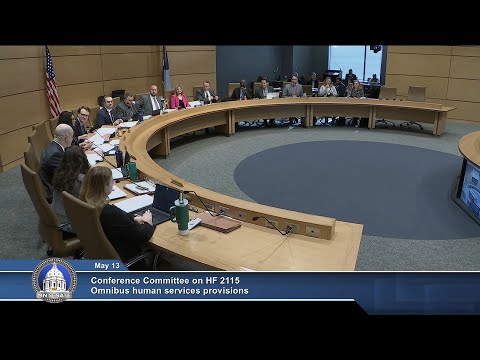
Conference committee debates repeal of special review board for civil commitments; prosecutors and victims raise concerns
Summary
A Minnesota legislative conference committee debated removing the Special Review Board from reductions-in-custody proceedings and shifting those reviews to a judicial appeal panel, a change that county attorneys and victim advocates said could curtail opportunities for victims and local prosecutors to be heard.
A Minnesota legislative conference committee reviewing House File 215 debated a provision that would eliminate the Special Review Board (SRB) used in some civil commitment cases and move review of petitions for reduction in custody to a judicial appeal panel.
Proponents said the SRB process is duplicative and that judicial review already provides a full de novo review of petitions; opponents said removing the SRB would reduce opportunities for victims and county attorneys to present concerns before decisions about release or reduced custody are made.
The debate unfolded during a staff-led walk-through of the human services policy bill and during public testimony. Otter Tail County Attorney Michelle Eldeen told the committee she opposed removing the SRB, saying the panel brings specialized forensic expertise and an independent review that can differ from department recommendations. “That knowledge and oversight with this bill appears to be lost,” Eldeen said, adding the SRB gave counties and victims a formal venue to raise objections before reductions in custody were advanced.
Sen. Jonah Rasmussen (R) and other members flagged a statutory clause in the draft that would require the judicial appeal panel to conduct a de novo review, meaning the panel would consider the matter anew rather than giving weight to SRB findings. Nonpartisan staff pointed members to the side-by-side where the line removing language appears (253D.028, subdivision 3 in the comparison document). Rasmussen and several county attorneys said current practice allows victims and counties to participate in SRB proceedings and to place information in the record prior to judicial appeals.
House members supporting the change characterized the SRB as a lingering, duplicative step that in practice is ignored by the judicial panel when making final release decisions. Rep. Luke Frederick said the statute effectively requires the judicial panel to disregard SRB findings, making the SRB an unnecessary step. Representative Mahmoud Noor and others described the change as a technical cleanup to remove a process that does not affect ultimate judicial outcome. Rep. Frederick said removing the SRB “saves time” without “getting more people out into the community.”
Victim advocates and county attorneys urged pause and further study. The committee received a letter from a constituent, Amber Simonson, identified in public remarks as a victim who opposed the change. Senator Rasmussen said the Minnesota County Attorneys Association also objected to removing the SRB because, in their view, it reduces the ability of victims to oppose petitions on their own.
Committee discussion also touched on caseload and timing questions. A member described roughly “more than 250” SRB cases annually and “about 60” judicial appeal-panel cases, and said the overall process can take more than a year (a figure given to the committee during discussion). Members on both sides emphasized they wanted to protect victims’ notice and participation rights while eliminating redundant procedures.
Department of Human Services representatives did not advocate the SRB repeal as a DHS policy proposal, committee members said, and direct care and treatment staff were reported as not supporting the change. Several senators urged that the provision be deferred for additional hearings, noting the issue had not been the subject of a full Senate committee hearing during the session and that stakeholders — including county attorneys, victims’ groups and forensic experts — should have an opportunity to testify fully.
No formal vote on the SRB language occurred during the session recorded here. The committee recessed at the end of the day and indicated members could reconvene for further work.
Ending: The conference committee left the SRB provision unresolved pending additional review and stakeholder discussion. Members signaled they may continue work in later sessions or in the interim to refine language that preserves victims’ opportunity to be heard while addressing process redundancies.