Get Full Government Meeting Transcripts, Videos, & Alerts Forever!
Get email alerts on the District Budget And Taxes topic
No spam. Unsubscribe anytime.
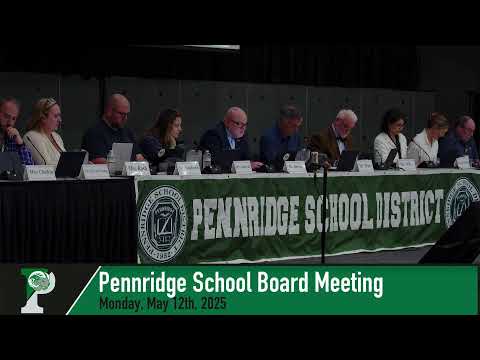
Pennridge board approves proposed 2025–26 budget in first vote, setting up a tax increase
Summary
The Pennridge School District board voted 5–3 in a first of two budget votes to approve a proposed 2025–26 general fund budget that the administration says requires a tax increase to cover contract and enrollment-driven shortfalls. The board and public speakers emphasized teacher contracts, cyber-charter funding, and use of reserves.
The Pennridge School District Board of School Directors voted 5–3 in the first of two budget votes to approve the district's proposed 2025'26 general fund budget, setting the stage for a local property tax increase the administration says is needed to close a multi-million-dollar shortfall.
Board President Wirtz said the administration recommended a tax increase after the board and staff cut roughly $6.5 million from the district's proposed spending but still faced a remaining shortfall of about $3.3 million. "By voting against the tax increase, we're not acknowledging that our prior decisions have consequences, but playing political games during an election," Wirtz said during his opening remarks.
Why this matters: The administration presented the increase as necessary to pay for recent collective bargaining agreements and to avoid drawing down reserves in ways it warned would jeopardize programs and future capital needs. The proposed budget listed revenues and expenditures balanced at about $163,159,000 on the Pennsylvania Department of Education form referenced at the meeting.
Board and administration case for the increase Chief Operating Officer Sean Dahlberg (identified in the meeting) and multiple board members described the main drivers behind the shortfall as the recent PEA and PESLA contracts for teachers and support staff and a long-term funding formula that sends money to cyber charter schools. The board cited the contracts'combined effect on salary and benefits as a principal cost pressure: the administration said payments to those employee groups rose from about $98.3 million in the year before the contracts to roughly $103.9 million under the new agreements, a change the district described as about $5.8 million.
The board highlighted other constraints: declining earned-income tax receipts (the administration noted a roughly 3% decline), flat real-estate tax collections year over year, and anticipated reductions in federal COVID-era funding sources. Several board members said using fund balance to cover the shortfall would be fiscally risky and could harm the district's bond rating or future borrowing costs.
Public comment and community reaction Several members of the public urged the board to approve the tax increase to preserve programs and staff. Sherry Lee of Hilltown Township told the board, "Raise my taxes, please. I am absolutely okay with it," if it means fixing buildings, paying teachers and support staff, and keeping extracurriculars. Other speakers, including Tom Gough and Jane Kramer, urged advocacy on cyber-charter funding reform at the state level and thanked the board for a recently passed resolution calling for legislative action.
Opposing views and concerns Some commenters and board members criticized prior governance choices and called for alternatives to immediate tax increases, citing the district's fund balance and the timing of capital needs. Board discussion included repeated suggestions to continue looking for efficiencies (including position reviews when vacancies occur), pursue state-level cyber-charter funding reform, and seek other revenue or grant opportunities before enacting tax changes.
Cyber charter funding and state advocacy Board President Wirtz and multiple public commenters pointed to House Bill 1372 (as referenced at the meeting) as legislation that could reduce payments to cyber charter schools and ease local tax pressure. Speakers urged residents and board members to contact state legislators, including Senator Jared Coleman (named at the meeting), to press for changes to the funding formula.
Other items decided at the meeting The board also approved a range of routine and committee items during the session, including curriculum approvals, facilities items tied to a safety-and-security grant, contract renewals, membership in the Pennsylvania School Boards Association, and student activity club recognition. Several of those votes were unanimous or near-unanimous; the budget vote itself passed 5'3 in this first reading. The board noted a second, final budget vote will occur later in accordance with state procedural deadlines.
What happens next Board members said staff will continue to refine projections, pursue grant opportunities (including work tied to a $450,000 safety and security grant noted elsewhere in the meeting), and engage with families who have chosen cyber charter options as the district considers both short- and longer-term strategies. A final budget adoption vote is scheduled per district procedure; the administration and several board members urged residents to review past finance committee meetings for fuller detail on the fiscal analysis presented.
Ending note: The board emphasized the decision was difficult and described it as an attempt to balance fiscal responsibility with maintaining programs and staffing that district officials and many residents said are critical to student outcomes.