Get Full Government Meeting Transcripts, Videos, & Alerts Forever!
Get email alerts on the Municipal Budget topic
No spam. Unsubscribe anytime.
East Greenwich holds public hearing on FY 2026 manager’s budget; town departments outline priorities
Summary
Town Manager and department heads presented the proposed FY 2026 operating budget, outlining rising expenses for debt service and public safety, investments in capital projects and technology, and community programs; council continued the hearing to May 19 for remaining departments.
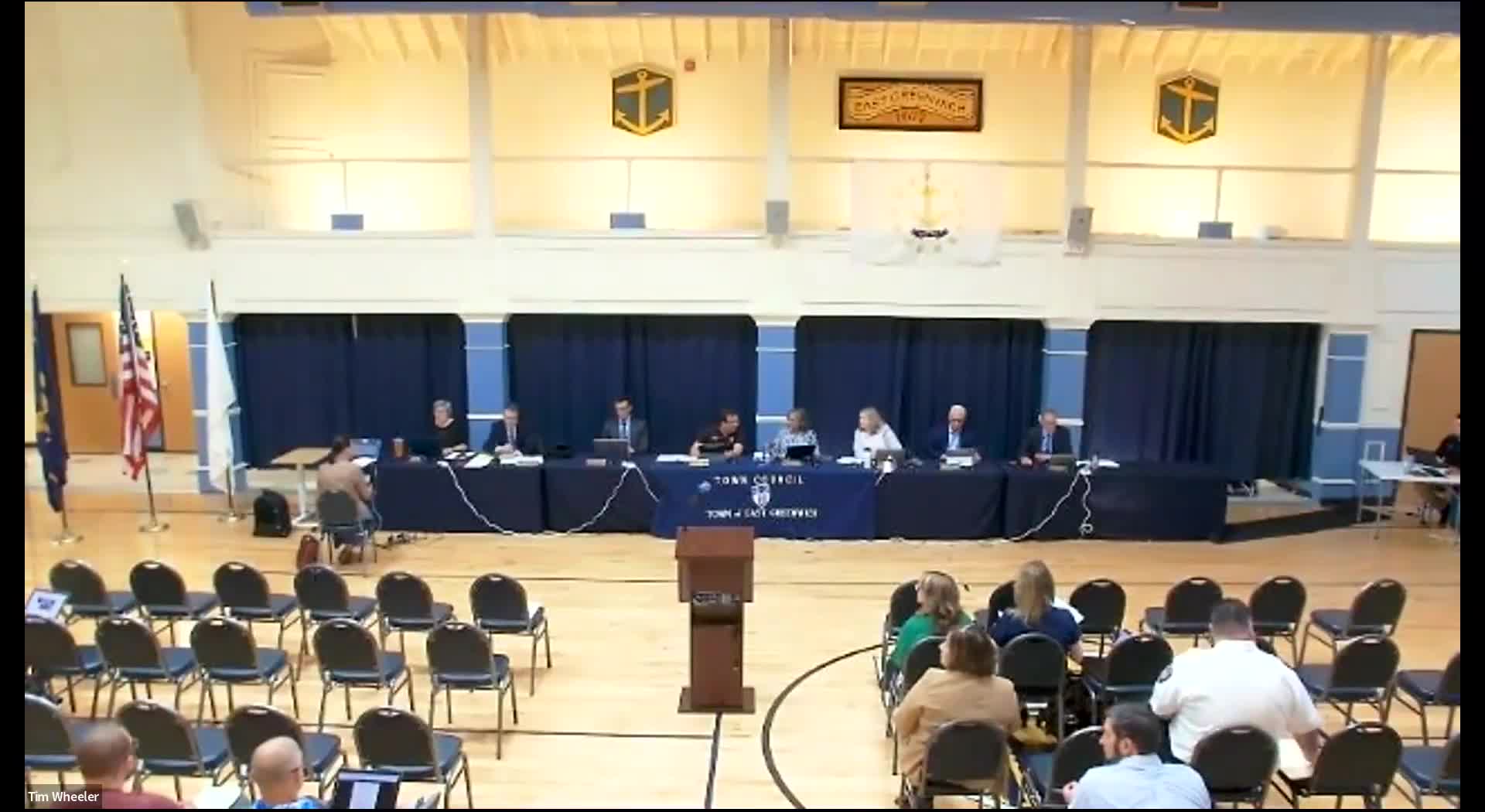
East Greenwich officials presented departmental overviews and the town manager’s proposed operating budget for fiscal year 2026 during a public hearing on May 12. Town Manager Andrew Nada and department directors outlined priorities that include continued capital investment, technology upgrades, public safety spending and expanded community programming.
Nada said the manager’s proposed budget was publicly posted May 1 as the town ordinance requires and that the council will vote on a final budget on or before June 10. He noted the manager’s recommended tax transfer to the schools is marked at the 4% maximum transfer recommended in the initial budget presentation and discussed an initial tax-levy petition that currently sits at 4.93% for planning purposes as the assessor finalizes role value calculations.
Finance Director Trish Bridal summarized revenue and program totals: the town’s total program (including schools and proprietary funds) stands at about $90.5 million; the general-fund program supported by local taxes is roughly $28.5 million; the school total (not including federal dollars) is about $50.2 million. Bridal said the proposed school transfer would increase approximately $1,650,000 (4%), to just under $43 million, and noted the town’s debt service and personnel costs are significant budget drivers.
Department directors presented highlights and priorities:
- Rose Amelio, administrative services manager, described personnel and HR initiatives — a Health Matters wellness program with peer-recognition and small incentive grants, an employee handbook under review and plans to automate personnel actions in Munis to reduce paper processes.
- Maria Bucci, director of Prevention and Support Services, described a coalition model focused on substance-abuse prevention, community education and building partnerships with the schools, faith-based groups and businesses. Bucci said opioid grant funds remain available but cautioned many coalitions are concerned about federal funding uncertainty; the department’s FY26 line shows increased program funding with a modest personnel reduction tied to grant timing.
- Trish Bridal and her finance team said priorities include sustaining the town’s bond rating, enhancing financial reporting, expanding contactless payment and e‑services, and completing audits. The finance department continues to emphasize a high collection rate — historically above 98% — and is implementing Munis enhancements for online payments and reduced in-person processing.
- Tim Wheeler, information technology director, reviewed major IT work: cybersecurity investments, consolidation of multiple data feeds into Munis, migration of GIS to the cloud, and a multiyear replacement of dispatch and radio systems tied to a 9‑1‑1/dispatch modernization project. Wheeler said the town has used ARPA and other funds to upgrade network capacity and plans additional phases of the dispatch project that could be operational as early as October.
- Andy Wade, community services director, described parks, recreation and senior services priorities including the Swift Community Center expansion (state-funded addition), ongoing park renovations (including Eldridge and Donny Bowen courts), Scalloptown dog‑park planning and expanded summer and youth programming supported by Learn365 funding.
- Fire leadership described staffing, training and equipment investments. The department plans to add a deputy chief position and to restore a dedicated training budget to allow in‑house and offsite training programs; the department also noted large line items such as hydrant charges and apparatus maintenance.
Councilors and staff noted shared challenges: recruitment and retention of municipal staff, health‑insurance cost pressure, cybersecurity threats and managing multi‑year capital programs such as school construction, highway garage replacement and Main Street rehabilitation. Manager Nada listed additional major forward-looking projects, including ongoing school construction work, a proposed fleet/facilities replacement for the highway garage, street-light acquisition, a comprehensive plan rewrite and other resiliency initiatives.
The council voted on routine items during the session: it approved the April 28 minutes (5-0), pulled the May 5 minutes for later amendment, and voted to continue the public hearing to May 19 to cover remaining departments (5-0). The hearing continues on May 19 when the council will receive presentations from the library, town clerk, planning, public works and police departments.
The public hearing remains open; residents may submit comments and the council will take the final budget vote before the statutory deadline in June.