Get Full Government Meeting Transcripts, Videos, & Alerts Forever!
Get email alerts on the Fy26 Budget Salary Schedule topic
No spam. Unsubscribe anytime.
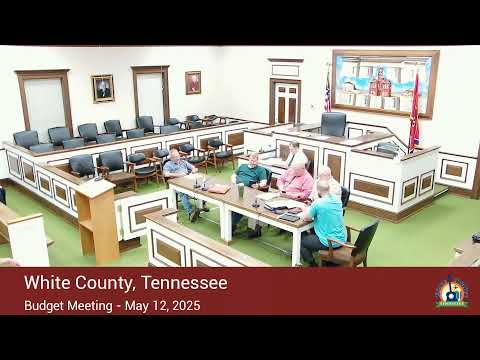
White County budget committee debates FY26 general fund gap, proposed salary schedule and staffing requests
Summary
Committee members spent extensive time on a proposed countywide salary schedule and FY26 general fund projections, discussing a $3.68 million shortfall, potential tax-rate implications, staffing priorities (EMS, sheriff, central maintenance) and options for longevity pay and tiered experience increases.
White County Budget Committee held an extended discussion of the fiscal 2026 general fund budget, a countywide salary schedule proposed by finance staff, and several staffing requests. Members did not adopt a final budget but identified priority positions to carry forward for more detailed review.
County staff presented a general‑fund projection showing estimated revenues of about $18.2 million at the certified tax rate used in the packet and projected expenditures of roughly $21.9 million if all requested items are funded — leaving a gap the finance director summarized as: “We are $3,680,000 short,” the finance director said in the meeting record.
The finance director (Chad) presented a draft salary schedule divided into groups and proposed adjustments, explaining the model’s intent to reduce pay compression across similar roles countywide. The draft included a baseline part‑time rate and grouped positions into tiers with different pay ranges and an example scenario that moved many positions to higher groupings. Chad said the combined effect across the general, solid waste and highway funds would be roughly $1.5 million in additional salary and benefits under the proposed scale.
Committee members debated how best to structure raises and retention incentives. Key discussion points included:
- Whether to use a flat percentage increase across the board versus a grouped structure tied to job similarity and experience. - How to treat public‑safety positions (sheriff’s deputies, EMS) so promotion and longevity don’t create bottlenecks where front‑line staff out-earn supervisors. - Longevity pay versus tiered pay by years of service; the committee discussed a longevity bonus (the draft included an example of $100 per year of service) and a three‑tier approach (0–5 years, 6–10 years, 10+ years) with suggested differentials. - Comparisons to neighboring jurisdictions (Sparta, DeKalb, Fentress) for competitive pay lines, particularly for patrol deputies and EMS personnel.
On public‑safety staffing, committee discussion repeatedly returned to the sheriff’s department and EMS. The sheriff’s office requested additional patrol deputies and vehicles; the committee discussed moving patrol deputies and sergeants into higher groups to be competitive with surrounding counties. For EMS, members considered adding four shift positions or making an assistant director full time to reduce overtime and heavy truck utilization; the EMS requests also included vehicle remounts and a new ambulance, which staff said were time‑sensitive procurement items.
Several non‑salary and capital items were also debated. Committee members agreed to carry forward key items for further review (examples that survived to the next round included: EMA director to full time, a full‑time parks and recreation director, additional clerical staff in the county executive’s office, EMS shift positions/assistant director, four patrol deputies, and two central‑maintenance mechanic positions). The committee directed staff to rework some capital requests (e.g., ambulance remount schedule and vehicle upfitting budgets) and to explore alternatives (procurement, shared services, donated equipment) where possible.
On timing and next steps, committee members scheduled follow‑up meetings and asked staff to return with revised scenarios that reduce the gap between projected revenues and expenditures. The committee set additional work sessions (not a final budget vote) and agreed to identify definite cuts and priority keeps before the committee’s final recommendation to the county commission.
No final appropriations or tax‑rate decisions were made at the meeting; the record shows the committee recessed with the work plan to refine salary-group assignments, examine non‑salary cuts, and prepare a budget recommendation to present in the coming weeks.