Get Full Government Meeting Transcripts, Videos, & Alerts Forever!
Get email alerts on the Disaster Mitigation Funding topic
No spam. Unsubscribe anytime.
Mitigation director urges flexible disaster-mitigation funding; ‘AGR 1’ motion approved for first reading
Summary
Stefania Stevens, mitigation director for the California Residential Mitigation Program, urged more flexible federal and state mitigation funding to address increasing climate-driven disasters in California. A motion labeled “AGR 1” was put on first reading and recorded as approved in a roll call.
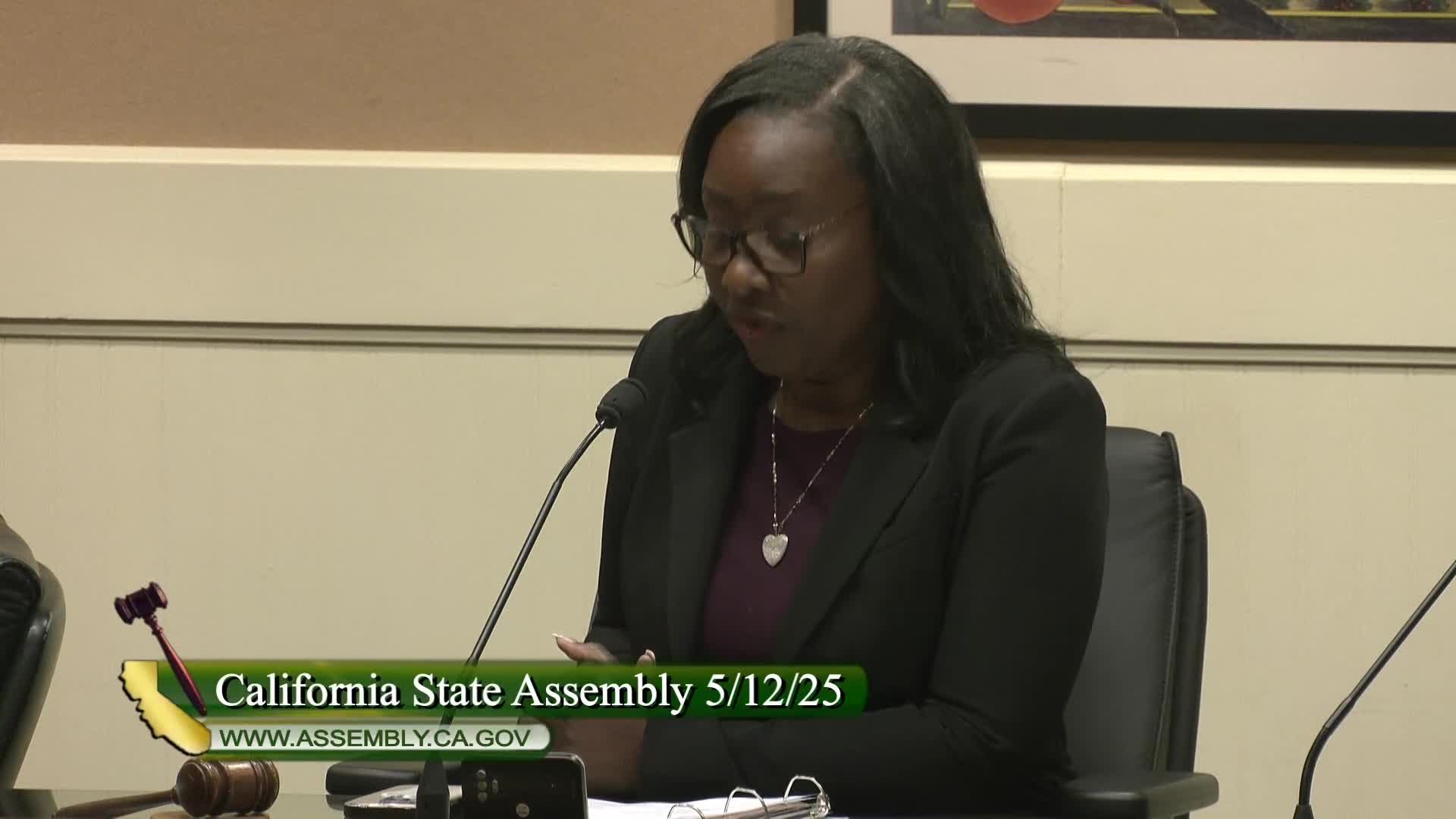
Stefania Stevens, mitigation director for the California Residential Mitigation Program, told the meeting that California communities face growing climate-driven hazards and need flexible mitigation funding to prevent and recover from disasters.
Stevens described increasing frequency of wildfires, floods and other extreme weather events in California and said mitigation and recovery funding must not be interrupted by rigid program rules. She said federal, state and local funding streams all play roles and told members that the program regularly makes grants to help communities prepare for and respond to disasters.
Stevens said some mitigation awards to support recovery and preparedness have been in the range of $4,000,000 (amount cited in testimony). She described the need to fill “critical prefencing gaps” so projects already underway are not left underfunded if a funding source is discontinued or restructured.
Meeting discussion emphasized that mitigation work ranges from planning to construction and that projects already in construction face particular financial risk if funding is paused. Members and presenters discussed the need for funding that can cover both recovery from recent disasters and investment in future risk reduction.
Later in the meeting, members moved and recorded a roll-call in favor of a motion identified in the transcript as “AGR 1” to place the associated bill or item on first reading. The transcript records members voting in the affirmative with the following names as read: Ransum; Hadwic (also listed as Hadvic in the record); Rambila (also listed as Rembila); Bains; Banet; Colderown; and De Maio. The transcript line concluding the roll call states, “the bill is out,” indicating the motion to adopt AGR 1 for first reading was approved as recorded.
The meeting included multiple presenters and members raising questions about program eligibility, funding sources and how to avoid interruption of ongoing projects. No final program rule changes were adopted during the discussion; the recorded formal action was the AGR 1 first-reading motion noted above.
Proponents urged federal and state action to maintain or restore flexible hazard-mitigation grant funding so local projects can continue, while members asked staff to note funding risks to projects already underway.