Get Full Government Meeting Transcripts, Videos, & Alerts Forever!
Get email alerts on the Public Works Curb Cut topic
No spam. Unsubscribe anytime.
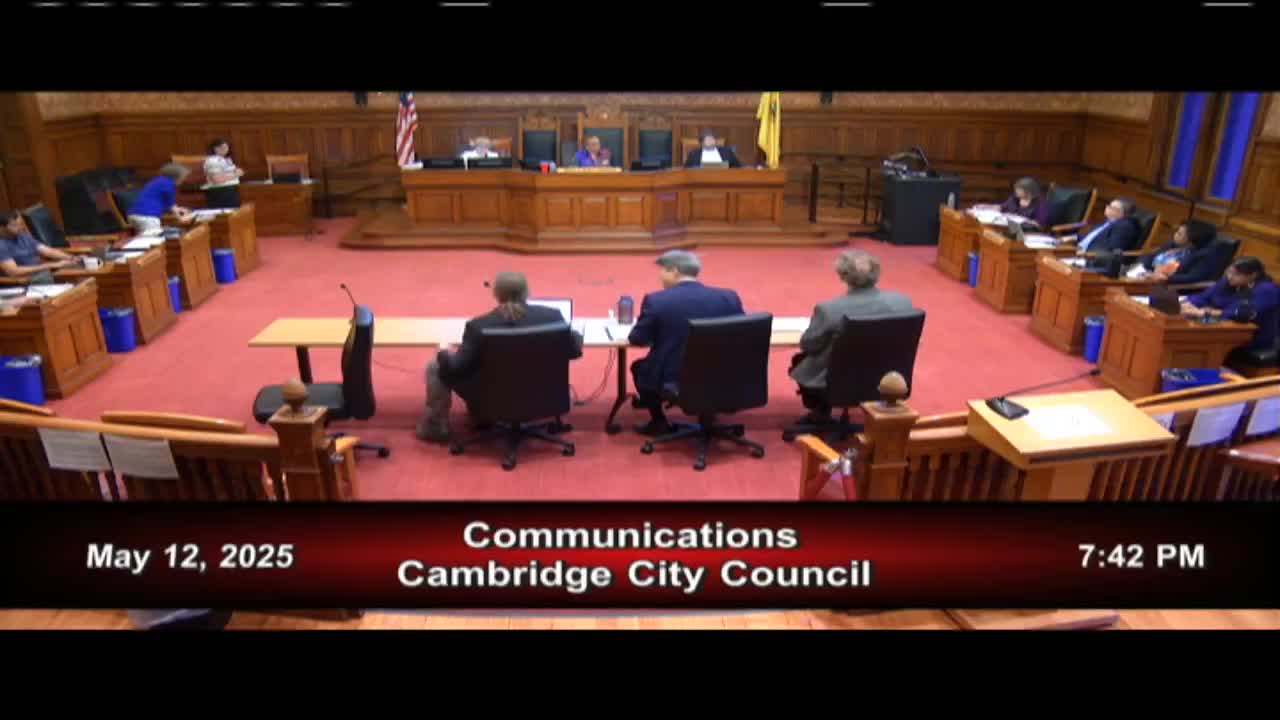
Council approves contested Alpine Street curb cut despite neighbor opposition
Summary
The council approved a driveway curb-cut application for a property on Alpine Street after divided public comment and two councilors recording present votes; the motion passed with five ayes, two nays and two members present.
The Cambridge City Council voted to approve a curb-cut application for a property on Alpine Street despite several immediate neighbors objecting to the change and asking the council to preserve the street’s existing character.
Why it matters: Curb-cut approvals convert public street space to private driveway access and have a direct effect on on-street parking, sidewalk continuity and neighborhood character. Because many permitting steps for property changes do not formally collect neighborhood consent, the council is often the only municipal body that hears direct resident concerns on curb-cut requests.
Public comment and neighborhood reaction: Councilor J. Nolan raised neighbor opposition in public comment, saying several residents on the block had filed written disapproval and expressing concern that the request would create parking and safety issues on a narrow street. The Fresh Pond Residents Alliance wrote that the application would set an “undesirable precedent” because front-yard parking is not typical on the block.
Applicant and council discussion: Petitioners mentioned medical and accessibility reasons for the requested front-yard access. Council discussion emphasized the need for objective curb-cut criteria; Councillor Toner said future rulemaking should avoid turning approvals into popularity contests. Some councilors noted alternatives such as a single-side driveway or designated accessible curb-space.
Vote: The council recorded five votes in favor, two against and two members recorded as present; the application was approved.
Next steps and context: Councilors said they expect ordinance-level guidance to be developed so future curb-cut decisions can rely on objective criteria and neighborhood impacts rather than ad-hoc petitions. The decision will stand as the applicant proceeds with permitting and construction under the city’s pavement and sidewalk rules.
Ending: The council’s action underlined tensions between neighbor preferences, accessibility needs and the council’s limited role as the principal forum for contested curb-cut requests.