Get Full Government Meeting Transcripts, Videos, & Alerts Forever!
Get email alerts on the Neighborhood Retail Zoning topic
No spam. Unsubscribe anytime.
Council backs study and committee review of letting small retail operate in residential areas
Summary
After public comment for and against allowing limited first-floor retail in residential neighborhoods, the council amended the order to send draft zoning language to relevant committees for public hearings and discussion before ordinance drafting; the amended motion passed with one absence recorded.
The Cambridge City Council voted to send draft language that would allow limited first-floor retail in residential areas to a joint meeting of relevant committees for further public hearings and review before any zoning ordinance changes are drafted.
Why it matters: The city’s recent multifamily upzoning did not legalize many small, neighborhood retail uses by right, leaving longtime corner stores and small food businesses vulnerable during redevelopment. Supporters said allowing limited retail by-right in some residential districts would increase walkability and preserve neighborhood amenities; opponents urged caution, saying a blanket allowance could be hard to tailor by use and location.
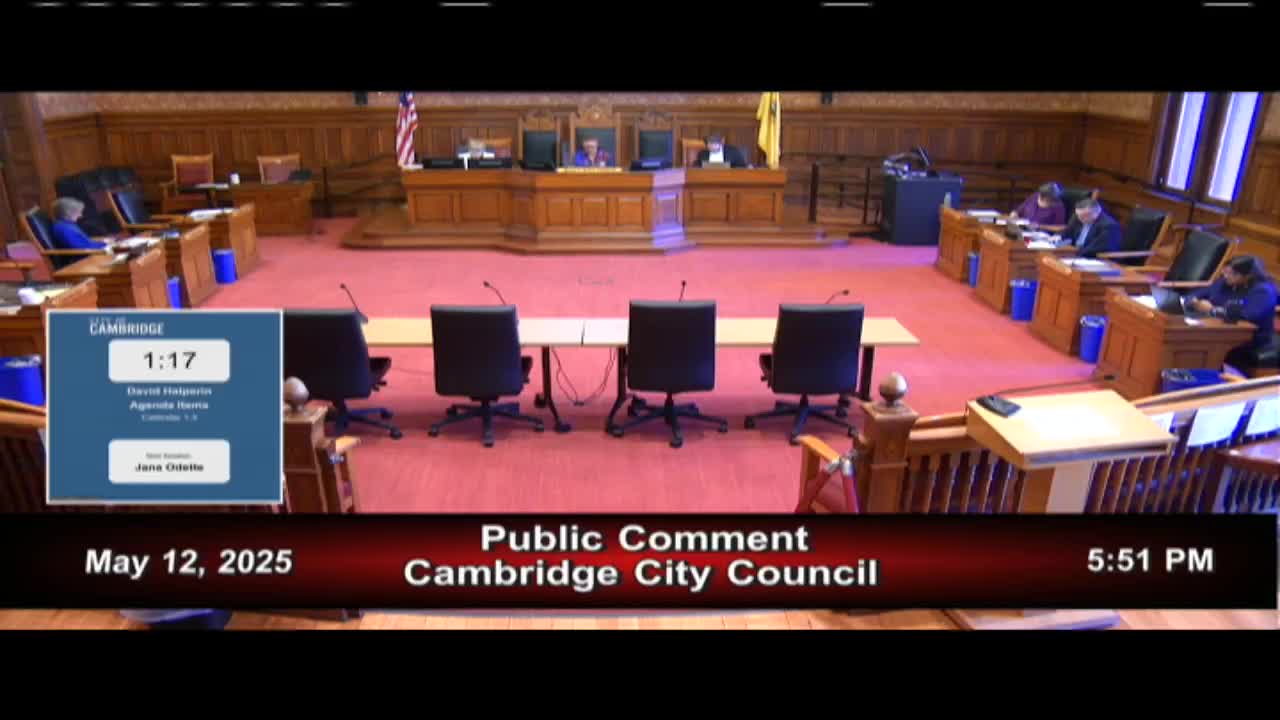
Public comment: Several speakers supported the measure as a way to preserve neighborhood bakeries, cafes and markets. David Halperin encouraged a narrowly tailored approach, writing in testimony and urging “Yes” to appropriate first-floor retail but “No” to labs and dance clubs. Hanan Rhodes told the council the Black Sheep Market and Asaro Bakery are “cornerstones” that face displacement under current zoning. Opponents argued a broad change could bypass neighborhood planning and be difficult to limit by use.
Council action: Councilors amended the policy order to require the Community Development Department to draft proposed zoning language and to refer that draft to a joint meeting of the Economic Development/University Relations Committee and the Neighborhood & Long-Term Planning Committee for hearing and discussion before the Ordinance Committee reviews it. Proponents said committee review will give neighborhood groups and small businesses a chance to weigh in before any ordinance language is finalized.
Vote: The amendment to send draft language to the joint committees was adopted on the council floor; the final policy order as amended passed by the council (eight yes votes; one member recorded absent).
Next steps: Staff will draft model language and start the committee review process; any ordinance change would require subsequent committee hearings and a formal council vote.
Ending: Councilors said they favored a targeted approach that preserves neighborhood retail while allowing committee-level deliberation to refine which uses and locations would be permitted.