Get Full Government Meeting Transcripts, Videos, & Alerts Forever!
Get email alerts on the Homelessness Shelter Vouchers topic
No spam. Unsubscribe anytime.
Council approves extra vouchers and orders planning for successor to Rise Up as Spalding shelter closes
Summary
After weeks of public comment from shelter residents and advocates, the council approved additional municipal housing vouchers and asked staff to scope a successor to the Rise Up cash-assistance program; the vote was 8-1 for the voucher/successor package.
The Cambridge City Council adopted an amended policy order on May 12 to add at least $1,000,000 (or 25 additional municipal housing vouchers, whichever is greater) for people affected by the impending closure of the Spalding Transitional Wellness Center and directed staff to provide a planning update on a successor to the Rise Up cash-assistance program by August 2025.
Why it matters: Spalding’s Transitional Wellness Center (TWC) has sheltered medically vulnerable and formerly unhoused residents. Residents and advocates told the council they feared being displaced without a clear transition plan. The motion responds to dozens of public commenters who pressed the council to prioritize vouchers and to continue direct-assistance programming.
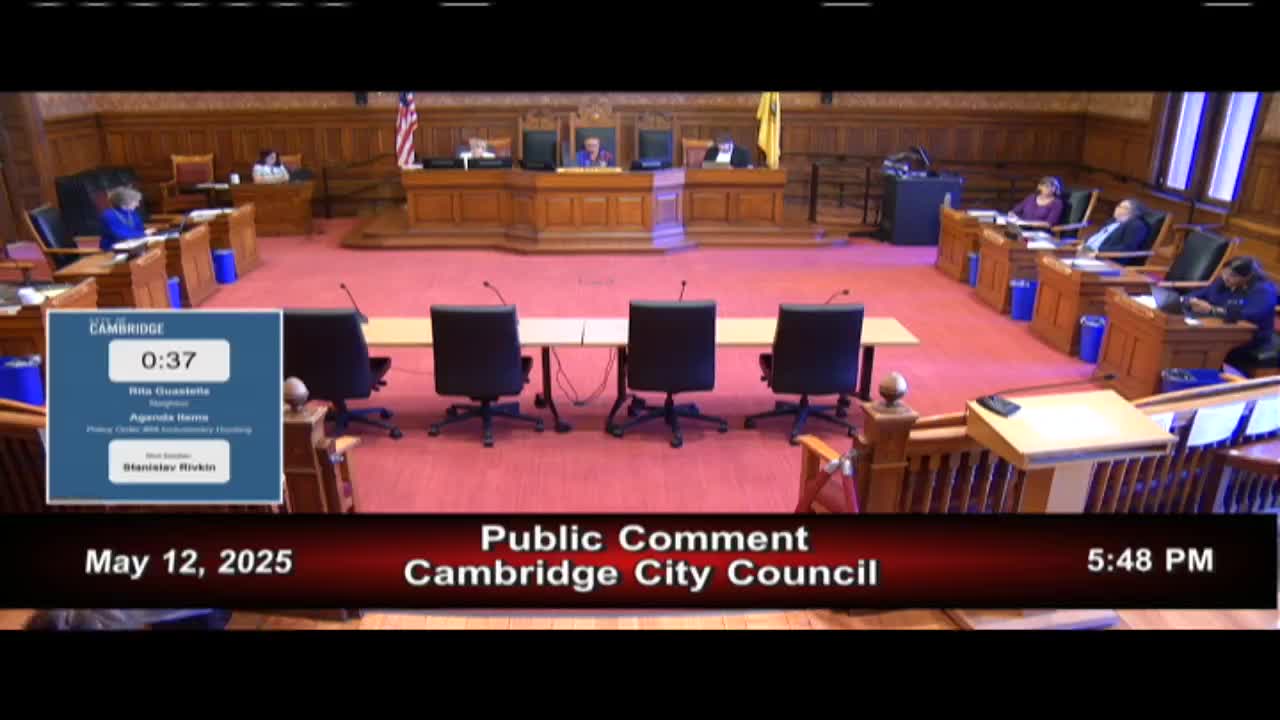
Public testimony: Residents of the TWC spoke about the program’s role in their recovery and stability and urged prioritization for housing help. David Heath, a TWC resident, said he reconnected with his 15-year-old son while housed at Spalding and pleaded, “Please support the vouchers.” Other residents and advocates — including Mohib Ahmed, Bonti Ganetti of Cambridge Housing Justice Coalition and Joe Quest Neubert — urged the council to prioritize current TWC residents for newly funded vouchers.
Council action: Councilors debated an array of budget and operational constraints and the difficulty of keeping the transitional center open. Vice Mayor McGovern described the vote as a compromise after repeated discussions with the manager and noted the city would develop eligibility and prioritization criteria. The city manager said staff could fit the additional voucher funding into the FY26 operating budget but warned prioritization and program scope must be defined.
Vote: The amended policy order — allocating at least $1,000,000 or approximately 25 municipal vouchers and asking staff to scope a Rise Up successor and report back by August 2025 — passed 8-1. Councilor Zuzi cast the lone “no” vote.
What it does and does not do: The order does not reopen the TWC; rather it authorizes additional voucher funding and asks for a plan to design and, if approved in a future budget, implement a successor to Rise Up. The council and staff emphasized that vouchers are subject to eligibility and existing placement processes; staff said TWC residents would be eligible to apply, but prioritization decisions would be made under the city’s standard processes unless the council directs otherwise.
Next steps: Staff will return to the council with a report on Rise Up successor scope and estimated costs by August 2025 and will work with shelter operators and service providers on voucher allocation criteria.
Ending: Council members described the vote as an imperfect but immediate response to residents facing displacement while leaving longer-term program design and prioritization to follow-up staff work and future budget decisions.