Get Full Government Meeting Transcripts, Videos, & Alerts Forever!
Get email alerts on the Education Funding topic
No spam. Unsubscribe anytime.
Brainerd School Board approves survey showing 59% support for tested $5.5 million operating levy
Summary
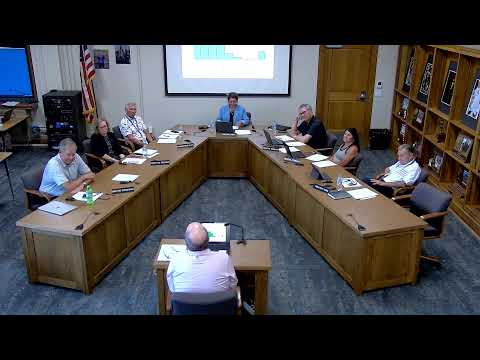
The Brainerd School Board voted to approve results of a 500-resident survey presented by consultant Peter Leatherman that tested support for a $5.5 million operating levy. The survey found 59% support for the tested levy ask, with a ±4.5% margin of error; the board agreed to review the findings further at a retreat.
The Brainerd School Board on Wednesday approved residential-survey results presented by consultant Peter Leatherman that tested community support for a $5.5 million operating levy aimed at maintaining class sizes and programs.
Leatherman told the board that researchers spoke with 500 randomly selected district residents, a sample he said is projectable to plus or minus 4.5 percentage points at a 95% confidence level. He said the interviews were conducted between Feb. 24 and March 7 and that 53% of respondents were cell-phone-only households.
The survey tested a $5.5 million operating levy described to respondents as a maintenance measure to “maintain class sizes and programs and avoid future budget cuts.” Leatherman said the tested levy would increase property taxes on a median-value $340,000 home by about $18 per month (about $218 per year). He reported 59% support and 35% opposition for that tested scenario. “If additional funds were approved they would be used to maintain class sizes and programs and avoid future budget cuts,” Leatherman said.
Why it matters: The district must secure voter approval to place an operating levy before taxpayers; the survey is intended to help the board decide whether to pursue a ballot measure and how to frame public communications. Leatherman advised that, historically, a 60% early-survey level is a helpful planning threshold and that campaigns often face an 8-point regression from early survey numbers to election-day votes.
Key findings and context from the presentation: - Methodology: 500 interviews; ±4.5% margin of error (95% confidence); average interview time about 10 minutes; nonresponse rate 6%. - Demographics: 26% of respondents have a child attending the Brainerd schools; 70% were classified as “empty nesters”; the typical respondent’s residency in the district was about 18 years. - Overall ratings: 87% rated the district’s quality of education favorably (higher than recent state norms cited by the consultant); 62% rated district financial management favorably. - Levy tolerance and message: Core support and core opposition each started at about 28%; 44% were described as persuadable. Leatherman said the single clearest distinction that moves voters is framing requested funds as a “need” (to maintain services) rather than an “enhancement.” - Property tax sentiment: The district’s level of property-tax hostility was lower than many Minnesota districts; Leatherman said the district is “under 50%” in the very-high/somewhat-high hostility category, versus a 2025 norm he cited near 62%. - Communications: Respondents said they receive information via mailings/newsletters (28%) and the district website (21%); preferences split between print (about 37% preferring mailed newsletter/local newspaper) and electronic (about 40% preferring website/email/social media).
Board action and next steps: Director Brecken moved and Director Edelman seconded a motion approving the 2025 residential survey results “as presented.” The board approved the motion by voice vote; no roll-call tallies were recorded in the meeting minutes. Board members said they will discuss the survey findings further at a scheduled retreat Wednesday morning and consider whether to pursue an operating-levy request and, if so, what size and messaging to use.
Consultant recommendation and caveats: Leatherman emphasized that survey results are a snapshot and that external factors—state and local tax announcements and general economic conditions—can shift voter sentiment between the survey and any election. He recommended prioritizing “needs” to persuade undecided voters and suggested that modestly reducing the levy ask could help move persuadable voters nearer to the 60% planning threshold. “You are at 59% on the operating levy,” he said, adding that careful campaign planning would be needed to maintain or increase that level of support.
The board did not take a vote on placing any levy on the ballot at the special meeting; it approved only the consultant’s survey report and scheduled further discussion at the retreat.