Get Full Government Meeting Transcripts, Videos, & Alerts Forever!
Get email alerts on the Local Programs topic
No spam. Unsubscribe anytime.
County programs show measurable gains in housing, suicide prevention and outreach, officials say
Summary
Los Angeles, San Luis Obispo and other counties described programs that pair CVSOs with local partners to lower veteran homelessness and suicide rates and to reach rural and justice‑involved veterans.
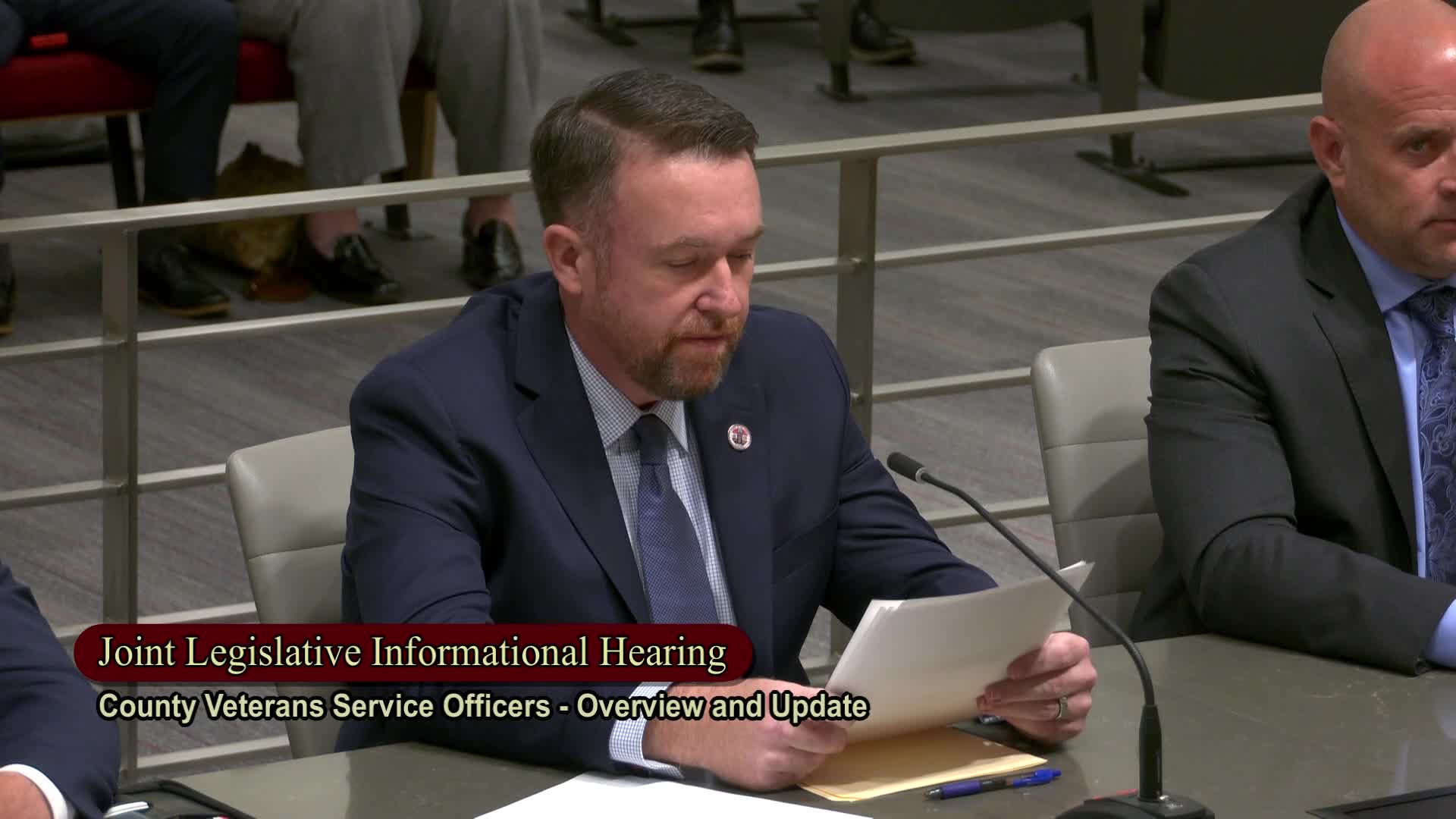
During the Sacramento hearing, county officials described local programs that expand the reach of CVSO offices and produce measurable outcomes in housing placement, suicide prevention and outreach to underserved veterans.
Jim Zenner, Los Angeles County Director of Military and Veteran Affairs, described the county’s Veteran Peer Access Network (VPAN), a program that deploys 45 trained veteran peer navigators across the county to help veterans connect with services. Zenner said VPAN “has served between 3 to 4 and a half thousand veterans and their family members a year” and that the county has seen “over a 20 percent reduction in veteran suicides” since VPAN’s inception. He also said coordinated county–VA partnerships increased placements of veterans into permanent housing by “over 42% per year” and achieved a 22.9% reduction in veteran homelessness from February 2023 to February 2024.
San Luis Obispo County Veteran Service Officer Morgan Boyd described a CalVet‑administered mental‑health services act grant that funds co‑located telehealth and in‑person care through Transitions Mental Health and said the county participated in over 33 outreach events in six months, engaging about 1,900 veterans. Boyd said the county is the most northern county in its VA medical region and leads the state in veteran suicide per capita; the grant and CalVet support, Boyd testified, are intended to expand access in rural areas.
Placer County CVSO Richard Johnson offered case examples showing the local economic effect of awarded benefits, and several witnesses urged lawmakers to quantify the economic return from increased federal benefit awards and recurring payments. Catherine Kuminski of the Center for a New American Security said CVSOs produce high success rates on claims and recommended investment in county capacity as a cost‑effective strategy to serve diverse veteran needs.
Why it matters: witnesses tied program outcomes to public‑health and housing goals and said county‑level investments and coordination with CalVet and the VA can reduce homelessness and improve crisis response. The LA model was presented as one replicable approach though witnesses emphasized local adaptation would be necessary.