Lifetime Citizen Portal Access — AI Briefings, Alerts & Unlimited Follows
Lawmakers and veterans groups urge crackdown on for‑profit 'claim sharks' targeting veterans
Loading...
Summary
County veterans officers, VFW leaders and CalVet witnesses told a joint committee that unaccredited for‑profit claims operators are charging veterans large fees, leaving veterans without advocacy, and recommended stronger state enforcement, a public registry, and educational outreach.
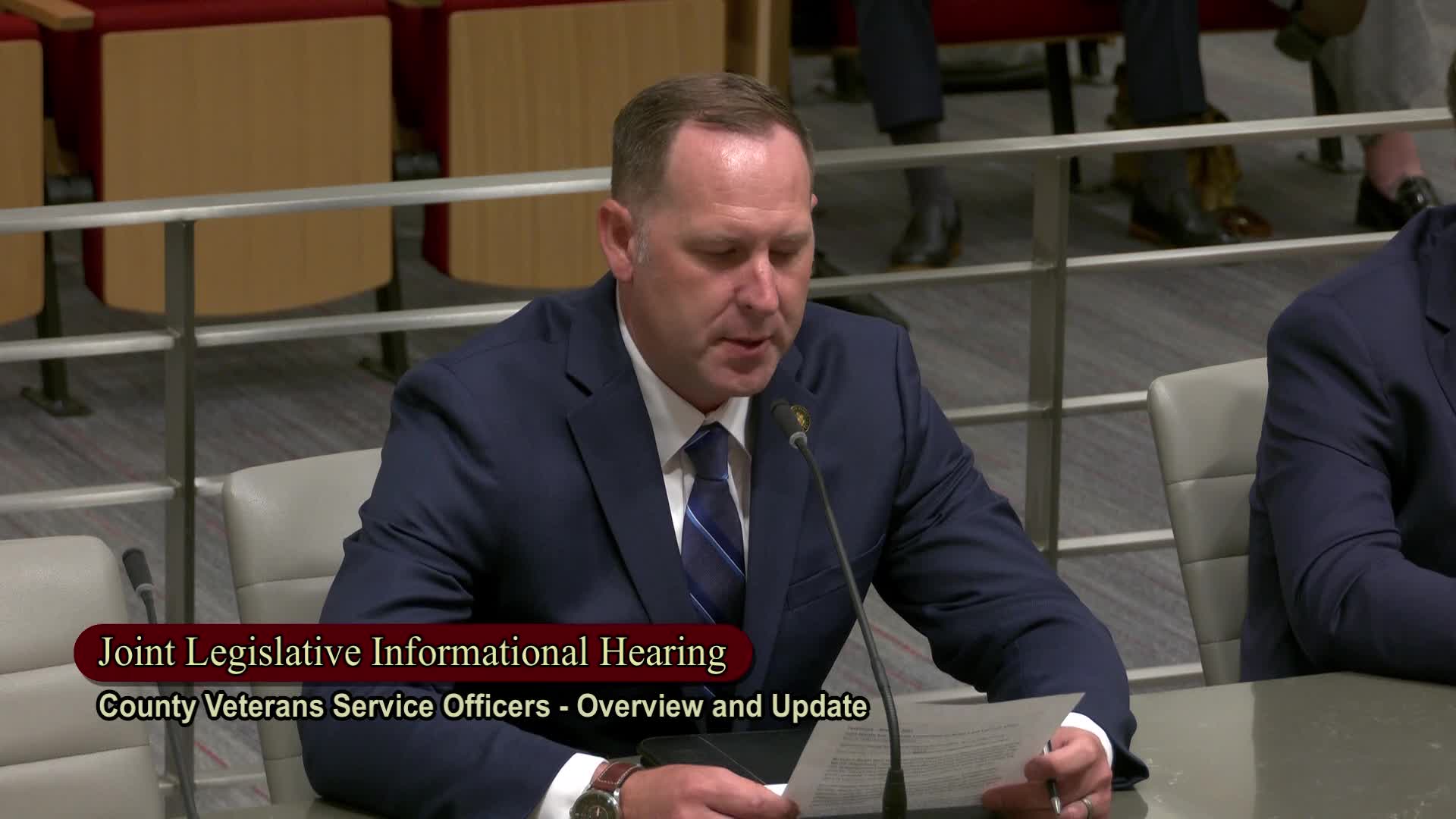
County veteran service officers, veterans service organizations and CalVet officials told a joint Senate–Assembly hearing in Sacramento that unaccredited commercial claims companies — widely described in testimony as “claim sharks” — are exploiting veterans by charging fees for services CVSOs provide for free.
Deborah Johnson, president and CEO of the California Veterans Assistance Foundation and representing the Veterans of Foreign Wars Department of California, told the committee that "claim sharks are able to advertise broadly on social media, target people through search engines, and build websites that look professional but have no real backing." She urged lawmakers to consider legal and regulatory tools to close gaps that allow those firms to operate.
Multiple witnesses offered examples. San Luis Obispo County Veterans Service Officer Morgan Boyd and Placer County’s CVSO Richard Johnson described cases in which veterans or their families paid thousands of dollars, received little or no follow‑up, and in some cases had fees taken from potential retroactive awards. Witnesses said firms sometimes request veterans’ VA.gov credentials or banking information to “track” claims because they lack authorized access to VA systems.
CalVet Deputy Secretary Roberto Herrera noted federal regulations prohibit charging fees for initial VA claims while permitting reasonable fees in some appeals contexts; he described steps CalVet takes to accredit and train county representatives and to field legitimacy questions from veterans who call the department. Herrera said the VA requires agents to pass a written exam and meet continuing education requirements if they seek accreditation, and he described CalVet’s own academy and supervision requirements for county staff.
Recommendations presented to lawmakers included: prohibiting contingency or percentage fees for unaccredited claim agents; creating a visible public registry of accredited representatives; launching public awareness campaigns to direct veterans to accredited, free help; strengthening penalties and enforcement against misleading actors; and partnering with digital platforms to remove deceptive ads. Deborah Johnson said 17 states have considered related bills and cited Maine, New Jersey and New York as states that enacted restrictions.
Why it matters: witnesses said predatory practices extract funds from vulnerable veterans, can delay or damage claims, and weaken trust in veteran services. Lawmakers on the panel signaled interest in pursuing legislative remedies and public outreach; no bill was passed at the hearing.