Get Full Government Meeting Transcripts, Videos, & Alerts Forever!
Get email alerts on the Property Tax topic
No spam. Unsubscribe anytime.
Southeast Polk board holds required public hearing; staff says tax rate will stay the same despite higher assessments
Summary
At a special public hearing, district finance staff said Southeast Polk Community School District’s property tax rate will remain unchanged for the coming year, though rising property valuations mean many homeowners will see higher bills. Residents raised concerns about assessment methodology, “unrealized gains” and district accountability.
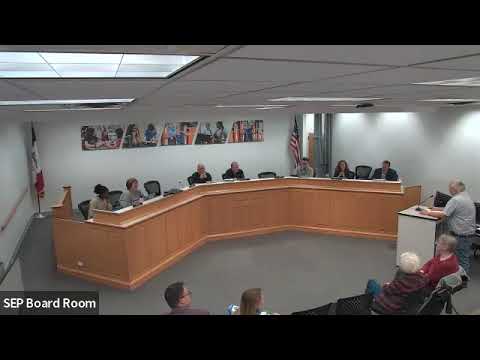
The Southeast Polk Community School District board of directors held a required public hearing on the district’s property tax notice on Oct. 26, 2025, during which district finance staff said the district’s property tax rate will remain unchanged but rising property valuations will increase the dollars collected.
Kevin, district finance staff, told the board and attendees that “Southeast Polk’s school tax rate remains unchanged for next year,” and that an increase in tax dollars shown on county notices stems from higher property valuations, enrollment and supplemental state aid. He said property valuations rose 4.5 percent and that a reduction in the state income tax rate for individuals increases property taxes collected for the instructional support levy.
The hearing attracted several public commenters who asked questions and voiced concerns about higher bills. Mark Coleman, who identified himself during public comment, said the county’s published 10 percent figure is an assumption used in notices and “is not a misprint.” He told the board: “It’s just an assumption. It is not a misprint or incorrect with the county’s publication.”
Several residents sought clarification about what the increases would mean for their payments. One commenter asked whether the district was requesting a property tax increase; a board member responded during public comment that “we’re not—we’re not increasing taxes.” Other attendees raised questions about how assessed value is calculated and whether property owners are being taxed on “unrealized capital gains.” The board chair reminded speakers that the public hearing portion was for comment and that staff would answer technical questions after the meeting; the board directed residents to speak with Kevin in the hallway following the hearing for detailed follow-up.
David Bouchard (identified in the record as Dave Bouchard) described his projected tax increase in dollar terms and said he was worried about rising liability in retirement. Another resident suggested the district consider more online or hybrid programming to limit capital spending, though district staff did not discuss programmatic changes during the hearing.
The hearing record shows the board received one written comment card and multiple in-person speakers. Kevin told attendees the district has not raised its tax rate recently and, when asked about history, said the rate had been unchanged for at least six fiscal years and had been lowered at points over the past decade.
The board opened and closed the public hearing as required by statute; following closing remarks, the chair noted the district would hold its regularly scheduled board meeting immediately afterward and that Kevin would be available to answer individual questions in the hallway.
Ending: The hearing provided residents a forum to register concerns about assessment-driven increases in property tax bills even though the district is not changing its tax rate. Staff said they would follow up one-on-one with residents who requested further detail.