Get Full Government Meeting Transcripts, Videos, & Alerts Forever!
Get email alerts on the Public Safety topic
No spam. Unsubscribe anytime.
Riley County discusses fireworks law changes after state'wide update; commissioners signal consensus on shorter sales window and higher vendor fee
Summary
Riley County commissioners on May 12 discussed whether to revise local fireworks rules after Kansas enacted Senate Bill 199; commissioners signaled a working consensus to limit sales and discharge to June 28—, require vendors to follow state fire-marshal rules and raise the temporary-seller permit fee to $100 while continuing to prohibit year-round stands in the unincorporated county.
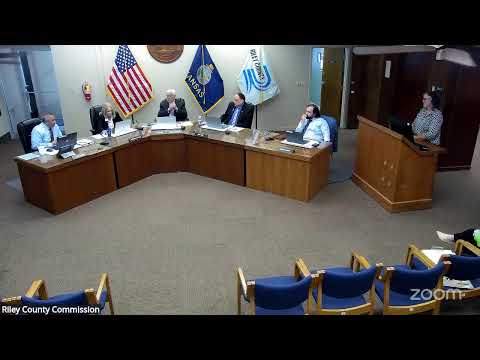
Riley County commissioners spent a significant portion of their May 12 meeting discussing whether to update the county's local fireworks regulations after the Kansas Legislature passed Senate Bill 199, which changed state rules for retail sales and extended dates for public discharge unless a local jurisdiction imposes limits.
The county's discussion focused on four policy choices: whether to permit year-round retail sales in unincorporated Riley County (the new state law allows year-round retail operations if the vendor maintains a permanent facility and meets state fire-marshal requirements); how many days around July Fourth to allow sales and discharge; whether to align the county's operating and safety rules with the state fire marshal's regulations; and whether to increase the temporary vendor permit fee now set at $25.
What commissioners discussed and agreed on
- Local vs. state control: Staff recommended adopting the state fire marshal's operating rules (siting setbacks, fire-safety conditions and registration requirements) so that county requirements would mirror the state regulations and avoid conflicting rules.
- Sales and discharge period: Commissioners expressed reluctance to allow year-round sales in unincorporated Riley County. The board coalesced around a shorter, one-week window in the July Fourth period rather than the broader window allowed in the new state law. The working consensus articulated during the meeting was sales and discharge permitted June 28 through July 4 (technically expiring at midnight July 5) for both retail sales and discharge within unincorporated Riley County.
- Vendor permit fee and inspections: Commissioners discussed increasing the current temporary seller fee (historically $25) to better reflect staff time for site checks and inspections. A rounded fee of $100 was proposed as a reasonable increase to cover staff time, vehicle use and inspection work in rural areas. Commissioners also discussed keeping or increasing insurance requirements for public displays (for example, raising a $1 million coverage threshold that staff noted was written decades ago).
- Year-round permanent retail facilities: Commissioners signaled they would not permit permanent year-round retail facilities in unincorporated Riley County as a practical matter; such permanent facilities are regulated at the state level for inspections but the county can restrict whether permanent retail operations are allowed in unincorporated county areas.
Outcome and next steps
No formal ordinance was passed at the May 12 meeting. Staff and the county counselor were asked to draft updated resolution language mirroring the state fire marshal's operational requirements, closing the sales and discharge window to June 28— (midnight July 5), increase the temporary vendor permit fee to $100, and retain a prohibition on year-round retail stands in unincorporated Riley County. The county also asked staff to check neighboring city regulations to avoid creating clusters of longer-sale sites immediately outside city limits.
Why this matters
The county's decision will determine who can sell fireworks in unincorporated areas, for how long, what safety setbacks and insurance are required, and how enforcement and permitting costs will be recovered. The discussion recognized that the new state law removes some local controls unless the county adopts a local restriction, while also considering the practical costs of inspection and enforcement for county staff.