Get Full Government Meeting Transcripts, Videos, & Alerts Forever!
Get email alerts on the Transportation topic
No spam. Unsubscribe anytime.
Council asked to approve Palm Beach County contract and $31,000 night‑work premium to improve Stripling Road roundabout pedestrian safety
Summary
Village staff asked council to use a Palm Beach County contract with Win & Sons to make pedestrian safety improvements to the Stripling Road roundabout and to approve an approximately $31,000 premium to allow night construction.
Village staff asked council permission to use a Palm Beach County contract with Win & Sons to perform safety modifications at the Stripling Road roundabout, and to authorize an additional approximately $31,000 in related work not covered by the county contract to permit evening construction.
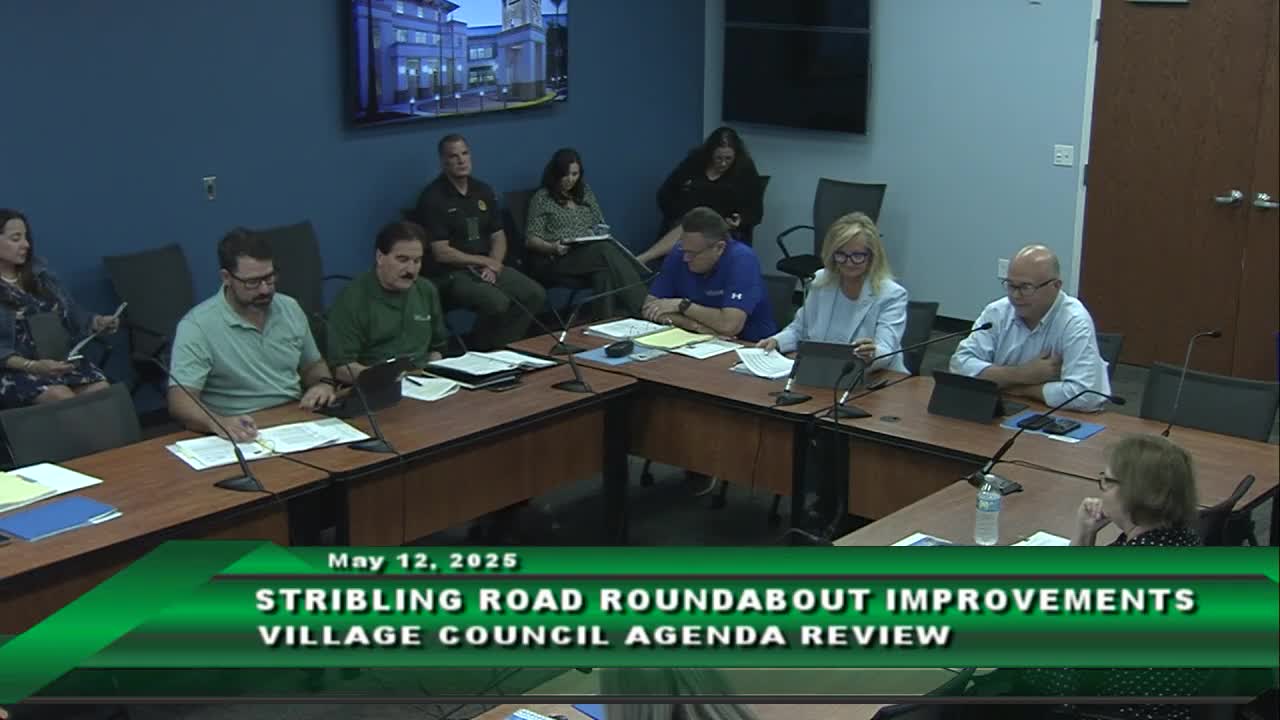
Mister Delvey, presenting for staff, said the proposed scope would relocate the pedestrian crossing further from the roundabout exit, reduce the crossing from three travel lanes to two, move the yield/merge back from the roundabout exit and widen an area repeatedly damaged by trucks. “The scope of work includes relocating existing pedestrian crossing further from the roundabout intersection, reducing the crossing from 3 lanes to 2,” Delvey said. Staff noted these changes align with roundabout design best practices and are timed to coincide with planned repaving of Stripling Road.
A village engineer, identified in the discussion as Jonathan, explained that the change would reduce the number of lanes the pedestrian must cross (from three to two) and move the crossing further from the roundabout exit, improving sightlines and pedestrian safety. The staff presentation also noted that evening construction—between approximately 9 p.m. and 6 a.m.—would minimize traffic impacts but would incur a premium cost; staff asked council to approve that additional $31,000 so the contractor can perform the higher‑impact work overnight.
Council members asked how future roundabouts could be designed to avoid early costly retrofits. Staff replied that usage patterns change over time—more golf carts, e‑bikes and pedestrian traffic—and that the current work is an opportunistic safety upgrade while repaving is scheduled. Staff said they are targeting June for scheduling and that the proposed evening work would limit traffic disruption.
No final vote on the contract authorization or the additional evening work premium was recorded during the workshop; staff requested council approval and answered technical questions.