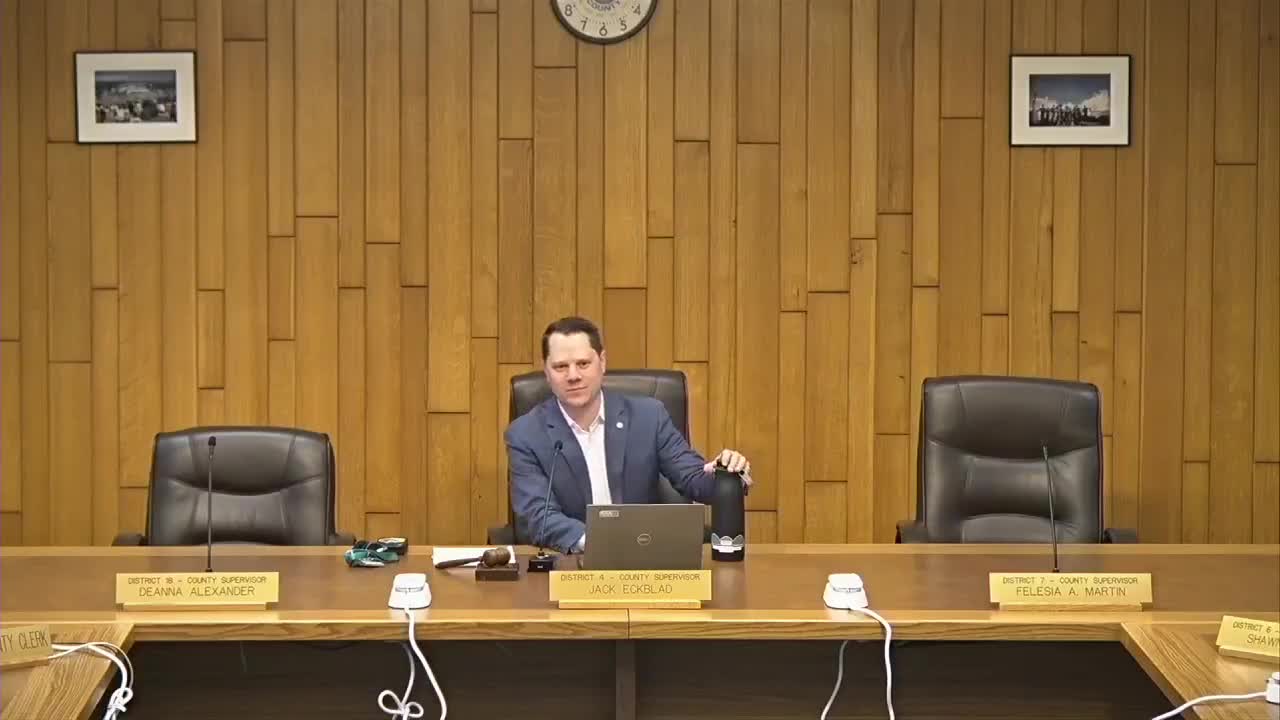
Milwaukee County audit director outlines office role, independence safeguards and ongoing projects
Loading...
Summary
Director of Audit Services presented an informational report to the Audit Committee describing the office's mission, independence safeguards (including a memorandum of understanding with the elected comptroller), recent peer-review history, hotline operations, and ongoing work on data governance and workforce demographics.
The director of Audit Services told the Milwaukee County Board's Audit Committee that the office exists to provide "independent, objective and timely analysis of information" and described steps taken to preserve its independence after the office moved under the elected Comptroller.
The report matters because the Audit Services office reviews county programs, follows up on recommendations, and administers the contract for the county's annual financial audit. Committee members pressed the director on workforce demographics, progress on a countywide data-governance effort and how the office identifies comparative counties for benchmarking.
Director Follier said Audit Services issues performance audits, operates the county's fraud hotline and manages the outside contract for the annual financial statement audit, but does not perform financial audits in-house. "We are a performance audit shop. We do not, do financial audits," Follier said. She described the office's focus on helping "policy makers and program managers in providing high quality service and amen services in a manner that is honest, efficient, effective and accountable to the citizens of Milwaukee County." (Quotation text taken from the committee presentation.)
Follier noted the office's institutional shift after a change in state law that created the elected Office of the Comptroller and moved Audit Services under that office. She said reporting to the Comptroller is "not the ideal structure for auditors," and that independence is essential: "We should not be reporting to management of any kind. A key part of our mission is independence, and it's something that we take very seriously." To preserve independence, the director said Audit Services and the Comptroller signed a memorandum of understanding that lays out how independence will be protected despite the reporting structure.
The director said Audit Services follows government auditing standards and has passed multiple peer reviews since the 2012 organizational change. She said peer reviews are performed on a three-year cycle by teams of local government auditors; the office last presented a peer-review report to the board in September 2023 and expects to return with a peer-review update next winter. "Who audits the auditors? We, too, are audited," Follier said, describing the peer-review cycle.
The office requires continuing professional education for staff: each auditor must receive 40 hours of training annually, the director said. Audit projects are often broad and can take several months to complete because of the requirements of government auditing standards; the office typically follows up with management every six months on implementation of audit recommendations until they are fully implemented.
On the county's fraud hotline, Follier said Audit Services has maintained the hotline since 1994 to receive and investigate allegations of fraud, waste and abuse. She said the office also administers the contract with the outside CPA firm that performs the county's annual financial audit and related single-audit work for federal and state grants; the countywide audit reports are typically presented to the board during the September meeting cycle.
Committee members asked questions after the presentation. Vice Chair Martin raised workforce-retention data from the office's "mind the gap" analysis, saying, "during the pandemic, we lost 349 employees, 213 were female, and of that 24% were Black." Follier said the detailed demographic percentages by department are available in the office's reports and on an employee dashboard and offered to provide the specific countywide percentage of Black employees after the meeting. "We can certainly get that to you," she said.
On data governance, Martin and other members asked for an implementation update. Follier described progress since the audit found the county had been in the early stages of data-governance planning: a committee of stakeholders has been assembled and work is underway to standardize data sets and reduce inconsistent or free-form data entry that makes analysis difficult. "Yes, moving ahead with that," she said, while noting data governance is "living, breathing and it has to be ongoing in order to fully get implemented."
Supervisor Alexander asked whether Audit Services uses consistent comparative counties for benchmarking. Follier said the office maintains a list of larger Midwestern counties and large metropolitan counties used as comparators, naming Hennepin, Cuyahoga and Wayne counties and citing King County (Seattle) and Austin as jurisdictions whose audit offices the director follows for good practices. She added there is no single "shining star" that applies across every topic and that Milwaukee County often uses the next-largest comparable counties, acknowledging the county's unique scale and challenges.
The Audit Committee did not take formal votes on any policy changes during the meeting. The clerk read item 2 (e-comments) and reported none submitted at the time; the committee adjourned and scheduled its next meeting for 3 p.m. on Monday, June 9.
Background: the presentation packet provided to the committee included summaries of Audit Services reports going back to 2010 (with reports to 2002 available on the Comptroller's website), and the director noted staff adhere to continuing professional education requirements and government auditing standards.
No formal actions or new audit engagements were voted on during the meeting. The director encouraged supervisors to contact the office if they are considering a resolution requesting a performance audit, noting narrower scope requests are completed more quickly.