
Public testimony splits on Healthy Aging subcabinet; advocates urge funding, Board on Aging expresses concern
Get AI-powered insights, summaries, and transcripts
Sign Up Free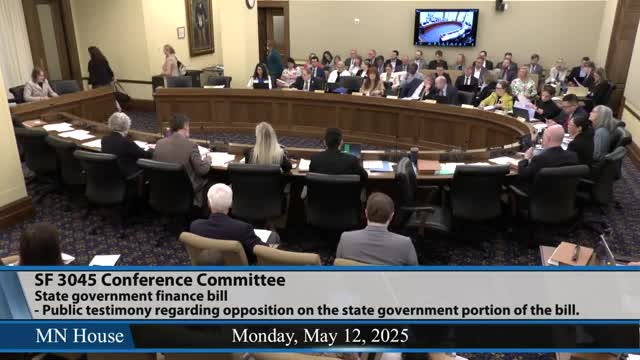
Summary
During public testimony at the conference committee on May 12, advocates and agency representatives praised the creation of a Healthy Aging subcabinet and urged full funding, while the Minnesota Board on Aging said it opposed creating another aging entity, citing overlap and potential confusion.
Public testimony before the State and Local Government and Elections Conference Committee on May 12 featured sharply divergent views on a proposed Healthy Aging subcabinet and statewide healthy aging plan.
Dawn Simonson, president and CEO of Trellis (the metropolitan area agency on aging for the seven-county region), told the committee the state must plan for an older population and urged the panel to "adopt the House language and fully fund the healthy aging subcabinet." Simonson said she has seen "growing wait lists for home delivered meals and increasingly limited access to transportation and in-home services," and warned that without action the state would not be prepared for a larger senior population.
In contrast, Maureen Schneider, chair of the Minnesota Board on Aging, testified virtually that the board "unanimously" cast the sole vote against the task force's final recommendations and opposed establishing a separate aging entity. Schneider said the board worried the subcabinet "would create potential areas for overlap" with existing statewide plans led by the Minnesota Board on Aging and Age-Friendly Minnesota and could confuse older adults and community partners navigating federal and state programs.
Other witnesses included Kathleen (Kathy) Kelso of Elder Voice Advocates, who supported the House language and argued the subcabinet would produce a multiagency planning process on housing, transportation, aging services, jobs and other issues. Kelso said demographic data show Minnesota is aging and that "staying in one's home to the extent that one is able" benefits communities and the state economy.
Alicia Lane, government relations director for the Minnesota Commission of the Deaf, DeafBlind and Hard of Hearing, told the committee the Deaf and hard-of-hearing population skews older and argued that disability is a natural part of aging that statewide guidance should address.
Why it matters: The Healthy Aging subcabinet is intended to coordinate cross-agency planning and produce a statewide healthy aging plan. Testimony revealed a split between stakeholders seeking an elevated, funded coordinating body and the existing Minnesota Board on Aging, which warned of duplication and confusion.
Substantive points raised
- Service demand: Witnesses said wait lists for home-delivered meals and reduced access to in-home services are increasing.
- Geographic disparities: Testimony cited the state demographer’s findings (as referenced by witnesses) noting that Greater Minnesota has a larger share of older adults and is aging faster than metropolitan areas; a witness said 70 percent of women 65 and over live in rural Minnesota.
- Governance concerns: The Minnesota Board on Aging expressed concern that creating a new cabinet-level entity could overlap or duplicate current state aging efforts and partnerships.
- Request for funding: Supporters asked the committee to adopt the House language creating the subcabinet and to fully fund it so it can conduct "an open planning process" and develop implementation strategies.
Provenance
Topic introduction (public testimony on healthy aging): "Thank you Chair Cleburne and, members of the conference committee. My name is Dawn Simonson and I'm the president and CEO of Trellis, the metropolitan area agency on aging for the 7 County region. My comments today are in support of the healthy aging subcabinet."
Topic finish (closing testimony in this topic group): "If you look at the deaf and hard of hearing population as a whole, over half of those individuals are aged 65 or older. ... So that is why we support this healthy aging subcabinet so that we can have a statewide authority to provide guidance to those individuals and those policy makers across the board, across all agencies."