Get Full Government Meeting Transcripts, Videos, & Alerts Forever!
Get email alerts on the Homelessness Shelter Funding topic
No spam. Unsubscribe anytime.
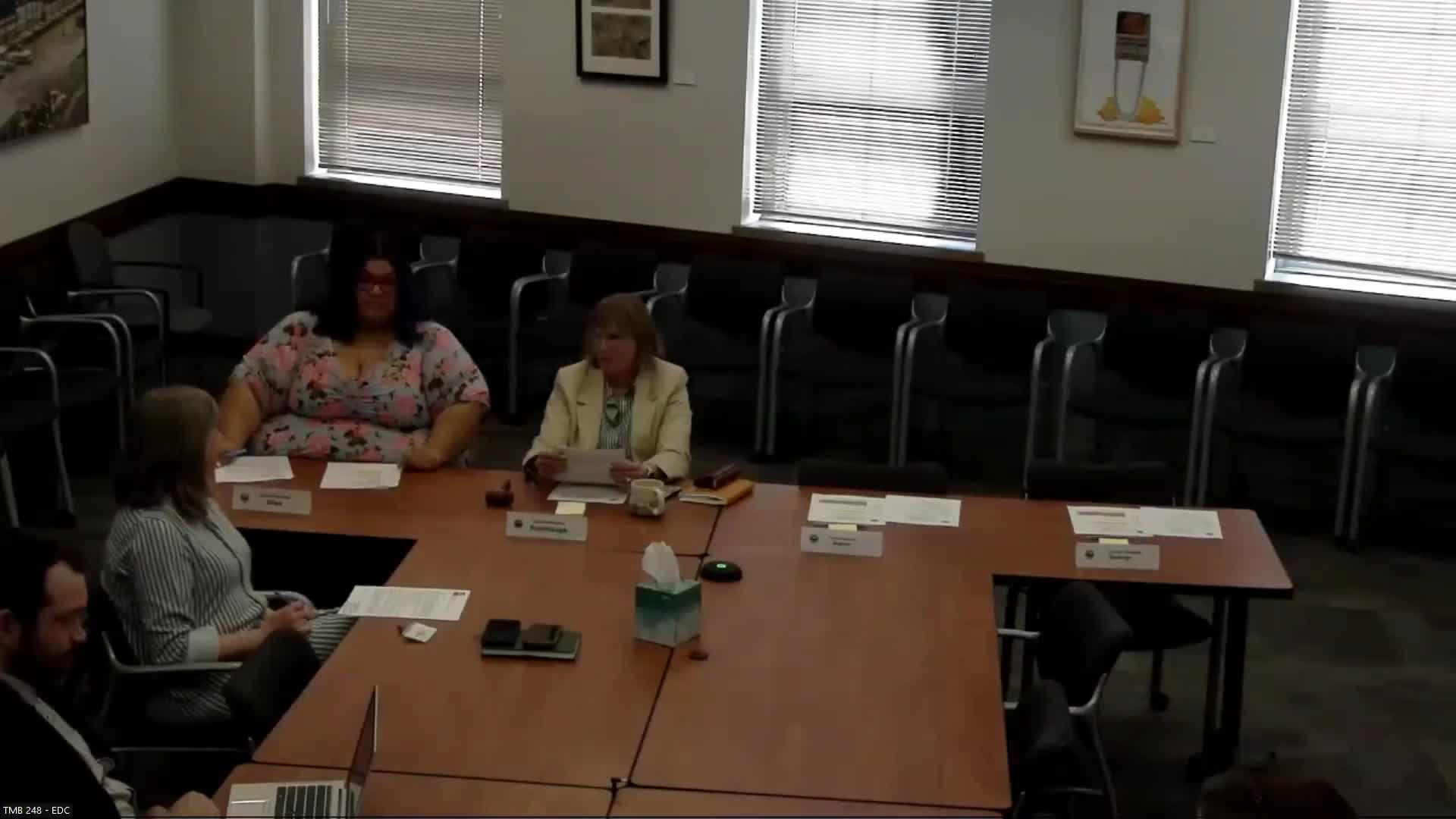
Tacoma officials outline contingency plan as state shelter funding remains uncertain
Summary
Tacoma city staff told the Neighborhood and Community Services committee on a briefing that the city is operating temporary and emergency shelter sites with $3,000,000 in state funds through June 2025 but faces uncertainty about continued operations because the state budget and grant process have not been finalized.
Tacoma city staff told the Neighborhood and Community Services committee on a briefing that the city is operating temporary and emergency shelter sites with $3,000,000 in state funds through June 2025 but faces uncertainty about continued operations because the state budget and grant process have not been finalized. Katie Johnston, interim director of Neighborhood and Community Services, said the city has been working with the Washington State Department of Commerce but that "we don't know the amount and the timing of those funds," and so cannot guarantee extensions beyond June 30.
The briefing laid out immediate operational and contingency steps and described shelters that have already stood down. Caleb Carbona, the city's homeless strategy, systems and service program manager, said the city has "stood down 4 shelters" to date and is using those experiences to shape any future transitions. Carbona told committee members the city is planning for a client-centered stand-down process that includes on-site case management, referrals, and coordination with providers and property owners to decommission sites when residents are transitioned out.
Why it matters: city staff said the state legislature included nearly $58.8 million in a supplemental package intended to sustain shelter projects statewide, and the City of Tacoma submitted an internal request for $12,000,000 to sustain shelter operations. Staff described several distinct funding unknowns: whether the governor will sign the budget, the Commerce Department's grant allocation rules and schedule, and the timing for funds to reach shelter providers. Katie Johnston said the city is "optimistic" it would receive some funding through Commerce but cannot confirm amounts or timing while the budget remains unsigned.
Shelter sites and capacity: staff provided a system overview showing the city funds a baseline of about 720 beds with a mix of mental-health, substance-use, and general-fund dollars and said the city's legislative ask sought support for an additional 307 beds through June 2027. Specific sites discussed in the briefing included:
- Shiloh (single-adult shelter): staff said referrals were completed and the site stood down; the organization subsequently opened a housing project and the city will continue some service funding through its operational contract.
- Alzheimer Memorial Church (family shelter): began stand-down in April; staff said it is not part of the state's supplemental ask and is slated to stand down June 30. As of the briefing staff said about 13 residents remained on site and that several families have already transitioned into housing.
- Forging Path Community (30 Fifth and Pacific, operated by Tacoma Rescue Mission): staff said it currently serves dozens of residents across mitigation and micro-shelter phases and is on a site that will transition to affordable housing developed by Mercy Housing after shelter use. Carbona said the future housing will include about 81 units targeted to households at or below 60% area median income and an early learning center.
- Brotherhood Rise Freedom Project: operates 16 micro-shelter sites on privately owned land; the city's current agreement with the landowner is set to expire June 30, 2025. Staff said short-term extensions are possible but depend on available funding.
Operational priorities and contingency planning: Johnston and Carbona emphasized transparency with providers and residents and described steps the city would take if funding lapses. Those steps include regular provider briefings, direct meetings with residents, halting new intakes at affected sites, and prioritizing continuity of care and placements to other shelters, stability sites or housing programs. Carbona said staff will work individually with providers on staffing impacts and with property owners on decommissioning or transitions back to owners once sites close.
Legal and policy context: the briefing reminded the committee that the Tacoma City Council in fall 2022 adopted an ordinance restricting camping and storage of personal belongings near temporary shelters and certain waterways; staff said boundaries tied to that municipal code will change if shelter locations change. City staff also displayed a map showing overlap between shelter boundary areas and 3-1-1 service requests.
Data and outcomes cited: Carbona told the committee that, across five state-supported sites discussed in the briefing, more than 1,500 people were served and that 769 of those people transitioned into permanent housing. He and Johnston said the city can produce additional exit and outcome data from the homeless management information system (HMIS) on request.
Inclement-weather and longer-term planning: committee members asked how the city will respond if winter or extreme-weather shelter needs arise without the anticipated state funds. Johnston said the city is not relying solely on the supplemental grant for inclement-weather response and that it can pivot other funding sources, including Emergency Solutions Grant monies and some local mental-health and general-fund dollars. Staff also described a planned Tacoma Rescue Mission men's expansion (about 100 beds) with a tentative early-Q1 2026 completion timeline that staff said would support longer-term inclement-weather capacity.
Next steps: staff said they will continue to work with the Washington State Department of Commerce and providers, send a letter to the six affected sites communicating uncertainty, and return to the full council with an updated briefing in the week of June 9, when staff hope there will be more clarity about the state budget and Commerce's distribution process.
Quotes used in this report are drawn from public comment and the staff briefing. Sally Perkins, a resident of District 3 who spoke during public comment, said, "hope is not a method," urging the committee to plan for worst-case scenarios if federal or state Continuum of Care funding changes.
Ending: The committee did not take any formal action on shelter operations at the briefing. Staff advised providers to prioritize current clients while the city and Commerce continue negotiations and said more detailed contingency steps would be available once the state budget is signed and Commerce issues grant guidance.