Get Full Government Meeting Transcripts, Videos, & Alerts Forever!
Minnesota House passes jobs and labor budget (Senate File 1832) after amendments; proposed disability wage repeal fails
Summary
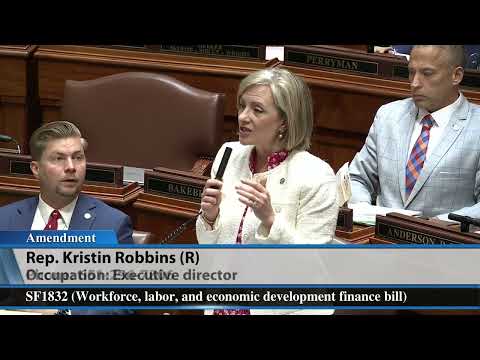
The Minnesota House on Friday passed Senate File 1832, the biannual jobs, labor and economic development budget, after adopting several chair-sponsored amendments and rejecting an amendment to end subminimum wages for some workers with disabilities.
The Minnesota House on Friday passed Senate File 1832, the biannual budget for jobs, labor and economic development, as amended, after hours of debate and several roll-call votes. The bill passed 115 yeas to 19 nays.
The bill funds state workforce and economic development agencies while cutting about $50 million in each of the next two biennia, includes changes to grant language for small-business assistance and film tax administration, and adds enforcement and measurement provisions intended to address worker misclassification and fraud. During floor debate lawmakers adopted multiple chair-sponsored amendments, approved a separate amendment on well contracting, and rejected both a measure to ban subminimum wages for some workers with disabilities and a proposed rollback of the 2023 ban on most noncompete agreements.
Why it matters: SF1832 sets the House'side framework for workforce and economic development policy for the next two years and sends negotiators to conference with specific funding shifts and policy carve-outs. The bill affects state programs that support job placement and training, administration of Minnesota'wide tax credits, and enforcement resources for wage and classification protections.
Representative Pinto, who presented the bill on the House floor, said the committee faced "a challenging, fiscal position" and described the package as one that "funds our government agencies that are overseen in those jurisdictions" while making both cuts and targeted investments. "We cut a little bit beyond the $50,000,000 in order to be able to make some investments," Pinto said.
Co-chair Representative Baker said he and Pinto worked together to reach compromises and defended the bill's approach to funding agencies such as the Department of Employment and Economic Development and the Department of Labor and Industry. "We're trying to make Minnesota more competitive," Baker said, adding the bill seeks "more accountability and more follow through" in grant and workforce spending.
Ke…
Already have an account? Log in
Subscribe to keep reading
Unlock the rest of this article — and every article on Citizen Portal.
- Unlimited articles
- AI-powered breakdowns of topics, speakers, decisions, and budgets
- Instant alerts when your location has a new meeting
- Follow topics and more locations
- 1,000 AI Insights / month, plus AI Chat