Get Full Government Meeting Transcripts, Videos, & Alerts Forever!
Get email alerts on the State Budget Jobs Labor topic
No spam. Unsubscribe anytime.
Minnesota House passes jobs and labor budget (Senate File 1832) after amendments; proposed disability wage repeal fails
Summary
The Minnesota House on Friday passed Senate File 1832, the biannual jobs, labor and economic development budget, after adopting several chair-sponsored amendments and rejecting an amendment to end subminimum wages for some workers with disabilities.
The Minnesota House on Friday passed Senate File 1832, the biannual budget for jobs, labor and economic development, as amended, after hours of debate and several roll-call votes. The bill passed 115 yeas to 19 nays.
The bill funds state workforce and economic development agencies while cutting about $50 million in each of the next two biennia, includes changes to grant language for small-business assistance and film tax administration, and adds enforcement and measurement provisions intended to address worker misclassification and fraud. During floor debate lawmakers adopted multiple chair-sponsored amendments, approved a separate amendment on well contracting, and rejected both a measure to ban subminimum wages for some workers with disabilities and a proposed rollback of the 2023 ban on most noncompete agreements.
Why it matters: SF1832 sets the House'side framework for workforce and economic development policy for the next two years and sends negotiators to conference with specific funding shifts and policy carve-outs. The bill affects state programs that support job placement and training, administration of Minnesota'wide tax credits, and enforcement resources for wage and classification protections.
Representative Pinto, who presented the bill on the House floor, said the committee faced "a challenging, fiscal position" and described the package as one that "funds our government agencies that are overseen in those jurisdictions" while making both cuts and targeted investments. "We cut a little bit beyond the $50,000,000 in order to be able to make some investments," Pinto said.
Co-chair Representative Baker said he and Pinto worked together to reach compromises and defended the bill's approach to funding agencies such as the Department of Employment and Economic Development and the Department of Labor and Industry. "We're trying to make Minnesota more competitive," Baker said, adding the bill seeks "more accountability and more follow through" in grant and workforce spending.
Key amendments and outcomes
- A15 (authors' amendment): Moved by Representative Pinto and adopted by voice vote. Pinto said it "makes a few adjustments to the bill mostly regarding funding" and shifts language and dollars to expand a small-business assistance competitive grant program. The amendment drew supportive remarks and cleared the floor.
- A18 (funding shift for vocational supports): Moved by Representative Baker and adopted. Baker said the amendment redirected funds to better support vocational rehabilitation services (VRS) and Individual Placement and Support (IPS) programs that assist Minnesotans with disabilities in obtaining integrated employment.
- A22 (technical correction to A18): Moved by Representative Baker and adopted; identified by the chair as a technical fix correcting a math error in the prior amendment.
- A14 (well contracting): Moved by Representative Baker; passed on a roll call, 69 yeas to 64 nays. The amendment changes regulatory responsibility for some well plan reviews and was presented as a measure to reduce delays faced by well contractors in Greater Minnesota. Representative Pinto requested a roll call and urged caution, saying plumbing board deliberations were pending; proponents argued the change would reduce slow plan-review turnarounds and help local contractors.
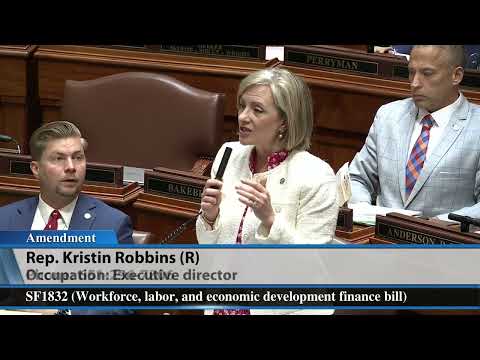
- A3 (whistleblower protections): Moved by Representative Robbins and adopted (voice vote). Robbins said the amendment would "expand whistleblower protections for state employees" and had previously passed the House unanimously.
- A5 (youth skills / construction partnerships): Introduced by Representative Baikberg (Bakeburg in transcript) to allow 16- and 17-year-olds to participate in construction-industry-related training at centralized training facilities; the author later withdrew the amendment after discussion and said she would continue work with stakeholders.
- A1 (end use of subminimum wages for some people with disabilities, proposal to sunset 14(c) contracts): Moved by Representative Hanson J. The amendment would have ended the use of federal 14(c)-style subminimum wage arrangements in Minnesota by Jan. 1, 2027. Hanson argued roughly 3,000 Minnesotans were paid under subminimum arrangements and that ending the practice would increase dignity and income for a small group of workers. Opponents warned it could risk employment and services for people who rely on center-based programs. The motion was defeated on a roll call, 65 yeas to 67 nays; the amendment was not adopted.
- A12 (delete portion of bill that narrows 2023 noncompete ban): Moved by Representative Greenman; failed on a 67-67 tie and was not adopted. Greenman said the amendment would have preserved the full noncompete ban enacted in 2023, while opponents and other speakers argued the statute and protections for trade secrets and nondisclosure agreements remained in place and businesses had raised competitiveness concerns.
Final passage and next steps
After debate on substantive and procedural points, the House gave the bill third reading and passed SF1832 as amended, 115-19. Representative Pinto and Representative Baker thanked committee staff and members on both sides of the aisle and said they expect further negotiations with the Senate in conference committee.
Lawmakers on the floor highlighted additional items included in the bill or supported elsewhere in debate: teacher apprenticeship language added to support alternate pathways into the classroom; modest enforcement staffing and measurement resources to study and address worker misclassification; and the restoration or administrative repositioning of film board functions under Explore Minnesota to administer the state's film tax credit rather than a nonprofit intermediary.
What lawmakers emphasized and what remains unresolved
Supporters framed the bill as a fiscally responsible package that preserves core workforce services while tightening governance of grants and targeting funds where the agencies and providers indicated need. Several speakers stressed the importance of the IPS evidence-based program, with Representative Rae Rauer noting IPS's higher-than-national success rate and the rationale for shifting funding into IPS rather than across-the-board increases.
Opponents focused on specific policy concerns: the proposed ban on subminimum wages drew impassioned floor debate from members representing providers and families who said eliminating 14(c)-style center-based employment too quickly could reduce opportunities and supports for clients. The noncompete rollback also drew sustained discussion from members on both sides, with business and trade representatives warning the blanket ban could affect Minnesota's competitiveness for high-tech, R&D and headquarters jobs; proponents argued bans encourage mobility and innovation.
The bill now moves to a conference process with the Senate where negotiators will reconcile House and Senate versions and address outstanding issues including paid family and medical leave implementation and other statewide workforce mandates referenced during debate.
Votes at a glance (select floor actions referenced in debate)
- A15 (authors' amendment): adopted (voice vote). - A18 (VRS/IPS funding shift): adopted (voice vote). - A22 (technical fix to A18): adopted (voice vote). - A14 (well contracting): adopted, roll-call 69 yeas, 64 nays. - A3 (whistleblower protections): adopted (voice vote; earlier unanimous passage referenced). - A1 (phase-out of subminimum wages by 2027): failed, roll-call 65 yeas, 67 nays. - A12 (restore 2023 noncompete ban language): failed, 67 yeas, 67 nays (tie; not adopted). - Final bill (Senate File 1832 as amended): passed 115 yeas, 19 nays; title agreed to.
Ending note: Sponsors said work continues in conference and asked members to engage with local stakeholders on implementation details. Representative Pinto closed by urging members to carry forward the bill into conference negotiations and to keep refining provisions the committees had negotiated under fiscal constraints.