Get Full Government Meeting Transcripts, Videos, & Alerts Forever!
Get email alerts on the Solid Waste Landfill topic
No spam. Unsubscribe anytime.
Board keeps separate landfill permits, approves modest fee increases after public hearing
Summary
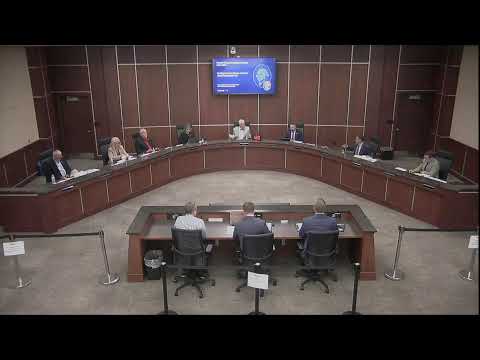
After a public hearing, the board approved proposed changes to Washington County landfill user fees and permit options and rejected consolidation of separate permits in favor of maintaining separate trash, yard debris and recycling permits; several tipping fees were raised and the board emphasized the need to fund long‑term closure and equipment.
Washington County commissioners approved proposed adjustments to the Department of Solid Waste’s permit program and tipping fees after a public hearing and staff presentation.
David Mason, deputy director of Solid Waste, outlined two permit options: (1) keep separate permits for trash, yard debris and recycling but apply proposed increases, or (2) offer an all‑inclusive permit covering trash, yard and recycling. Mason said trash permits are the most commonly purchased, with yard debris seasonal spikes in spring and recycling purchases lower historically.
Proposed tipping fee changes included raising rubble/building debris from about $75/ton to $78/ton, increasing the commercial tonnage tire rate from $162 to $250 per ton, and moving bulk mulch from $1.20 to $200 per ton (staff noted specific line items). Mason and county finance staff said the worst‑case aggregate change would be roughly a 6%–7% increase for typical users.
Public commenters reiterated affordability concerns. Curtis Ray criticized the county’s broader fee structure and called for lower, near‑cost fees for monopoly services. Commissioners and staff explained the solid‑waste enterprise fund must maintain reserves for closure and post‑closure costs, that landfill life expectancy and cell planning require multi‑year capital funding, and that the county sets aside operating‑expense reserves (policy: 25% of operating expenses) for future big purchases.
Mason said the landfill currently has an estimated remaining operating life of roughly 50 years at current usage; recent daily tonnage figures have been around 550 tons per day in April, above earlier design assumptions. Commissioners asked about recycling markets and were told recycling remains challenging because commodity markets are weak and contamination can lead to recyclables becoming trash.
After discussion a commissioner moved and the board voted to approve maintaining separate permit offerings and to adopt the proposed fee adjustments. The motion carried by voice vote with no recorded dissent.
Ending: Staff will implement the updated permit and tipping fee schedule and continue to rely on enterprise reserves and the limited general‑fund appropriation for closed cells; the board emphasized the county will continue to pursue cost‑control measures and assess long‑term capital needs.