Get Full Government Meeting Transcripts, Videos, & Alerts Forever!
Get email alerts on the Utilities Water Sewer topic
No spam. Unsubscribe anytime.
Washington County approves multi-year water and sewer rate increase after public hearing
Summary
After a public hearing that included residents' concerns about fixed incomes, the Washington County Board of County Commissioners approved proposed increases to the county's water and sewer enterprise fund rates, citing rising chemical and equipment costs and the legal requirement that the enterprise fund be balanced.
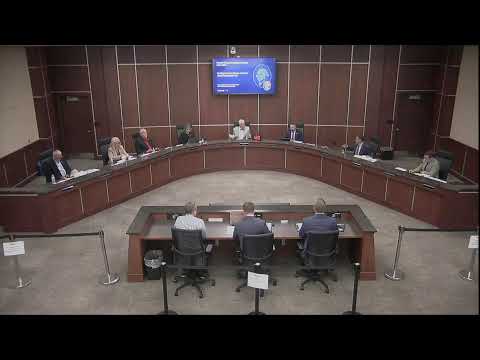
The Washington County Board of County Commissioners voted to approve proposed increases to the county’s water and sewer enterprise fund rates following a public hearing and presentations from county staff.
Mark Bradshaw, director of Environmental Management, introduced the proposed adjustments and noted the county is in year two of a previously approved multiyear schedule for water and sewer rates. “The previous water and sewer rate was approved for a multi‑year increase and we're in year 2 of the year 3 multi‑year that was approved,” Bradshaw said during the hearing. He and Chief Financial Officer Jesse Mace described the increases as necessary to cover operating costs that have risen, including chemicals and equipment replacement.
The hearing drew several public speakers who said the increases would strain households on fixed incomes. One resident from Williamsport said his monthly sewage bill had risen from about $147 to $155 and worried about two further scheduled increases. Curtis Ray, a Hagerstown resident who identified himself during public comment, criticized the county’s broader fiscal choices and argued rate and fee increases disproportionately affect low‑income residents.
County staff explained the rate structure is administered as an enterprise fund, which is required to cover its own operating and capital costs rather than be subsidized by the general fund. Bradshaw and other staff cited specific cost drivers: recent chemical procurement bids showed cost increases of roughly 20% to 50% for key treatment chemicals, and replacement equipment costs have risen about 20%–25% compared with two years ago. Solid Waste staff also noted larger capital items such as dozers can cost on the order of $800,000 to $1,000,000, requiring enterprise reserves to be built over time.
Staff explained the rate structure includes a base allowance and a usage component; single‑occupant households that use only the base amount see a smaller percentage increase than larger households because a separate per‑thousand‑gallon charge applies above base usage. Commissioners emphasized sensitivity to residents on fixed incomes and described existing discount and base‑rate protections for some users.
After the public comment period and staff responses, a commissioner moved to approve the rate adjustment and the board voted in favor. The motion carried by voice vote with no recorded roll‑call dissent.
The approved change was presented as part of the county’s overall budget process; commissioners noted that because water and sewer operate as an enterprise fund the adjustments are necessary to keep operations, capital replacement and regulatory compliance funded.
Ending: The county will incorporate the new rates into upcoming billing cycles per standard administrative procedures; staff said the rates are intended to preserve system reliability and to maintain the enterprise fund policy reserves used to pay for major future purchases and landfill/cell closure obligations.