Get Full Government Meeting Transcripts, Videos, & Alerts Forever!
Get email alerts on the Dual Credit And Student Support topic
No spam. Unsubscribe anytime.
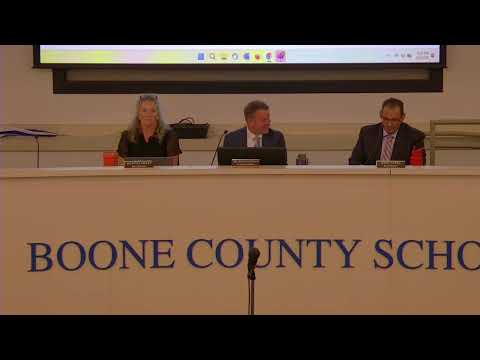
Board hears concerns about dual-credit logistics and parent notification after consent agenda includes a Thomas More MOU
Summary
Board members raised concerns about how local colleges handle dual-credit students’ communications, payment and grade consequences for minors after the consent agenda (which included a Thomas More College dual-credit MOU) passed unanimously.
Board members discussed recurring problems parents reported with dual-credit courses — especially how colleges communicate with minor students, billing practices and the academic consequences when a student misses deadlines — after the consent agenda that included a dual-credit memorandum of understanding (MOU) with Thomas More College was moved and approved.
Why it matters: Dual-credit coursework gives high-school students a head start on college credit, but board members said differences in college administrative practices — student-facing email, billing timelines and syllabus enforcement — can create unintended barriers for 15- and 16-year-old students and can cause families to lose learning opportunities.
Several board members described recent cases in which students who had been attending a dual-credit class for about two weeks were later blocked from participation because payment had not been received through a college account that communicated only to the student’s college email. Board member comments emphasized that minors and their families may not receive or monitor college-issued email accounts and that colleges’ default processes treat dual-credit students as adult college students.
Board member Byrd (transcript reference) said the district should explore ways to require stronger parent-notification steps and suggested the district could add supplemental expectations to boilerplate MOU language, such as requiring participating colleges to provide parent-directed billing notices or to coordinate directly with high-school counselors before removing a minor from a course for nonpayment. Board member Wolf and others described cases where students’ grades were affected by missed deadlines because the college syllabus applied adult penalty rules.
Superintendent Dr. Jeff Hauswald acknowledged the concerns and said the administration would review the MOU language with the colleges and explore possible addenda or district-side expectations that protect minors’ access to learning while preserving the colleges’ administrative needs. He suggested district staff contact partner institutions and deans to seek solutions (for example, clearer parent notifications, counselor triggers or counselor access) and return recommendations to the board.
The consent agenda that contained the Thomas More College MOU was approved as part of the consent vote recorded on the meeting transcript (motion approved 5–0). The transcript does not name the mover/second for the consent motion and does not record specific contractual language for the Thomas More MOU in the meeting remarks.
The board asked staff to return with options, and members encouraged outreach to partner institutions and school counselors to reduce situations where minors lose access to an ongoing dual-credit class because of administrative or billing miscommunication.