Get Full Government Meeting Transcripts, Videos, & Alerts Forever!
Get email alerts on the Public Records topic
No spam. Unsubscribe anytime.
Xenia council tables public records policy changes after debate on journalist definition and video redaction costs
Summary
Council voted to table Resolution 2025-26 proposing updates to the city's public records policy; council members raised concerns about who qualifies as "journalist" and about new charges and division-specific policies for police, fire and dispatch video records.
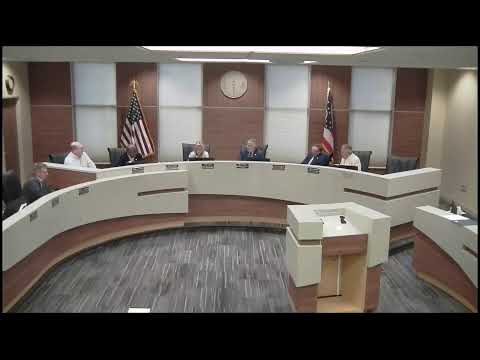
The Xenia City Council on May 8 voted to table proposed changes to the city's public records policy after an extended discussion about how the city would treat requests from journalists and how public safety divisions would handle and charge for redacting body‑worn- and dash-camera footage.
Danette, the city's law director, told council that several recent state law changes require updates to the local policy and that the proposed resolution would, among other things, add fees for large-format copies, lower charges for CDs/DVDs, allow the city to waive reproduction costs under $5, and authorize the police, fire/EMS and emergency communications/dispatch divisions to create division-specific public records policies for records unique to their operations. "We would like to recommend the council... that if the total cost of reproduction or delivery is less than $5, that we'd be given the ability to waive that," she said. She also said that the changes would permit public safety divisions to account for the staff time required to redact video under ORC 1.49.43.
Several council members raised questions about two central items: whether the proposed definition of "journalist" was too broad and how the city would estimate and collect upfront costs for labor-intensive video redactions. Councilman Crawford asked how the city would require payment in advance and how staff could estimate redaction costs for video requests without overcharging or creating extra administrative burden. Law director Danette replied that the division would estimate costs based on the number of videos and that requesters could be asked to pay an upfront estimate; if final costs exceeded the estimate, state law limits collections beyond the estimate.
Council members also discussed whether giving public safety divisions authority to adopt their own policies would remove council oversight. The law director said division policies would be reviewed for legal compliance by the law director and approved by the public safety director, and that council would be notified of those policies; several council members said they wanted to see the division policies before they were finalized.
After discussion, a council member moved to table the resolution to give staff time to refine the language and return with clarifying options, and the motion to table carried.
The topic drew sustained council attention; staff said they were willing to return with alternatives that would tighten the definition of "journalist" and provide clearer processes for cost estimates and council notification of division policies.