California first state to issue ChipTap EBT cards; rollout reduces reported thefts but retail updates lag
Loading...
Summary
CDSS and OTSI told the Senate subcommittee that California has replaced magnetic‑stripe EBT cards with chip‑enabled cards to reduce electronic skimming; officials said about 4 million cards were replaced and early indicators show reduced theft although most retail transactions currently fall back to magstripe until retailers update terminals.
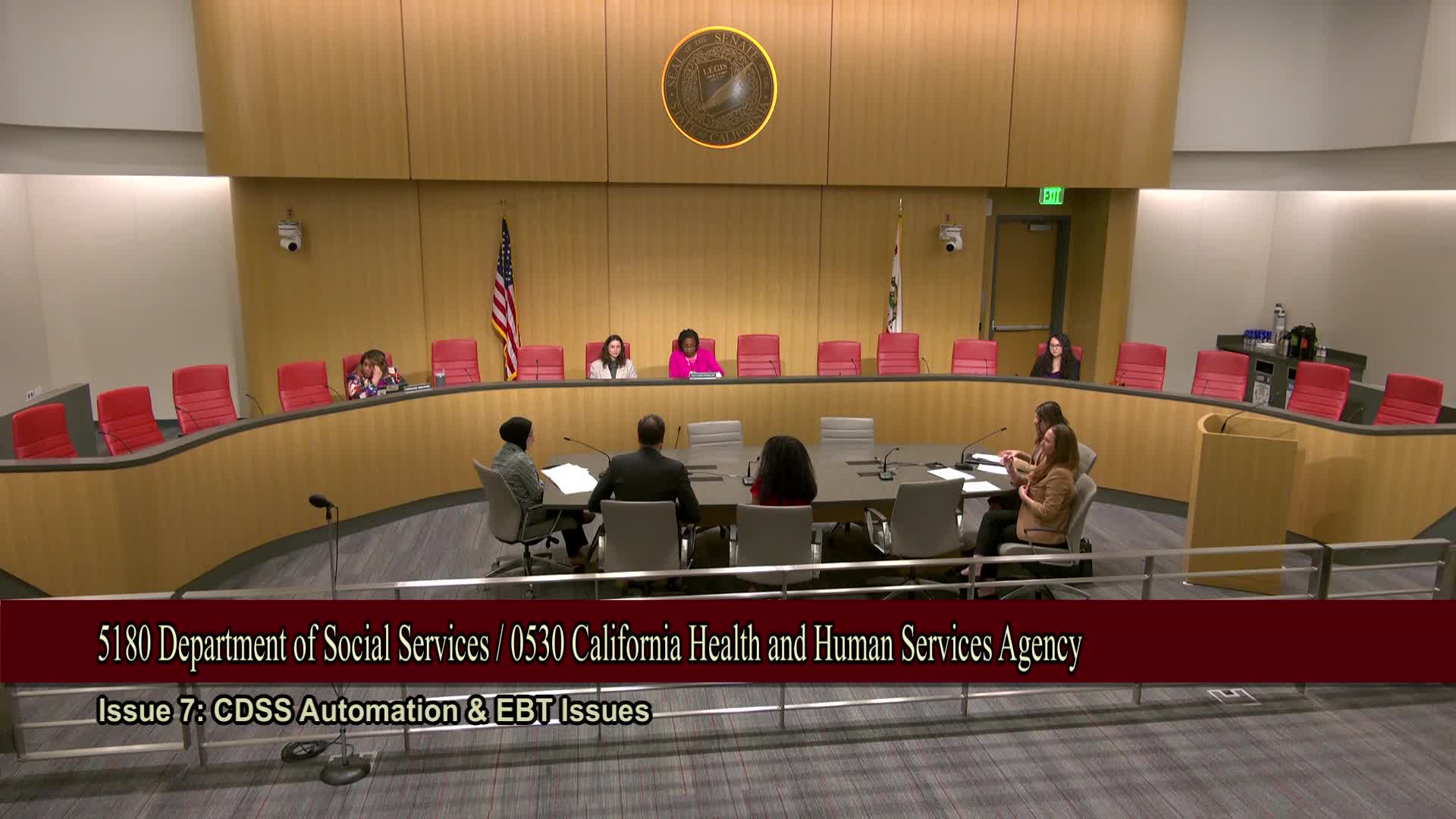
California is the first state in the nation to deliver EBT benefits through chip‑enabled (ChipTap) cards, Department of Social Services officials told the Senate Budget Subcommittee 3 during a hearing on benefits technology and security.
Ryan Gillette, Chief Data Officer and deputy director for CDSS’s Research, Automation and Data Division, said the state completed mass card deployment in late February 2025 and that "as of April 30, all clients have been issued new cards that include chip tap functionality." Gillette said roughly 4,000,000 magnetic‑stripe cards were replaced, and that local county offices can print replacement chipped cards over the counter.
Implementation details and early results: Gillette said about half of mailed cards had been activated as of the data reported to the committee. He also explained the current transaction mix: "about 15.8% of EBT transactions are processing through ChipTap lane," while an additional 73.3% currently fall back to magstripe. CDSS reported that 90.9% of ChipTap transactions are processing successfully, but the department cautioned that widespread fraud reduction depends on retailers updating point‑of‑sale terminals and clerks and customers adapting to the new routine at checkout.
Retail and vendor roles: CDSS described an active outreach effort to retailers and their third‑party processors and said the state’s EBT vendor, Fidelity Information Services (FIS), and CDSS/OTSI are coordinating with retailers to install the necessary updates. Brandon Hansard, deputy director of benefits and enrollment technology at the Office of Technology and Solutions Integration (OTSI), told the committee the spending authority request on the agenda would help the state speed vendor work when late federal approvals require rapid card distribution.
Fraud trends and outlook: Gillette said the state had seen a sizable decrease in reported theft since beginning mass replacement, but added that the full protective effects will take time to materialize while activation and retailer updates continue. LAO staff said they will continue to monitor theft rates and noted that budgeted savings tied to reduced theft depend on achieving higher ChipTap usage at checkout.
Public‑sector praise and next steps: Committee members commended CDSS and its partners for being first in the nation on ChipTap deployment and urged continued outreach to retailers, monitoring of activation and transaction patterns, and updated metrics to measure fraud reduction and any downstream budget impacts.