Get Full Government Meeting Transcripts, Videos, & Alerts Forever!
Get email alerts on the Da Staffing Budget topic
No spam. Unsubscribe anytime.
San Francisco DA warns 25-prosecutor cut would force suspension of misdemeanors, strain court system
Summary
San Francisco County supervisors heard detailed staffing and budget briefings from District Attorney Brooke Jenkins on May 7 and were told a $5.4 million reduction to the DA's office would require about 25 prosecutor layoffs and could force the office to suspend misdemeanor prosecutions and cut victim services.
San Francisco County supervisors heard detailed staffing and budget briefings from District Attorney Brooke Jenkins on May 7 and were told a $5.4 million reduction to the DA's office would require about 25 prosecutor layoffs and could force the office to suspend misdemeanor prosecutions and cut victim services.
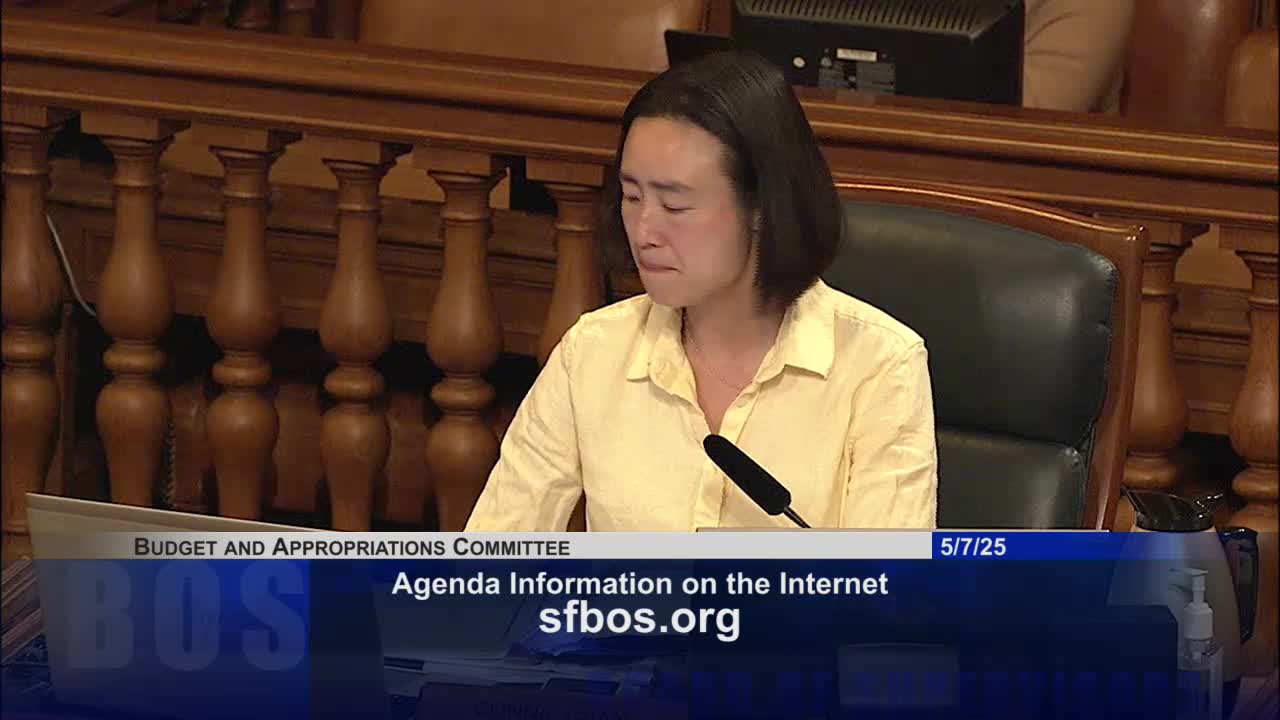
The hearing, before the Budget and Appropriations Committee at City Hall, came as the city faces an estimated $817.5 million budget shortfall for the coming fiscal year and as state ballot measure implementation (Proposition 36) and several unfunded mandates are increasing workload for the DA's office.
Jenkins, the San Francisco district attorney, said the office has roughly 7,100 pending cases and is managing nearly 2,000 more cases than when she took office. "A reduction of 25 lawyers would create unmanageable caseloads and would result in…not prosecuting categories of crimes across the board," Jenkins said. She told supervisors the DA's proposed operating budget for fiscal 2025–26 is $96,500,000 (a 3 percent increase driven largely by negotiated salary and fringe raises) and is projected to be $99,000,000 in 2026–27.
Why it matters: Jenkins and others told the committee that prosecutorial capacity affects not just filing decisions but the court calendar, victims' access to services, and the city's ability to hold repeat offenders accountable. Jenkins said 80 percent of the office budget is salary and fringe, 91 percent of funding comes from the general fund, and that reductions will primarily cut staff.
How the office is resourced: Jenkins said the office is budgeted for 324 positions, with 317 filled and 19 vacancies as of April 11, 2025; about 147 of the budgeted attorney positions are filled with six attorney vacancies being held for a new deputy clerk/graduate class pending bar results. She listed several underfunded nonpersonnel needs including case-management maintenance, records management, legal research subscriptions, transcription and expert witness costs, and shuttle service between the office at 350 Rhode Island Street and the courthouse.
Workload and case timing: Jenkins showed internal data indicating that felony and misdemeanor case volumes and the time to resolution have risen in recent years — felony cases now taking a median of roughly 591 days to resolve and misdemeanors about 574 days, according to the slides she presented. She told the committee many cases require more complex discovery and expert work than in prior years, increasing litigation costs and paralegals' workloads.
State mandates and unfunded requirements: Jenkins described state-level obligations she called unfunded mandates, including the Racial Justice Act (motions alleging racial bias require written responses and historic data production), a "race blind charging" requirement (software and staff to redact race-identifying information), and implementation costs for treatment-mandated felonies under Proposition 36. Jenkins told the committee those mandates create significant new legal and data burdens without accompanying state funding.
Public defender perspective: Manu Raju, the San Francisco public defender, argued the defense office also faces urgent funding and workload pressures. "We are the office that is mandated to provide effective assistance of counsel to every single person who is in the system," Raju said, adding his office's vertical representation model and limited investigative resources increase workload per attorney. He said his attorneys average about 65 felony cases and 145 misdemeanor cases and that staff shortages limit the defense office's ability to be in multiple courtrooms simultaneously.
Supervisor questions and public comment: Vice Chair Supervisor Matt Dorsey and other committee members pressed Jenkins on specifics, including whether Proposition 36 was driving an immediate surge in filings; Jenkins said San Francisco has used limited "washout" periods in charging decisions and that, as of the hearing, filings tied directly to Prop 36 remained modest compared with the overall rise in arrests. More than 50 members of the public spoke during a one-minute public comment period; many business and neighborhood groups urged preserving DA funding as a public-safety priority, while civil rights and community groups urged investments in prevention, treatment and oversight instead of prosecution.
Formal committee actions: The committee approved a routine motion to excuse President Rafael Mandelman from the meeting and later voted to file the hearing (see "Actions" below for the motion text, movers, seconds and recorded tallies).
What was not decided: No budget decisions were made at the hearing. Jenkins and committee members noted that the mayor's office and supervisors will continue budget deliberations in the weeks ahead.
Ending: Committee members said they would continue hearings and staff follow-ups as the mayor produces budget requests and as supervisors consider tradeoffs across public safety, social services and other city priorities.