Get Full Government Meeting Transcripts, Videos, & Alerts Forever!
Get email alerts on the Insurance And Wildfire Mapping topic
No spam. Unsubscribe anytime.
Utah insurance commissioner: companies must use state forester maps for wildfire risk assessments; ZIP‑code data collection planned
Summary
Utah Insurance Commissioner John Pike told Ivins–Santa Clara residents that legislation will require insurers to use the Utah State Foresters’ map to identify highest wildfire risk areas beginning Jan. 1 and described steps the insurance department is taking to collect ZIP‑code data and improve transparency for homeowners.
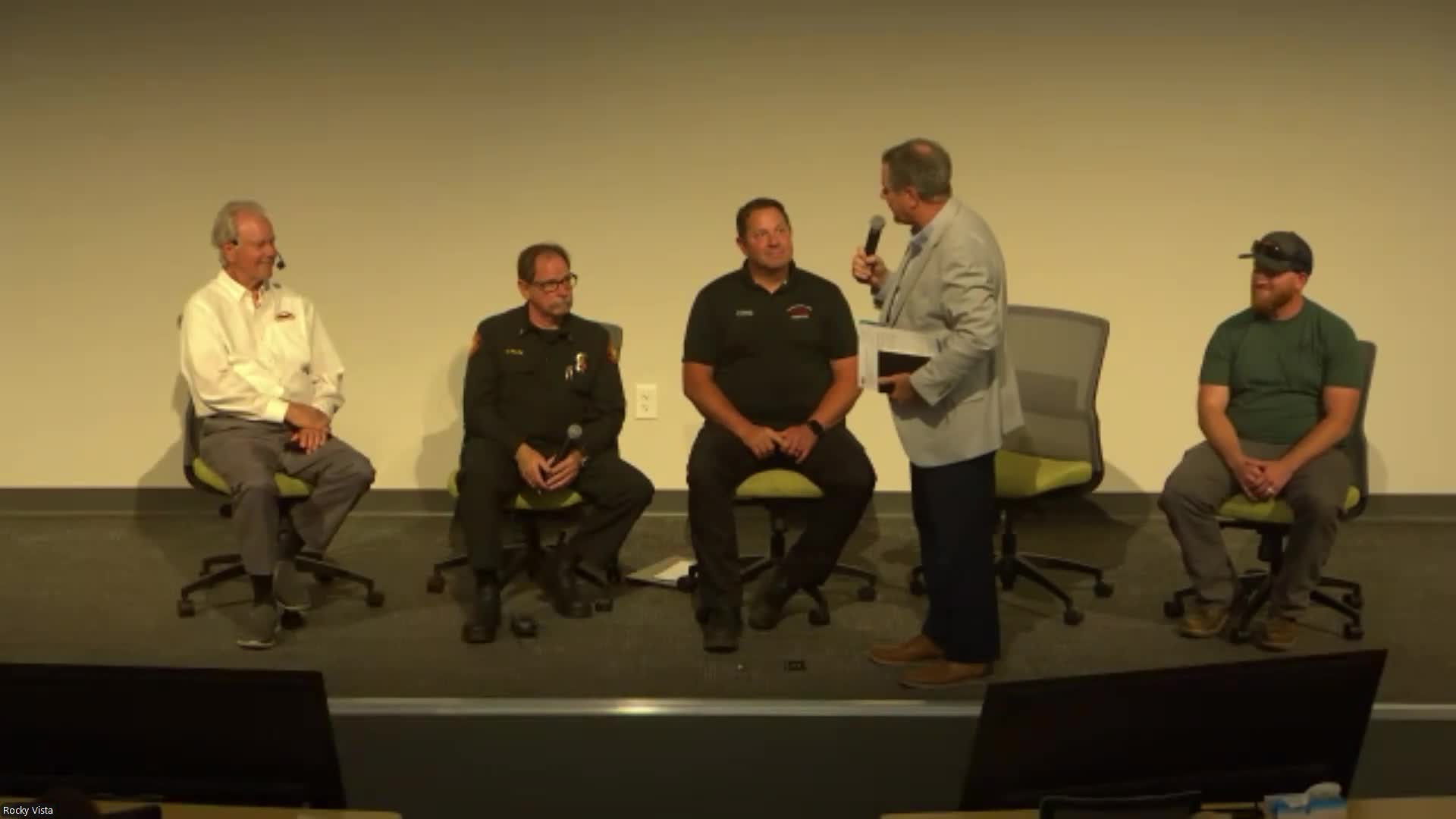
Utah Insurance Commissioner John Pike told residents at a joint Ivins–Santa Clara town hall that state legislation will require homeowners insurers selling policies in Utah to use the Utah State Foresters’ map when identifying wildland‑urban interface (WUI) and high wildfire risk areas.
“Representative Snyder's bill says to all the insurance companies, you will use the Utah State Foresters map in terms of determining what those wildland urban interface or highest wildfire risk areas are,” Pike said, describing provisions he called a “good step.” Pike said the change takes effect Jan. 1 next year and that insurers may still use their own models for other risk factors but must incorporate the forester map for WUI designations.
Pike, who earlier served in local government, said regulators in Utah do not set or approve homeowners insurance rates broadly and that the department’s authority is limited to examining insurer practices for inappropriate discrimination. He said one concrete consumer protection in the bill requires insurers to disclose explanations for rate increases greater than 20 percent.
The commissioner described a national data effort led through the National Association of Insurance Commissioners (NAIC) to obtain ZIP‑code-level data from insurance companies so regulators can monitor trends in premiums and market participation. Pike said the department has begun collecting ZIP‑code data from a majority of homeowners insurers and plans to publish reporting to inform policymakers and consumers.
Pike acknowledged agents and homeowners who report nonrenewals or sharp premium increases, and he urged residents to shop for alternate carriers or speak with their agent. “They can't just cancel you unless it's for nonpayment… There are some rules there,” Pike said, explaining that companies can raise rates or decline renewals within market rules but must defend their practices to regulators if those practices appear improper.
On market behavior, Pike described examples from other states where insurers reduced new writing or nonrenewed policies after repeated losses, and he said Utah regulators are trying to strike a balance that preserves a competitive market without allowing inappropriate rate discrimination. He also said the department will pursue rulemaking to implement elements of the new law and to improve transparency about insurer models and data.
Ending: Pike encouraged consumers who have concerns about rates or nonrenewal to contact the insurance department for review and advised homeowners to keep records (photos and inventories) of their property contents; he said those records help support claims in a total loss. He also said the department will share ZIP‑code reporting and other information publicly as it is finalized.