Get Full Government Meeting Transcripts, Videos, & Alerts Forever!
Get email alerts on the Solid Waste topic
No spam. Unsubscribe anytime.
Sullivan County officials, haulers and residents press enforcement of flow-control rules as tip rates rise
Summary
At a Sullivan County public works meeting, staff and legislators outlined landfill operations, a July 1 tip-rate increase and steps to pursue enforcement of the county's flow-control rules while residents urged stronger waste‑reduction plans and opposed incineration.
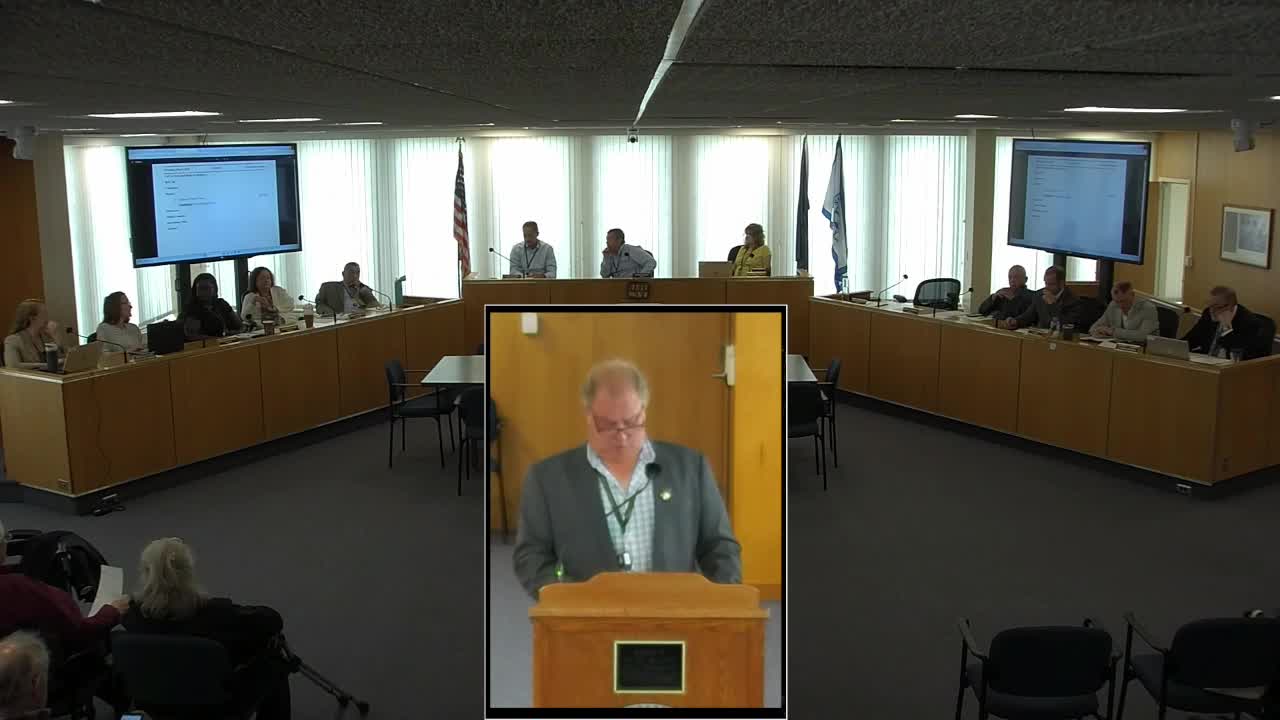
Sullivan County public works staff, county legislators and members of local groups discussed landfill operations, flow‑control enforcement and waste‑management strategies during the Legislature's public works meeting. County staff described recent tonnage and pricing figures and said the county will pursue a plan to enforce its existing flow‑control rules; residents and local environmental groups urged more investment in waste reduction and composting and warned against incineration.
The county's solid‑waste manager, Mark (public works staff), reported that cardboard revenue was “steady at $75 per ton” and that the county received 112 tons of cardboard in April; single‑stream recycling paid about $45 per ton for 172 tons in April. He said the county will implement a previously adopted tip‑rate rule that raises the municipal solid waste (MSW) tip rate to $150 per ton effective July 1. Mark also reported that overall tonnage at the transfer station is down about 25 percent since the price increase.
Why it matters: county staff and several haulers warned that if haulers transport waste out of Sullivan County to avoid the higher tip price, the county loses revenue that supports landfill maintenance and infrastructure. County legislators directed staff to work with the county attorney and the sheriff to develop an enforcement plan for the county's flow‑control rules, but no formal penalty or enforcement vote occurred at the meeting.
County staff described operational steps being considered to reduce on‑site congestion and better serve commercial haulers. Mark said the county's DEC permit allows opening at 7:00 a.m. with the last scale entry at 3:30 p.m.; he said he is negotiating with the private tip‑floor operator (MBI) on extending hours without increasing contract costs and that a contract change would require a resolution if money is needed. Staff proposed adding a seasonal worker to direct cars and creating an express lane for commercial auto tippers during morning hours.
Hauler concerns and proposed remedies
An unidentified hauler who spoke at the meeting (self‑identified as representing local hauling interests) told legislators the current $50,000 bond required of haulers is likely too low for the busy summer season and asked the county to raise the bond amount. The speaker also urged stronger enforcement of the flow‑control rules to deter haulers taking waste out of the county.
Public comments and waste‑reduction advocates
Caroline Bailey, representative of Sustainable Sullivan, urged the county to treat “waste as a resource” and to prioritize strategies that reduce the amount of residual waste (recycling, reuse and composting) rather than relying on disposal solutions. Rebecca Kreshkoff, co‑founder of Sustainable Sullivan and Beyond Plastic Sullivan County, said the New York State Department of Environmental Conservation (DEC) had told Seneca Meadows Inc. that its draft environmental impact statement was incomplete and suggested that Seneca Meadows' potential closure increases urgency for local planning. Kreshkoff said, “Given their track record to date, it's quite possible the landfill will really close at the end of this year.”
Other public commenters warned that incineration carries health risks such as PFAS contamination. Kathy Aberman and Linda Reich, who said they attended a recent solid‑waste conference, urged caution about incineration; Reich related a case from the conference in which livestock near an incinerator tested for elevated PFAS levels.
Committee discussion and next steps
Legislators and staff agreed the county has the usage data needed to identify haulers that have reduced tipping here and are likely hauling waste elsewhere. Several legislators asked staff and the county attorney to prepare a concrete enforcement plan — including how to gather evidence and whether civil or criminal avenues would apply — and to return with proposed means and methods. No enforcement action was adopted at the meeting.
Mark said the county is preparing bid documents for tip‑floor operations and for long‑term disposal contracts; he expects to have vendor selections underway by July. He also provided operational dates for household hazardous waste (HHW) events (tentative dates reported as June 8 and Sept. 20) and a countywide clean sweep on May 15.
Ending
The committee heard multiple public appeals to broaden the working group addressing solid waste to include outside stakeholders, scientists and residents. Legislators said they are open to such participation and directed staff to develop enforcement options in coordination with the county attorney and sheriff before the committee's next meeting. The committee adjourned without further votes on solid‑waste policy.