Get Full Government Meeting Transcripts, Videos, & Alerts Forever!
Get email alerts on the Building Codes topic
No spam. Unsubscribe anytime.
Home Builders Association warns that new residential code will raise costs; files intent to sue over process
Summary
Don Crandall of the Michigan Home Builders Association updated the House Regulatory Reform Committee on state residential-code changes, objections to the 2021 Michigan Residential Code (including its energy provisions), and the association's May 1 notice of intent to sue the Department of Licensing and Regulatory Affairs.
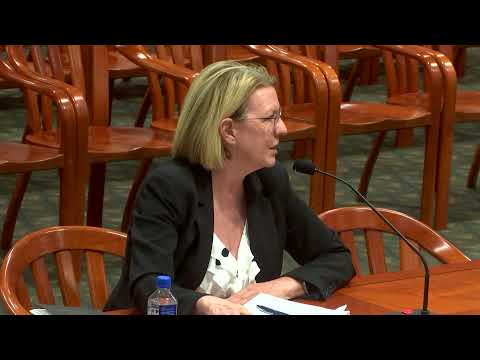
Don Crandall, executive vice president for government relations at the Michigan Home Builders Association, told the House Regulatory Reform Committee about recent changes in the state residential code process and the association's objections to the 2021 Michigan Residential Code (MRC) and the related Part 10 energy provisions.
Crandall summarized the change in process: model codes are developed by the International Code Council and historically Michigan used advisory committees of practitioners to review, amend and recommend state adoption. He said the state's Department of Licensing and Regulatory Affairs (LARA) now uses a streamlined internal process that reduced stakeholder committee steps and instead relies on the department and a board chair to review draft rules before submission to the Office of Policy and Legislative Affairs.
The Home Builders Association's concerns, Crandall said, focus on energy and construction requirements contained in the 2021 MRC and on Part 10 (a Michigan-specific uniform energy code). He listed specific provisions in the 2021 that he said would raise costs for homebuilders and buyers: 2-by-6 framing (instead of 2-by-4), R-60 ceiling insulation requirements, interior insulated ductwork, one-inch exterior insulated sheathing, mandatory solar-readiness requirements and expanded arc-fault requirements. Crandall said the 2024 model code (which the HBA supports) uses an ANSI process designed to allow innovation and a points-based compliance pathway (for example, a mix of heat pumps, high-performance windows or other technologies) and would provide equal or better energy performance while allowing flexibility.
Crandall said the association filed a notice of intent to sue LARA on May 1 after LARA sent the 2015/2021 rules to the Office of the Great Seal. He urged restoring advisory committees or passing legislation to require them for the Michigan residential code, arguing that the prior process produced better stakeholder debate and produced more workable rules.
Committee members asked about the estimated cost impacts to a new home and whether the state requires a cost-benefit or payback analysis for code changes. Crandall cited the national association's five-year study that estimates an average increase of about $10,000 per new home each time new codes go into effect and noted Michigan's legal requirement that energy-related changes show a seven-year payback. He said the HBA has raised questions about clarity in sprinkler language in the 2021 code and possible requirements that could increase builder costs and complexity.
Crandall said the HBA would prefer adoption of the 2024 model code and either gubernatorial rescission of Executive Order 2017-3 or new legislation restoring the advisory committee process specifically for the Michigan residential code. He said the HBA has a history of litigation over code adoption and that this is not the first such filing.
Representative Tisdell and Representative Wozniak questioned the process and relationship between LARA and the HBA; Crandall said the associations meet regularly with LARA but disagreed about the statutory interpretation of adoption cycles. Crandall said builders currently follow the 2015 MRC while statutory and administrative steps play out.
Crandall told the committee that studies show the 2024 model code would save 6%-8% more energy than 2021 if adopted under the points-based system, but said the HBA objected to specific mandatory elements in the 2021 energy chapter. The association is pursuing legal remedies while continuing to seek legislative or executive action to restore stakeholder advisory input.