Get Full Government Meeting Transcripts, Videos, & Alerts Forever!
Get email alerts on the Oac Grants topic
No spam. Unsubscribe anytime.
Providers praise Opioid Abatement Commission grants but say delays and one‑year awards undermine programs
Summary
Grantees and commission members told the Committee on Health that settlement funds and commission grants have funded housing and treatment programs but that bureaucratic delays and short award timelines have compressed service delivery and reduced effectiveness.
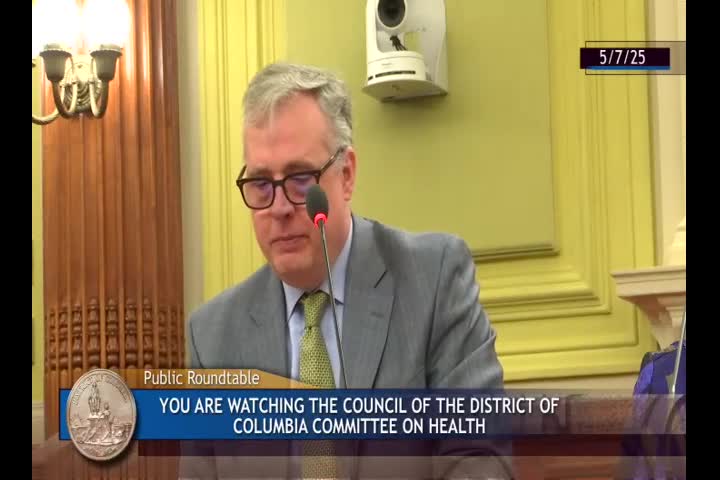
Service providers, grant recipients and commission members used Wednesday’s Committee on Health roundtable to praise new investments from the Opioid Abatement Advisory Commission while describing recurring administrative delays and short grant timelines that they said undercut program success.
Chad Jackson, chair of the Opioid Abatement Advisory Commission, told the committee the commission "has received a little over $25,000,000 and disbursed or awarded about half of those dollars." He said the commission has focused awards on programs directly related to reducing opioid use disorder or overdose deaths.
Provider testimony documented multiple problems with timing. Judy Ashburn, vice president of clinical programs at Samaritan Inn, described a successful transitional supportive housing program that opened quickly after a December 2024 award, noting 18 of 19 beds filled almost immediately. But other witnesses said many grantees experienced delays of months before funds were available, forcing compressed start dates and shortened spending periods.
Sums of money and examples cited at the roundtable include a $400,000 award to the Office of the Chief Medical Examiner for forensic toxicology capacity and roughly $250,000 for workforce development, both cited by Jackson. Several provider witnesses said compressed timelines required revision of budgets and reduced program scope: Sum Inc. reported an award timeline that was delayed and resulted in an effective loss of award months and an overall reduced spendable period.
Why this matters: several witnesses said short, one‑year awards or grants that start late make it difficult to build sustainable programs — particularly housing and longer‑term recovery supports. Ashburn said her program expects some people to need 18 months to two years of supportive housing to reach stable footing, and providers asked the commission to consider multi‑year funding or renewals for programs that meet goals.
Jackson acknowledged operational friction points. He described procurement and internal processing delays and said the Opioid Abatement Office has improved staff capacity but that grant processing still “takes several months to process that grant and get the budgetary requirements put into place.” He said the commission is tracking outcomes and hopes to prioritize successful grantees for follow‑on funding rather than continually running new competitions.
Providers and coalition leaders asked the commission and city to improve transparency and faster disbursement. Several witnesses also urged the Office of Opioid Abatement and Department of Behavioral Health to streamline reporting and technical support so community organizations — many of them small nonprofits — can manage awards without absorbing unrecoverable costs.
Panelists also recommended that the commission direct a portion of funds toward longer‑term infrastructure — for example, reliable transitional housing and workforce supports — rather than only relatively small, short‑term pilot grants.
Ending note: The commission chair and DBH staff told the committee they are refining grant management systems and exploring ways to reduce delays. The committee said it will continue oversight and requested written reports from the commission and DBH on grant timelines and implementation metrics.